
I remain bullish DXY on the basis of more aggressive Fed tightening, a lower terminal rate than everyone thinks leading to a market shock and safe-haven trade, and geopolitical risk. BofA with the note:
———————
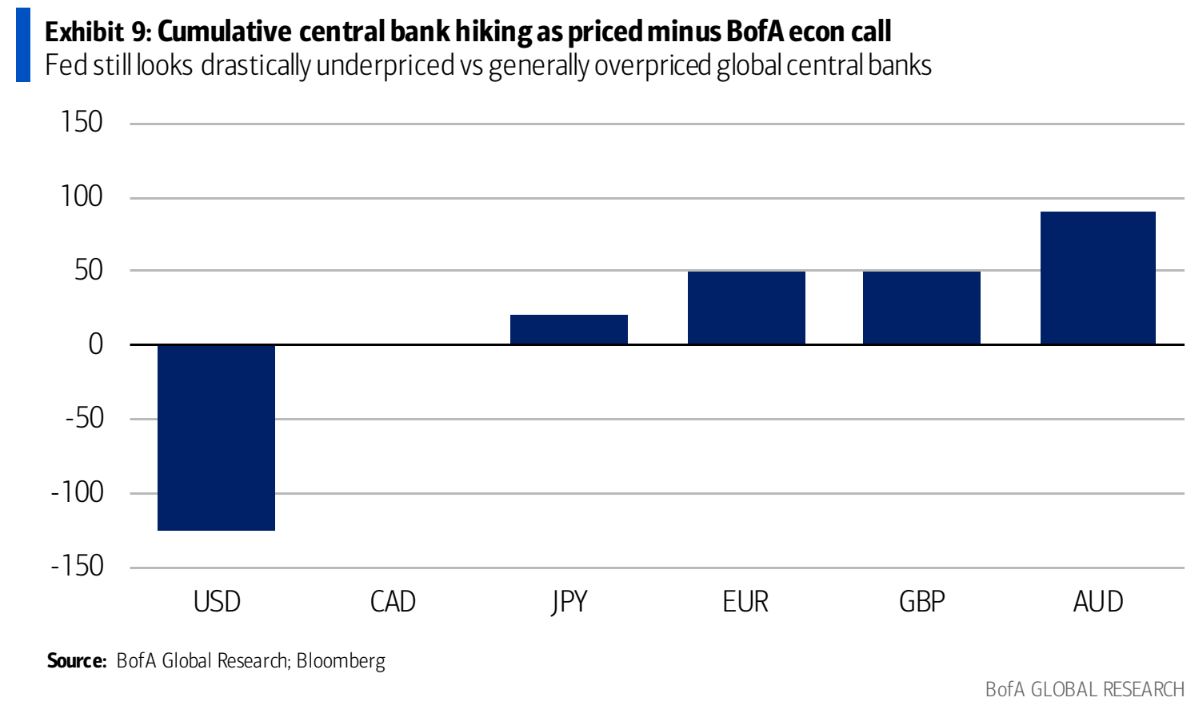
Markets believe that the race to the“top”(i.e., terminal policy rates) among central banks has tightened, punctuated by a hawkish shift by the ECB last week. USD is no longer broadly perceived as having a strong monetary policy tailwind behind it. We disagree, less with the impulse to re-price global central banks (CBs)higher, and more with the failure of markets to preserve the Fed’s lead. We expect this tailwind to reassert in the coming weeks as markets re-think their overly cautious view of the Fed. Markets are justified in expecting monetary policy response outside of the US, but our work continues to point to relative core inflation pressures and, specifically, their impact on the pricing of rate paths over the entirety of the cycle, as being the more impactful determinant of FX on a trend basis. For now at least, the US appears exceptional interms of having the greatest capacity-related price pressures in G10. As long as the Fed’s response to genuine upside inflation risks in the US remains under-appreciated, we are buyers of USD on dips, particularly on the lower beta pairs. Our forecasts forEURUSD and USDJPY remain 1.10 and 118, respectively.
The full text of this article is available to MacroBusiness subscribers
