
Morgan Stanley with the note. This looks like a pretty good analogy but the bottom will depend upon there being a Powell pivot which in turn is governed by inflation. If the latter does not come as it should then I’d be looking for even lower. But it should. This kind of demand shock is precisely what can expose the massive inventory build driving the inflation. Another key is damaging growth enough to break oil which is where Ukraine might complicate things. I think of the below as a good base case.
In recent notes, we have suggested the current situation looks similar to late 2018. The most apparent similarity is that we have an overly hawkish Fed at a time when growth is slowing. Back in 2018, the market viewed Powell’s “auto pilot” comments on rates hikes and view that policy remained far from neutral as tone deaf, particularly as credit markets were getting roiled in December. This time, the Fed is responding to record high inflation and is arguably behind the curve. So, while it’s hard to argue the Fed is making a mistake by signaling such an aggressive tightening schedule, it could mean they really are on auto pilot this time and therefore may find it very difficult to pivot back. In other words, the odds are increasing we end up with a similar outcome as December 2018. Exhibit 1 showsa priceanalogversus 4Q 2018 that’s holding up well. If we were to get some signs of a de-escalation in Russia/Ukraine tensions, it seems like a quick 5% rally is not out of the question. However, uncertainty is high here, and this would simply work off the oversold condition. Our experience with such analogs is that they eventually break down as the past is never a perfect prologue. Nevertheless, it’s worth
watching until it does.
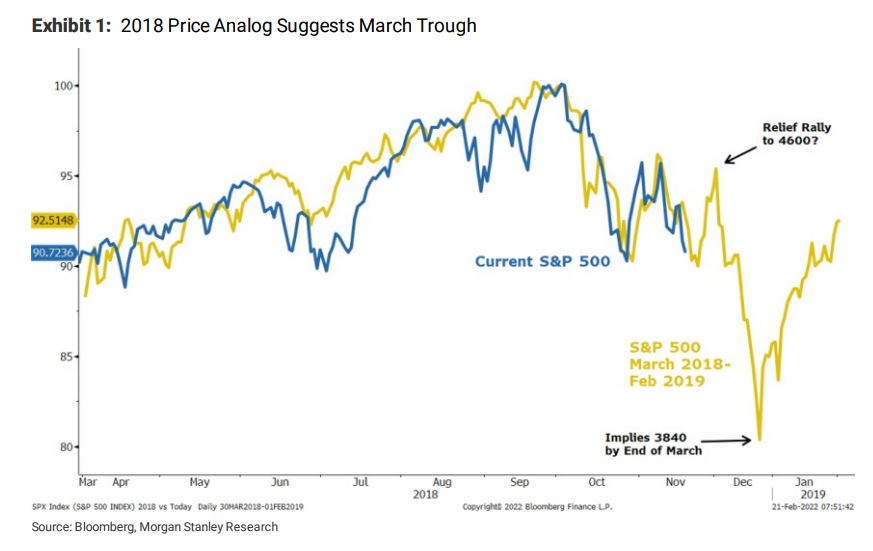
The bottom line for us is that we really don’t have a strong view on the Russia/Ukraine situation. We think a lot of bad news is priced at this point. Signs of de-escalation could lead to a relief rally in the near term given the lack of hard evidence for our Ice thesis. However, risk of tensions escalating is elevated and come March, the Fed will actually begin to tighten policy as opposed to just talking about it. This will come just as the data begins to roll over with respect to growth…more specifically, decelerating earnings revisions and more acknowledge ments from companies that demand may be slower than anticipated as supply comes on line and costs remain an issue.
The full text of this article is available to MacroBusiness subscribers
