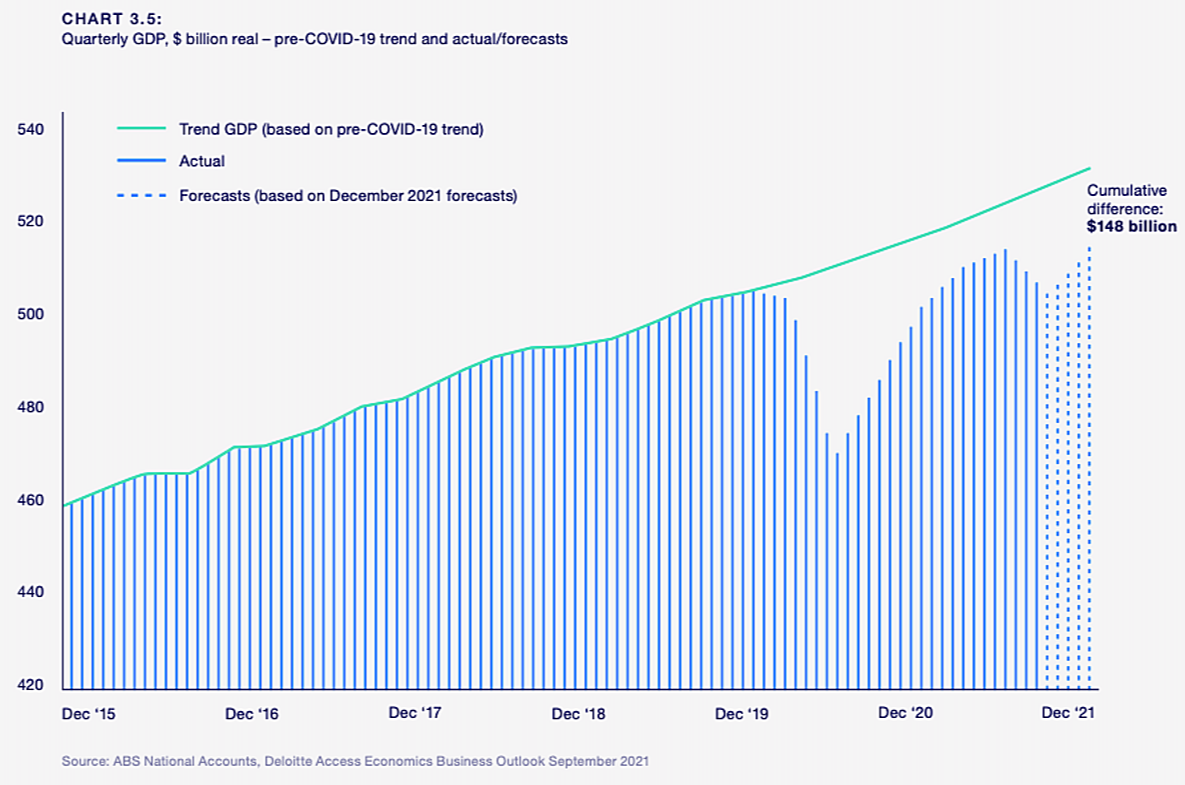
A new report from RMIT Online and Deloitte Access Economics claims the Australian economy has been hit hard from the loss of 380,000 migrants over the pandemic:
RMIT Online and Deloitte Access Economics suggest the Australian economy produced some $148 billion less in GDP than it would have in a pandemic-free world.
The nation’s closed border policy had an outsized impact on its own, carving away $32 billion from the GDP Australia would have amassed otherwise, the report says…
Policies which effectively brought international migration to a standstill mean Australia’s population is nearly 380,000 below where it would be without border closures, the report says.
In sharper terms, Australia missed out on more than 21 million hours of potential labour in September 2021 than it would have otherwise, the authors argue.
You know what they say about economic modelling: “garbage-in, garbage-out”.
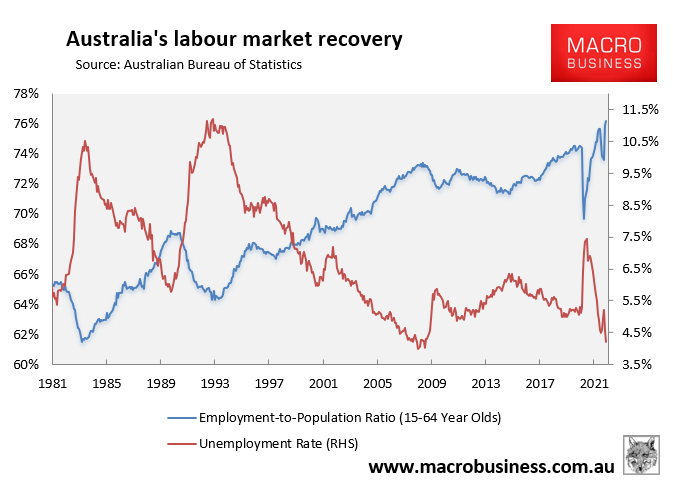
Funny how the authors failed to mention that Australians are enjoying the best labour market conditions in generations, with the unemployment and underemployment rates both at their lowest levels since 2008 and the employment-to-population ratio at its highest ever level:
Advertisement
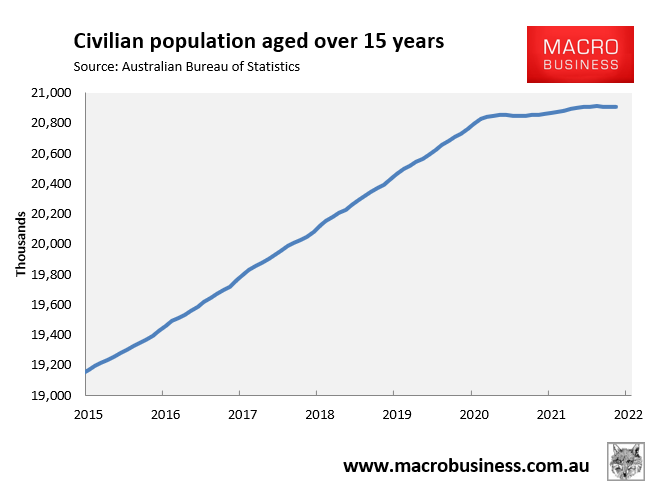
The reason why is obvious: Australia went from importing more than 180,000 migrant workers every year to losing tens-of-thousands of migrant workers over the pandemic. As a result, Australia’s labour supply stopped growing:
Advertisement
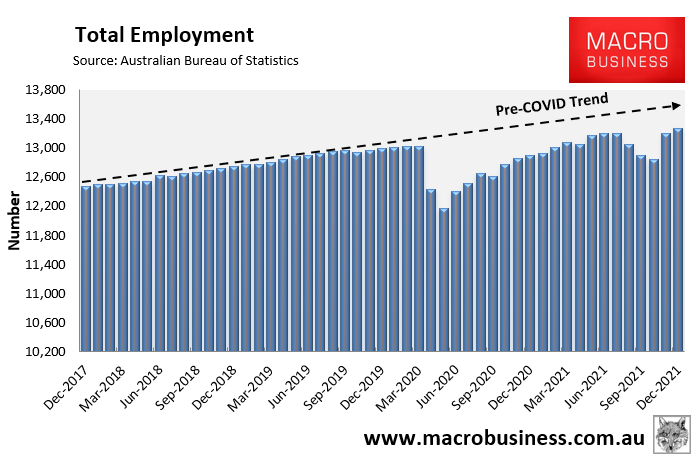
Which has driven unemployment and underemployment to their current 2008 lows, despite below trend jobs growth:
It turns out the “more than 21 million hours of potential labour” supposedly lost over the pandemic from the collapse in immigration has been just the tonic Australia needed to eliminate wasteful unemployment – a dynamic that will quickly reverse once pre-COVID mass immigration is restored.
Advertisement
It would be nice if economists spoke honestly on this issue.
Leith van Onselen is Chief Economist at the MB Fund and MB Super. He is also a co-founder of MacroBusiness.
Leith has previously worked at the Australian Treasury, Victorian Treasury and Goldman Sachs.