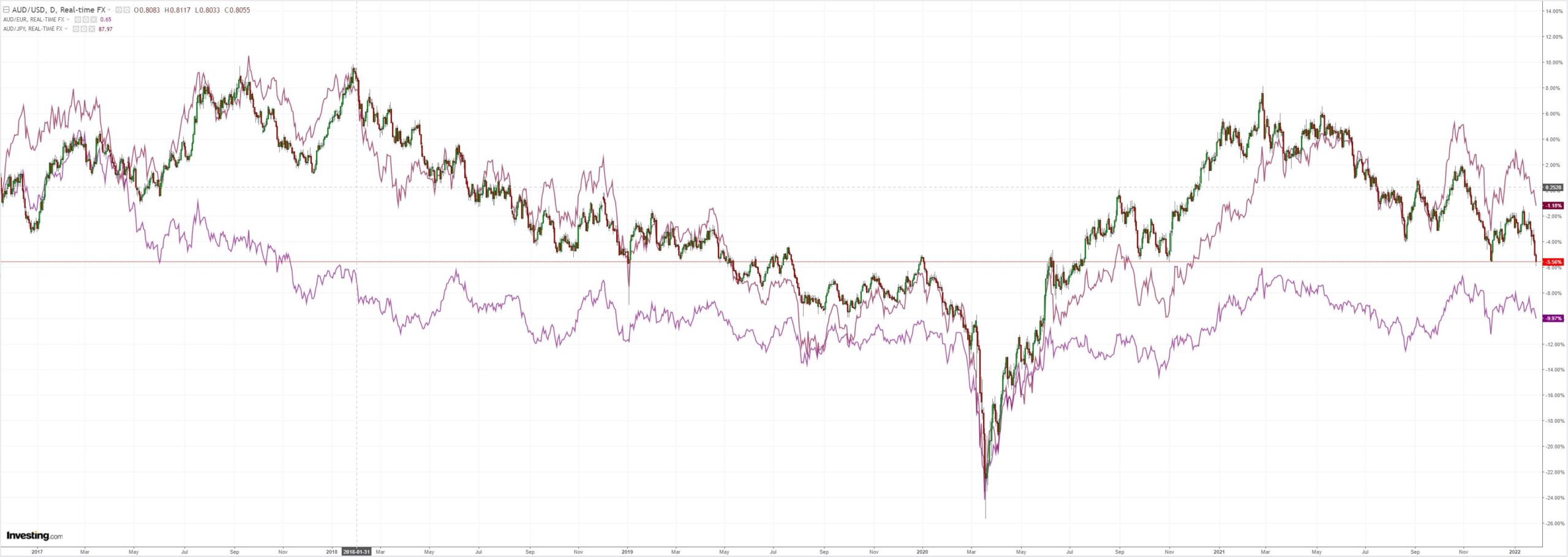
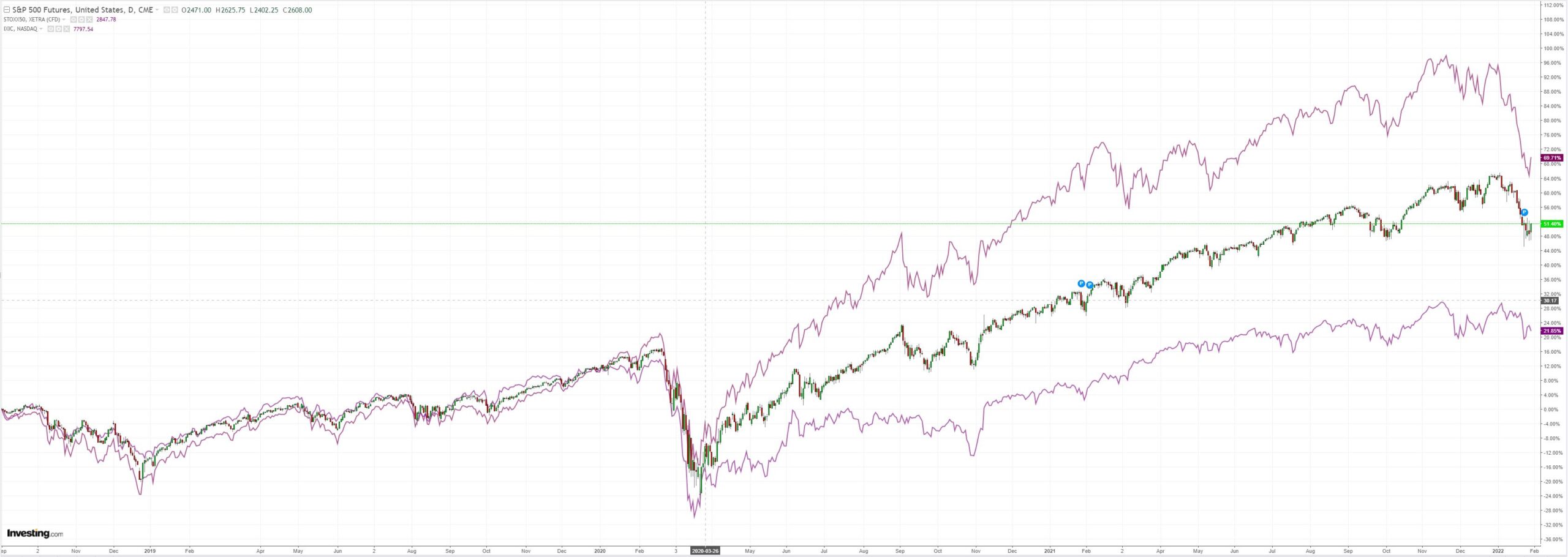
The Australian dollar was pulversmashed, broke 70 cents key support and is opening the way to god knows where:
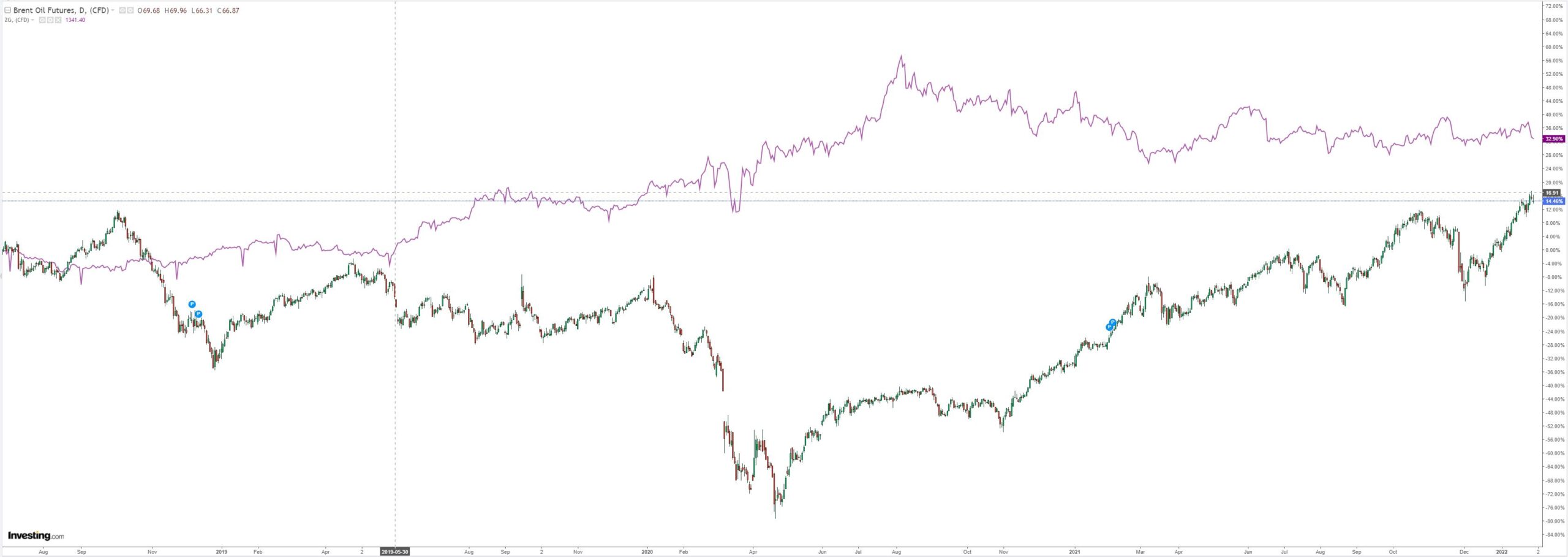
Gold and oil fell:
Advertisement
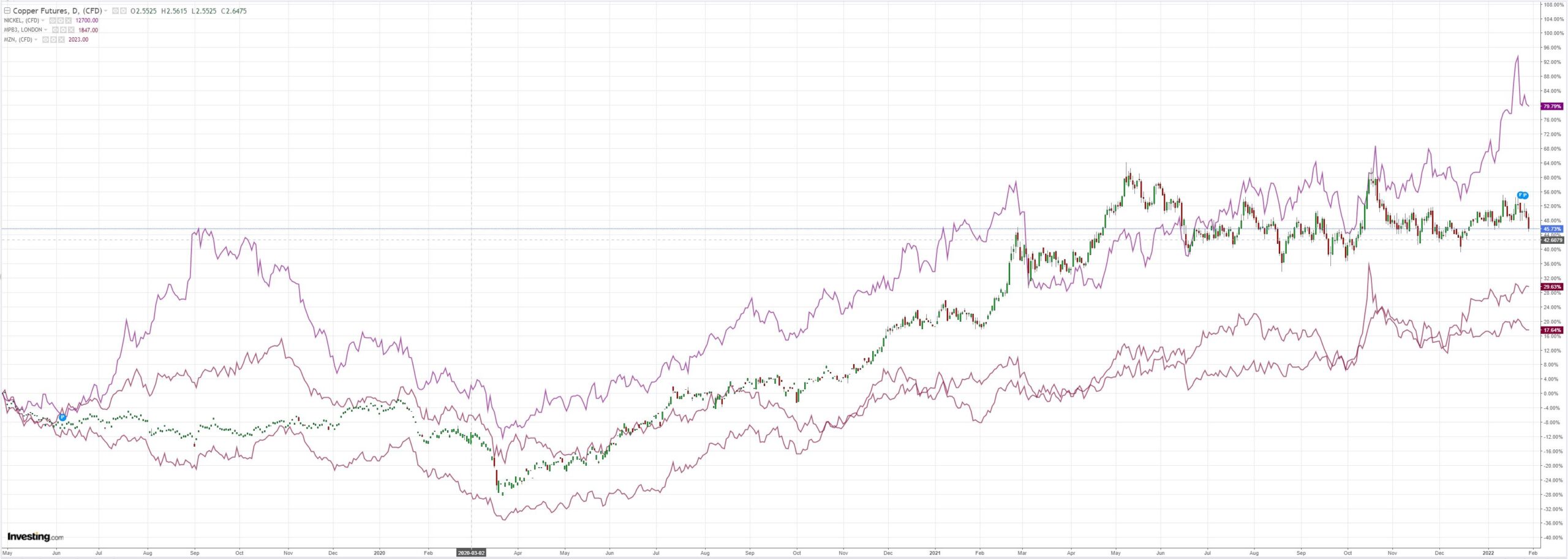
And base metals:
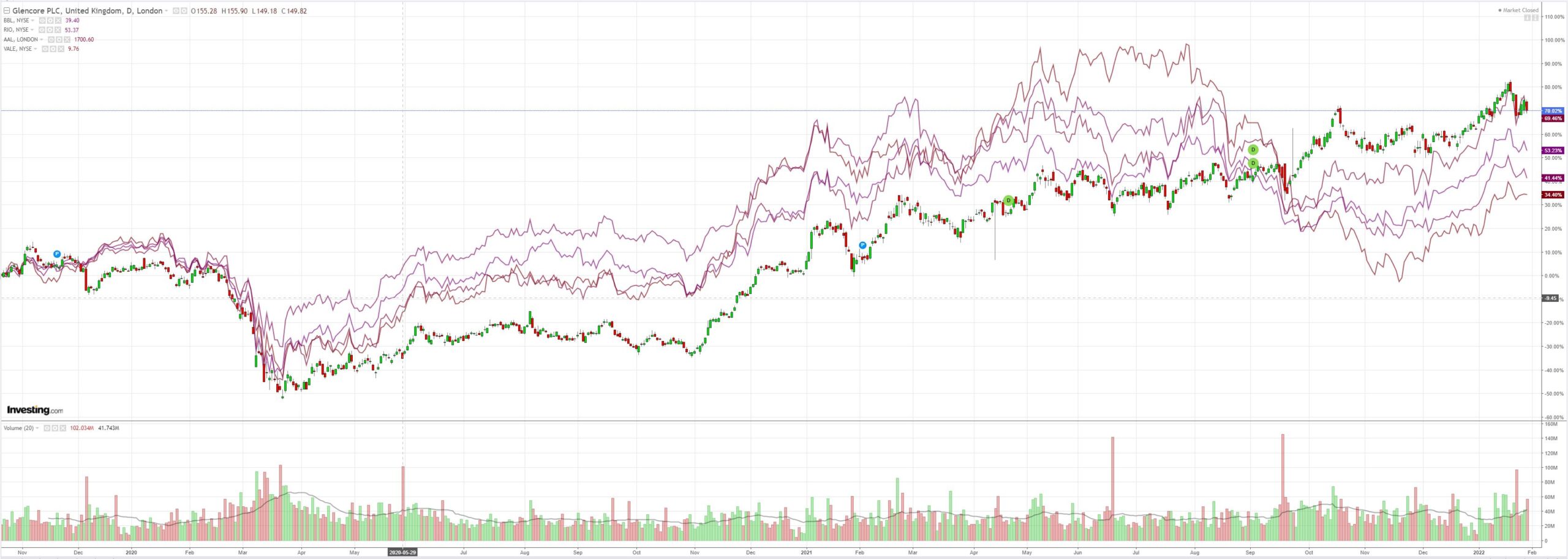
Big miners are sickening again:
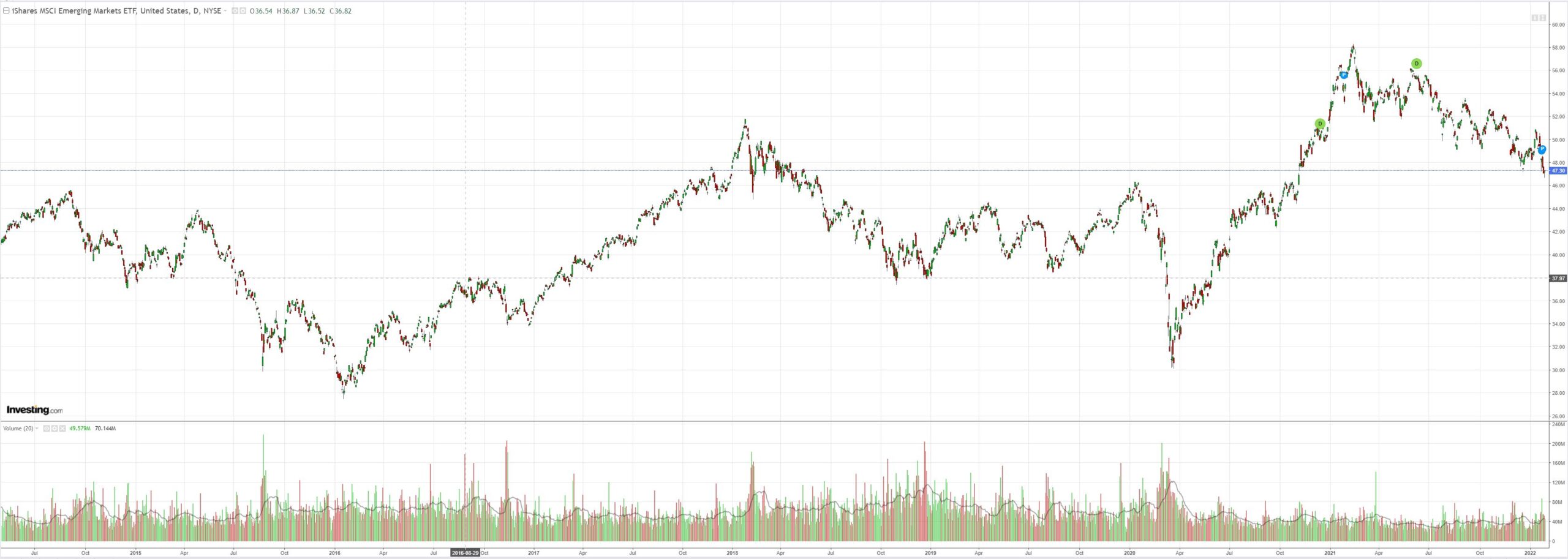
As EM stocks break:
Advertisement
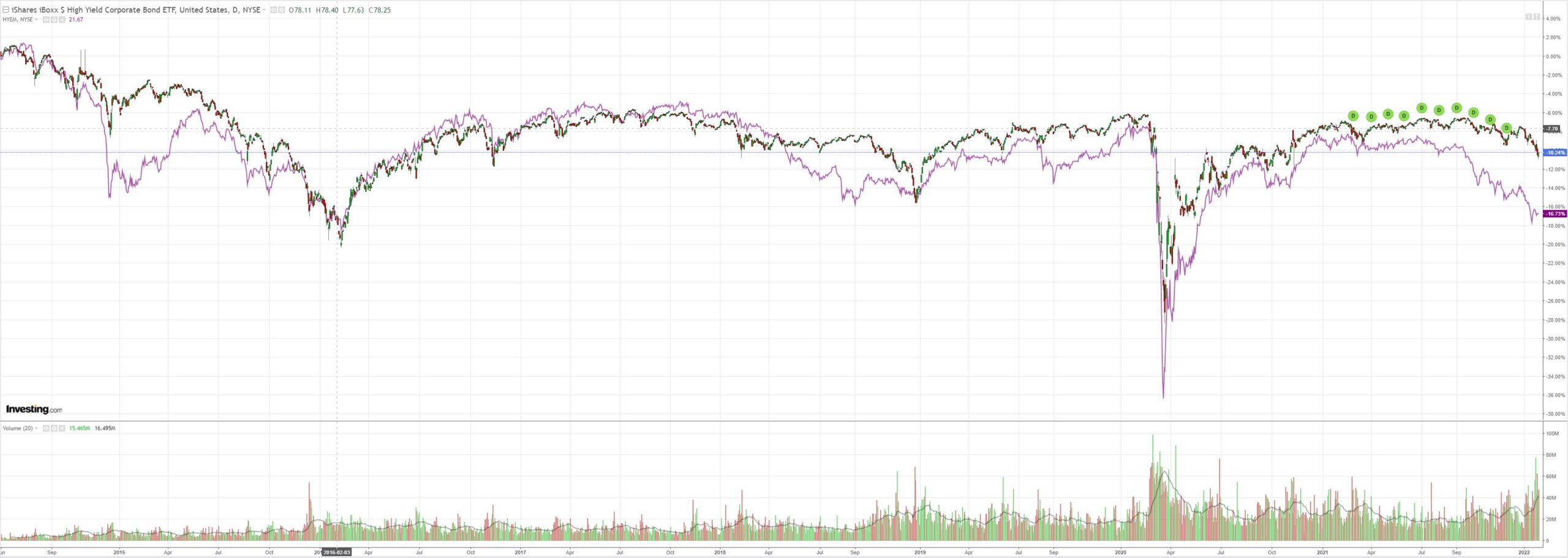
Though junk held on:
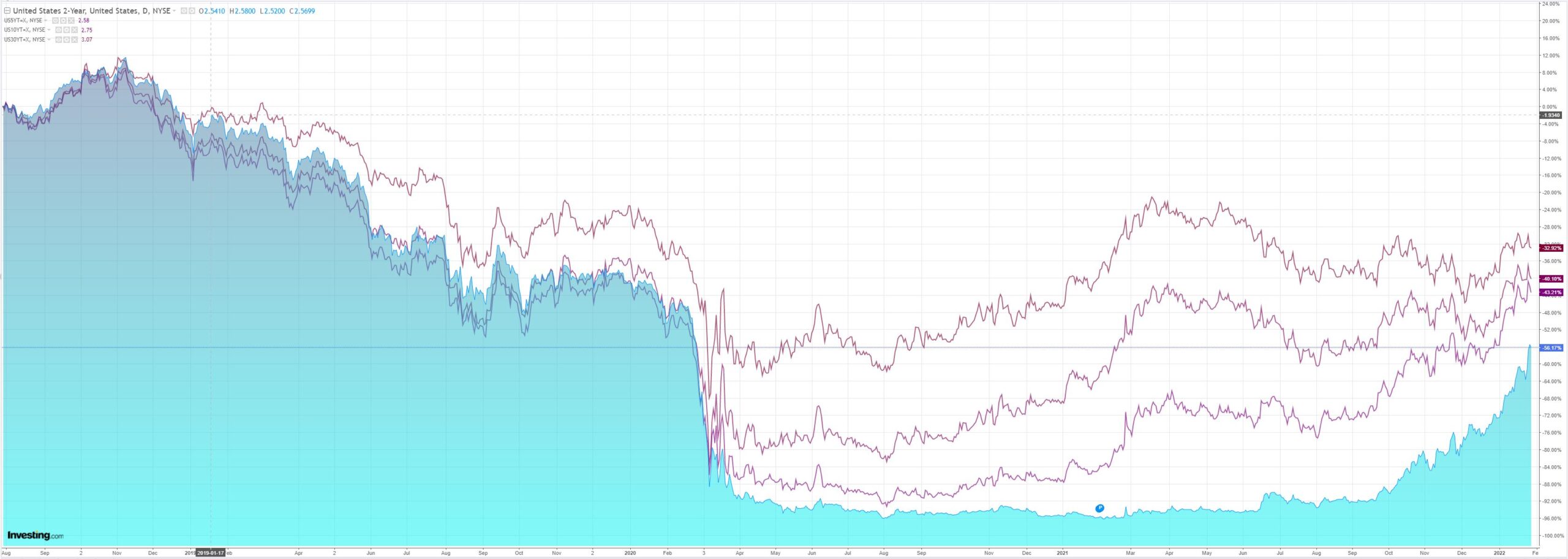
As the Treasury curve flattened some more with a broad bid:
Advertisement
Which lifted Growth stocks (along with the Apple result):
Bloomie summarises the mystery of the collapsing AUD:
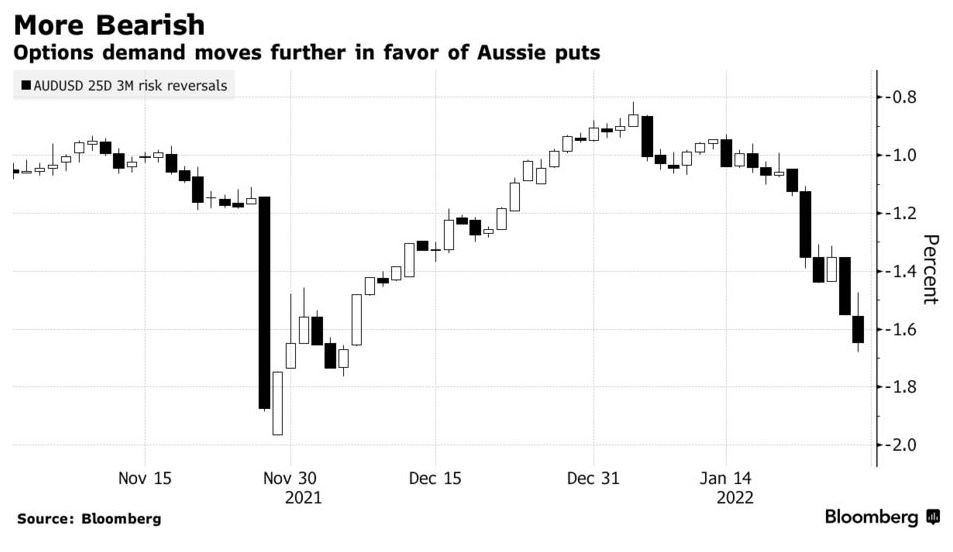
After a painful start to 2022, the options market points to even tougher days ahead for the Australian dollar.
A measure of put-and-call-option demand is flashing more bearish signals across tenors for the embattled currency, even as the Reserve Bank of Australia is expected to end its asset-purchase program at a meeting next week.
Rising commodity prices — usually a boon for the currency — are providing no relief.
Money markets expect the central bank to begin lift-off in the first half of the year, and are currently pricing 125 basis points of hikes by end-2022.
There is no mystery. The usual dynamics of a monetary cycle are playing out.
Advertisement
When the Fed tightens, inevitably money is steadily sucked from the periphery of global markets back to the core DXY architecture.
It always starts in vulnerable EMs and we saw that play out H2, 21 in currencies such as the Turkish Lira.
Next, the outflow moves to broader EM high yield debt and equity. That has been happening for the last quarter or so and also explains why Chinese stocks are in freefall despite all of Wall Street cheerleading them on.
Advertisement
The stress next appears in peripheral DM currencies and equity. This triggers a doom loop as the flow of capital from the periphery to the core US carry trade now gets a safe haven tailwind as well, exacerbating both. That is where we are now.
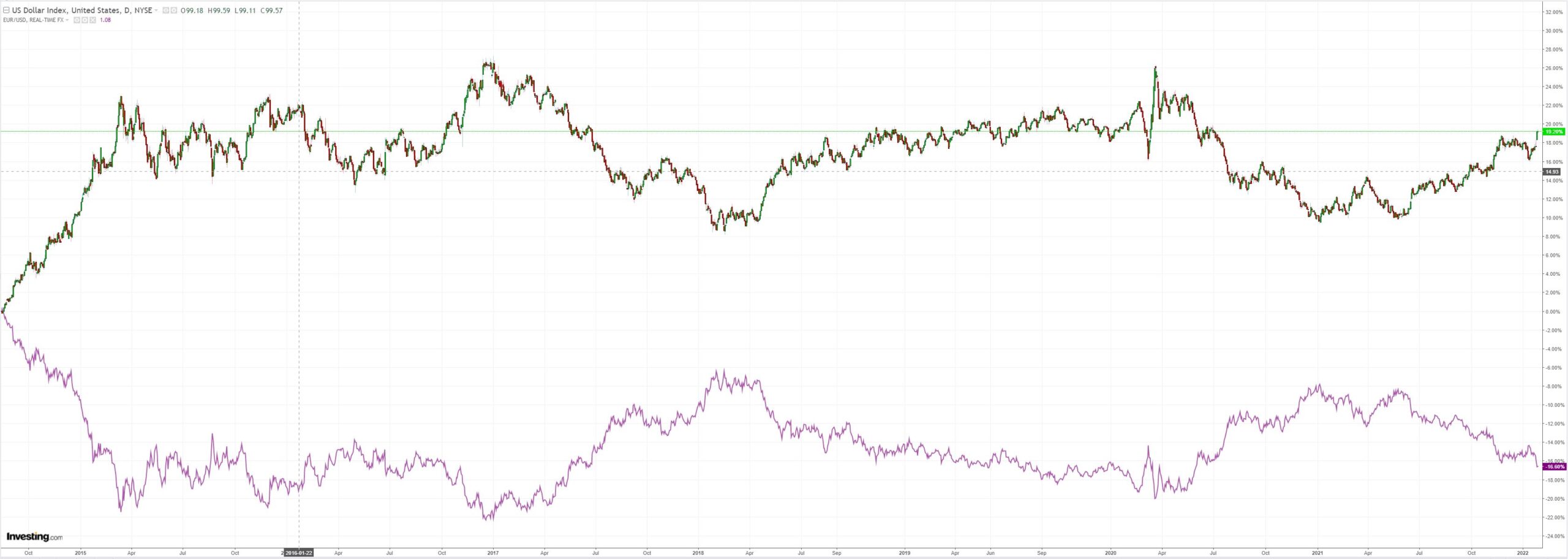
In the last two mini-Fed tightening cycles of 2015 and 2018, the above stress culminated in a commodity bust, especially oil, which was enough to deflate incipient inflation enabling the Fed to stop hiking and/or lift liquidity, also reversing all of the above dynamics.
But, in the COVID crazy cycle, the Fed does NOT have this luxury. Inflation is much higher, in the US especially, and Wall Street has blown a truly epic commodity bubble on the basis of hedging this inflation, so there is no quickfire deflation release valve.
Advertisement
This time the Fed is going to have to persist with tightening despite falling markets until it crushes enough real economy demand that commodities crash.
In short, expect lower yet on the AUD despite short-term blips like commodity blowoffs, RBA prognostication and short squeezes.
David Llewellyn-Smith is Chief Strategist at the MB Fund and MB Super. David is the founding publisher and editor of MacroBusiness and was the founding publisher and global economy editor of The Diplomat, the Asia Pacific's leading geo-politics and economics portal.
He is also a former gold trader and economic commentator at The Sydney Morning Herald, The Age, the ABC and Business Spectator. He is the co-author of The Great Crash of 2008 with Ross Garnaut and was the editor of the second Garnaut Climate Change Review.