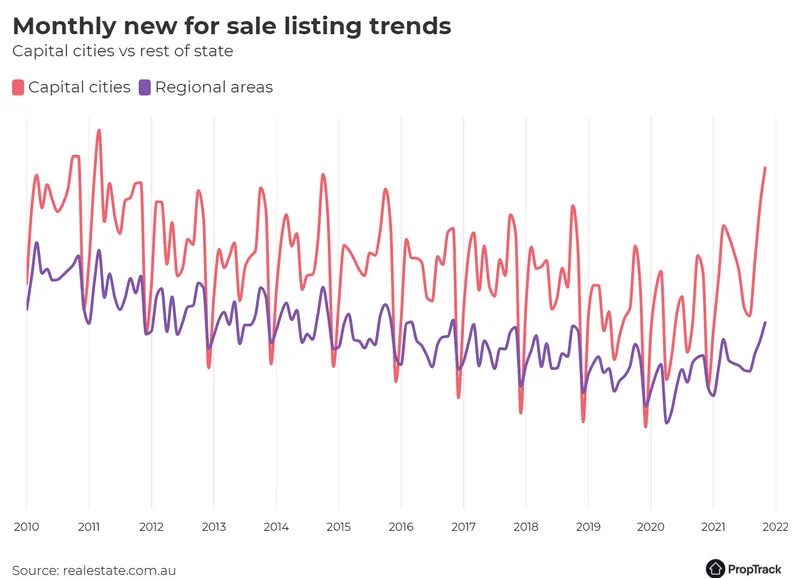
What pandemic? New listings of properties have surged to their highest level in seven years, as owners/specufestors take advantage of the COVID housing bubble with investors jumping in as housing construction and renovation hits new highs.
Bricks and mortar! It can’t be beat – don’t miss out!
November marked the peak of the spring selling season this year, with the latest PropTrack Listings Report showing new listings on realestate.com.au rose 12.1% to the highest level since 2014.
“Property market activity continued to soar in November as sellers made up for lost time after lockdowns,” PropTrack economist Angus Moore said.
New listings in the capital cities rose 12.5% in November to reach their highest level in a decade, while regional areas had an 11.3% rise to a five-year high.
Mr Moore said it was a strong result for November, with this year’s peak pushed back by the delayed start to the spring selling season due to COVID-19 lockdowns in Australia’s two biggest cities and Canberra.
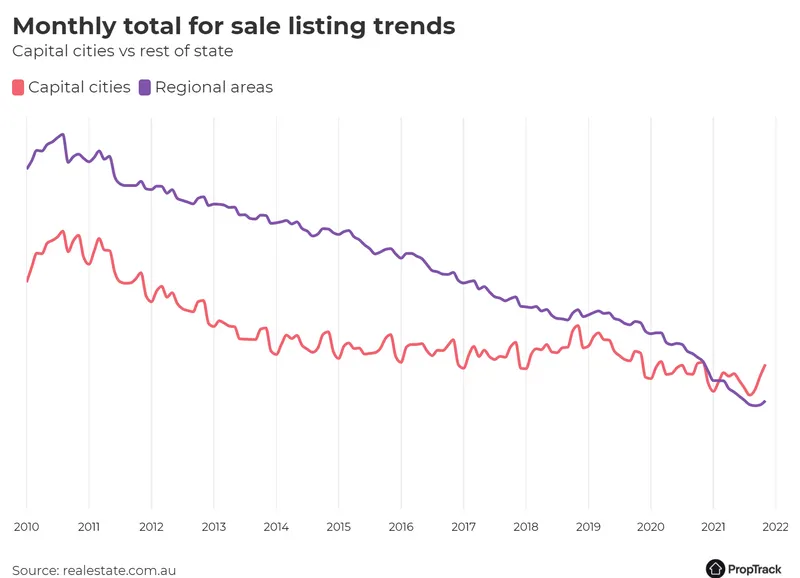
Despite the surge in new listings in November, the overall stock of properties for sale remained low compared to pre-pandemic levels.
“The long periods of restricted activity and lockdowns, coupled with high levels of buyer demand, mean that the total stock of properties available for sale is low compared to previous years,” Mr Moore said.
Advertisement
Meanwhile housing construction continued to trend higher throughout the year, despite lockdowns interrupting construction in both Sydney and Melbourne, and that population growth has flat-lined according to Deloitte:
The rebound in spending on building new homes and renovations means that housing construction activity has grown more than government spending through the pandemic to date, despite the unprecedented government expenditure since early 2020. This is due to record low interest rates, government incentives and perhaps more time during lockdowns to plan home renovations.
At the same time, supply chain disruptions have been causing delays in the delivery of some materials, and so the current construction peak may be relatively lower but more extended than previous cyclical peaks.
This means a solid pipeline of residential construction work remains going into 2022. However, with the effects of government stimulus fading and the reality of lower population growth kicking in, there is still every chance that residential construction activity wanes over the course of 2022 and 2023.
New building activity has been spurred on by house price growth. CoreLogic data shows housing prices have increased for the 14th consecutive month, but the rate of that increase has dampened in recent months, with November (national 1.3% monthly price growth) being the softest increase since January.
A more recent feature of the Australian housing market has been an investor resurgence. The rising investor share comes at the expense of first home buyers, many of whom are being priced out of the market.
New loan commitments for first home buyers are down from an historical peak in January 2021, however it is worth noting that first home buyer activity is still above pre-pandemic levels – supported by the large increase in household savings prompted by the harder lockdowns.
Advertisement
Whatever it takes, got to keep that real estate mega-complex moving along, since there’s nothing left in the basket to diversify into…