
The Centre for Population’s 2021 Population Statement projects that Melbourne will officially become the nation’s biggest city on the back of extreme immigration, with its population projected to grow to just over 5.9 million people (from 5.1 million currently) by 2029-30:
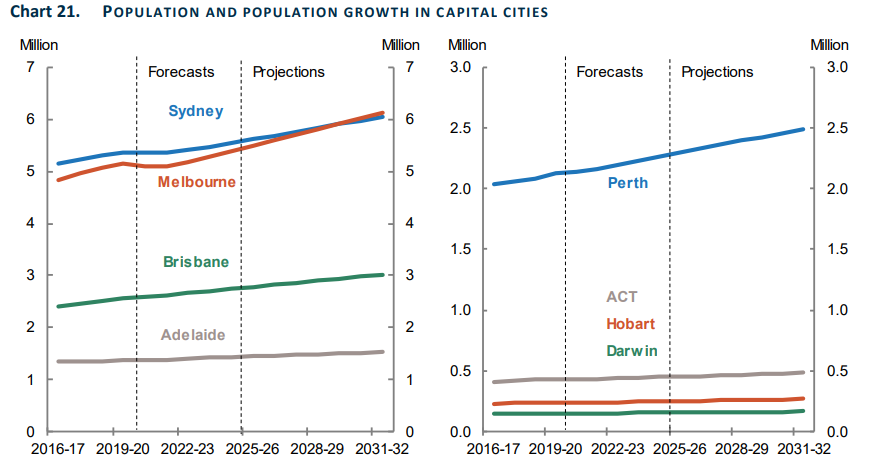
Melbourne City councillor Roshena Campbell has today questioned whether such strong immigration-driven population growth is desirable, given the costs it will place on existing residents:
This month’s mid-year economic and fiscal outlook update shows net overseas migration is set to dramatically turnaround in coming years…
This month, the federal Treasurer said the increase “includes about 200,000 places for students, tourists and skilled workers to address skills shortages”…
But in turning the migration tap back on to fix the current labour shortage, are we missing an opportunity?
Victoria has relied on immigration for decades to fill job vacancies.
The border closures of the past two years have been disastrous for many, personally and economically. But they have also provided the opportunity to see economic possibilities that did not exist when the migration tap was on.
Australia is currently on track to slash unemployment to historic lows.
After years of little to no wage growth, last week Reserve Bank governor Philip Lowe said a lower unemployment rate would put upwards pressure on wages next year.
In the case of hospitality, that’s already occurring…
The possibility of more widespread wage increases is finally in reach.
It’s difficult not to conclude a significant injection of skilled migrants would stall both this and the possibility of full employment…
Of the many unforeseen opportunities presented by COVID-19, the chance to get more young people and the long-term unemployed into work is not one we should lightly dismiss by reverting to the usual fix of migration.
In Victoria, there’s another reason why filling as much as possible of the labour demand domestically would be a wise move.
Infrastructure Victoria in a March 2020 report wrote: “Victoria’s transport network is struggling to meet demand, with congested roads and crowded public transport.”
What has been done since then to relieve the pressure in this state following years of high migration intake and population growth?
It seems not enough. And at great cost…
There’s no question a significant increase in migration will necessitate an even bigger investment in infrastructure. Leaving aside the fact the Victorian government seems incapable of building anything on budget, spending billions on roads and railways is a pretty expensive solution to a waiter crisis. And given the track record there’s no guarantee it will be delivered any time soon.
Before we turn the migration tap back on, we need to ask, is Victoria ready?
Brilliant stuff. Unfortunately it will be ignored entirely by our politicians, who will continue to pander to the rent-seeking business, property and edu-migration lobbies.
Privatise the gains, socialise the costs… You know how it goes.
