Westpac with the note:
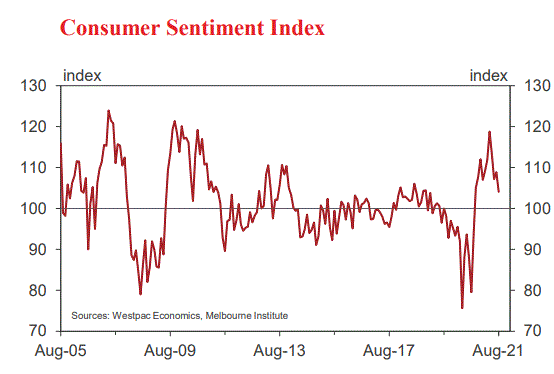
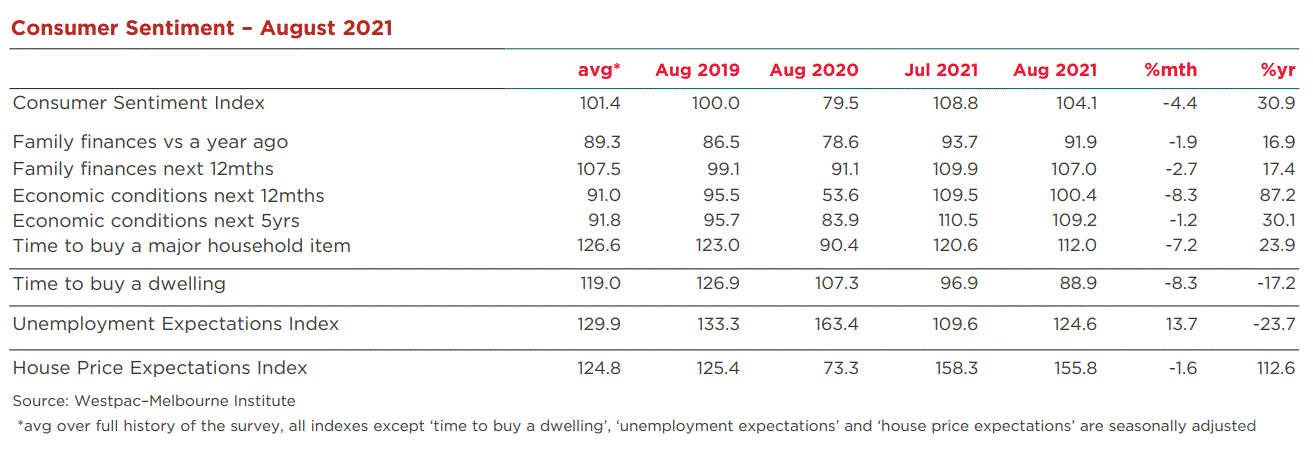
The Westpac-Melbourne Institute Index of Consumer Sentiment fell 4.4% to 104.1 in August from 108.8 in July.
At 104.1, the Index is now at its lowest point in a year but still well above the deeply negative lows seen during last year’s national lock-down (75.6) and Victoria’s ‘second wave’ restrictions (79.5). Remarkably, the Index is also comfortably above the readings seen over the twelve months prior to the pandemic (an average read of 97.5). The virus situation locally is clearly troubling, but consumers appear reasonably confident that it will come back under control, and that once it does, the economy will see a return to robust growth.
The availability of effective COVID vaccines is a key source of support for confidence.
Notably, sentiment is much stronger amongst those that have either been vaccinated or plan to get the jab. This group accounts 76% of all respondents and has a combined sentiment read 10.7pts above those not willing to get vaccinated or who have yet to decide. The gap is literally the difference between optimism and pessimism – in index terms, 106.6 vs 95.9 – and is apparent across all age groups.
Virus developments at the state level were again a prominent feature in the latest month.
Victorians recorded the biggest sentiment fall in August, last month’s reopening euphoria proving short-lived. The return to lock-down knocked the state index back 10.8%, reversing most of July’s 15% gain.
The prolonged ‘delta lock-down’ continues to take its toll on the NSW consumer mood. The extended, intensified and widened restrictions took a further 4.1% of confidence in NSW, the state index now down 14.8% from its May high but still in slight positive territory overall at 101.
Queenslanders were also jolted by a snap lock-down announced in late July, sentiment falling 4% to 103.0. That said, the hit looks to have been cushioned by official news that Brisbane will host the 2032 Olympics – the state’s ‘economy, next 5 years’ sub-index posted a solid 7.1% gain, running strongly against the grain of a 3.2% decline across the rest of Australia.
Notably, sentiment posted solid gains in the other major states – up 4.1% in Western Australia and 9.1% in South Australia – again in contrast to the virus shocks last year which saw major spillovers from states at the epicentre of outbreaks to other jurisdictions.
While state sentiment moves were the main theme, there were some notable shifts in the sub-group detail.
The biggest sentiment decline was amongst ‘paraprofessionals and tradies’ (-15.2%) where pressures on health and education systems, disruptions to building sites and the tougher restrictions in place for parts of Sydney all factored. The eight local government areas of concern in Sydney’s south and west facing the tightest lock-down restrictions account for over 40% of the city’s tradies.
Sentiment also posted a bigger fall amongst those working in ‘sales or clerical’ roles or in the ‘recreational services sector’ – likely reflecting both mandated closures and the elevated virus exposure risks for those still operating.
All index components recorded declines in August with the biggest falls around expectations for the economy over the year ahead and assessments of ‘time to buy a major item’.
The ‘economy, next 12 months’ sub-index dropped 8.3% to 100.4, with big falls for the large virus-affected states – Victoria down 13.3%, Queensland down 12.8% and NSW down 6.4%, the latter now having plunged 23.5% in the last three months. A slight majority of consumers across all three major states now expect conditions to deteriorate rather than improve over the next year.
The medium term view on the economy was less affected, the ‘economy, next five years’ sub-index down just 1.2% to 109.2 nationally.
Around family finances, consumers are understandably less confident about the year ahead, the ‘finances, next 12 months’ sub-index retracing 2.7% to 107, led by sharp declines in Victoria and Queensland. The ‘finances vs a year ago’ sub-index recorded a milder 1.9% decline to 91.9 – still slightly above its long run average of 89.3.
The ‘time to buy a major item’ sub-index posted a sharp 7.2% drop to 112, again led by sharp falls in Victoria, NSW and Queensland and likely partly reflecting the direct impact of restrictions limiting shopping opportunities.
Consumers registered a particularly sharp loss of confidence around jobs. The Westpac Melbourne Institute Index of Unemployment Expectations jumped sharply, rising 13.7pts to 124.6 (recall that higher reads mean more respondents expect the unemployment rate to increase in the year ahead).
That said, the sharp deterioration is coming from a very strong starting point – the long run average read on the index is about 130. The deterioration points to increased unease around jobs. Virus disruptions are clearly knocking the wind out what was otherwise a very strong labour market.
However, as we have seen in previous lock-downs, labour markets can rebound very quickly once restrictions are eased.
Consumer sentiment around housing continues to be shaped more by the broad-based boom in prices than COVID developments. The latest month again shows a clear shift in the market that is likely to see owner occupier activity slow sharply as investor activity strengthens.
The ‘time to buy a dwelling’ index posted another sharp decline, down 8.3% to 88.9. The index has now slumped by nearly a third from its November high of 132, August marking the second lowest read since 2010 (the lowest being during last year’s national lock-down). The steep fall is clear warning that the rapid rise in dwelling prices, and associated deterioration in housing affordability, is starting to weigh heavily on buyer sentiment amongst owner occupiers.
A sharp cooling in demand from this segment appears imminent. Notably, the weakening is coming across all the major states and is not confined to the capital cities.
Meanwhile, consumer house price expectations remain very bullish. The Westpac Melbourne Institute Index of House Price Expectations declined 1.6% in the month but is still at a very elevated level at 155.8. Over 70% of consumers expect prices to rise further over the next year with 20% expecting doubledigit price growth.
Consumers appear to be somewhat confused about the outlook for interest rates. Every six months we ask respondents about their expectations for mortgage rates over the next year. The August results show just over a quarter of consumers just ‘don’t know’ – easily the highest reading for this category and nearly the 13.3% read back in February.
Very few expect rates to decline further (3%) but only 30% expect rates to be unchanged and just over 40% expect rates to rise. It seems that while most consumers understand rates are at the bottom of the cycle there is a high degree of uncertainty about when they might start to move higher.
The Reserve Bank Board next meets on September 7. We expect the Board to again leave policy unchanged and restate that it is prepared to adjust policy if there is a significant further deterioration in conditions. However, given its decision to sit pat in August despite a sharp deterioration to the near-term outlook, the hurdle for RBA action looks to be very high. Barring a significant virus outbreak taking hold in another large state, it looks unlikely to be met in September or October.
The apparent resilience of consumer sentiment will give some comfort to the RBA, suggesting the consumer and the wider economy remain well placed to snap back once virus restrictions ease.
Westpac’s central case remains that widespread vaccination will see a reopening recovery underway by the November Board meeting, meaning this will still be an appropriate time for the Reserve Bank to start scaling back its bond purchases.
We also remain comfortable with our view that the Board will begin raising the cash rate in the March quarter of 2023.