From Gareth Aird, head of Australian economics at CBA
- New daily COVID‑19 cases will surge in NSW once Greater Sydney exits its lockdown.
- We expect the economic rebound to be patchy from that point over a three to six month period as households and businesses adapt to ‘living with COVID’.
- Additional policy support will be required once lockdowns are over as the economy transitions through the ‘four phase plan’ out of the pandemic.
The consensus view is that the economic rebound will be very swift once lockdowns are a thing of the past and the vaccination threshold of 80% has been reached. Economists have formed that view because economic activity snapped back very quickly over the past year each time a lockdown ended.
But things will look very different in Greater Sydney and potentially other parts of Australia when the current lockdown is over. More specifically, in Greater Sydney the lockdown will not be brought to an end as a result of the daily new number of COVID cases being zero. Rather it will end because a vaccination threshold has been met, which has been set at 80% of the 16+ population (note that this means one in five people over the age of 16 will be unvaccinated).
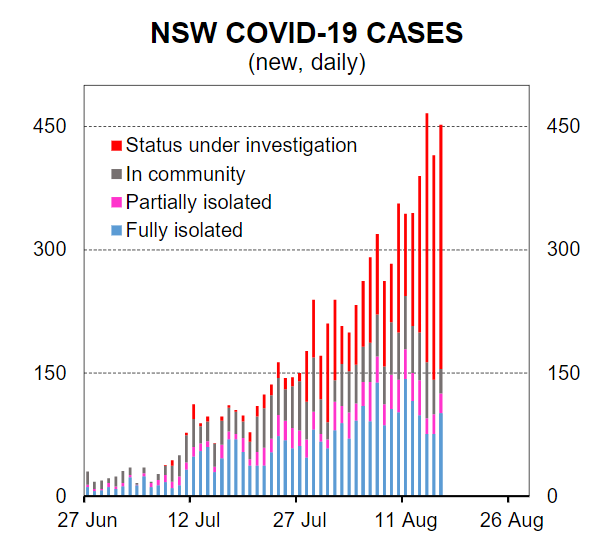
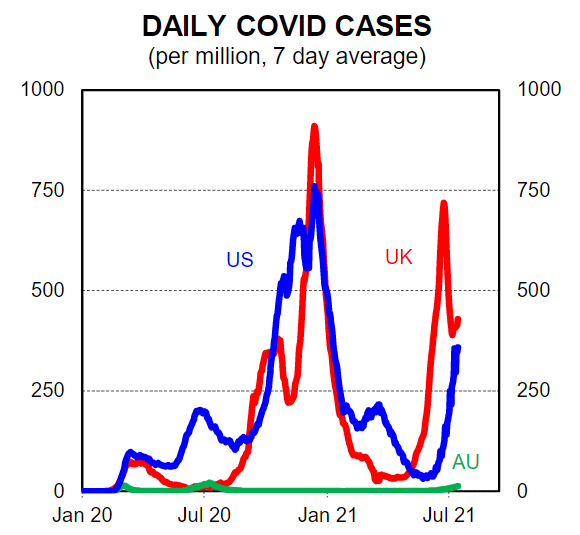
New COVID‑19 cases will surge on reopening in NSW as has been the case overseas (we expect the reopening to occur in mid‑November as per our updated economic outlook published on July 28). It will simply be a matter of time before the virus is rampant across the entire country.
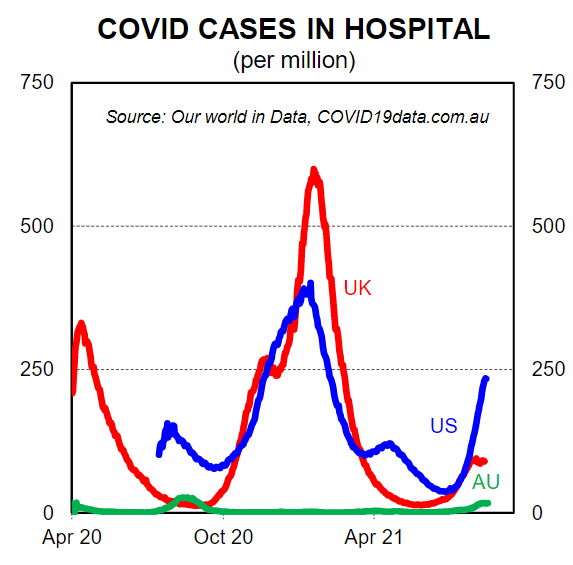
For the first time Australia will experience ‘living with COVID’. This is likely to mean that there will be a significant period of adjustment for households and businesses as the virus circulates within the community in large numbers and hospitalisations rise. It will mean that the economic recovery, at least initially, is a bumpy ride.
For a large chunk of the population, pent‑up demand will be unleashed and that will boost services consumption. But many individuals may be deterred in the beginning from getting out and about as COVID cases increase significantly. Indeed it is likely that a large chunk of office workers will want to continue to work from home as COVID cases spike, which would have implications for CBDs. More targeted fiscal support will be required to keep businesses afloat during this period.
It will take time for the labour market to heal once the economy reopens. Not all workers stood down due to the current lockdowns will have a job to return to. Our expectation is that the unemployment rate will not reach its June 2021 low of 4.9% until mid‑2022. In contrast the RBA expects the unemployment rate to be 4.5% by mid‑2022.
In time we will publish a fuller assessment of what we think the reopening will mean for the economy in the short run. But at this juncture we want our readers to be aware that the economic reopening, particularly in NSW, will be very different to exiting previous lockdowns. In short, we anticipate an uneven reopening of the economy, which means it will take time for economic momentum to build again.
The medium term for Australia still looks very good provided fiscal support remains significant as households and businesses adapt to ‘living with COVID’.