There are lots of US jobs report bulls out there. My own experience is twofold. Jobs reports are not much easier to trade than GDP reports. That said, jobs reports have typically overshot in pandemic recoveries. Standard Chartered takes that to the extreme in a new note.
We expect the US April non-farm payroll report to show an increase of 1.5mn versus the consensus of c.1mn, and the number could well be higher, in our view. Of 69 forecasters in the Bloomberg consensus, 33 see 1mn jobs or more; our forecast is close to the top. Our judgment is that it would take 2mn jobs for investors to think that the Fed might reconsider its view that the tapering discussion is premature. We think investors will see anything below 1.5mn as a continuation of strong data, but not enough to shift the Fed. Between 1.5 and 2mn there is likely to be uncertainty on Fed perceptions.
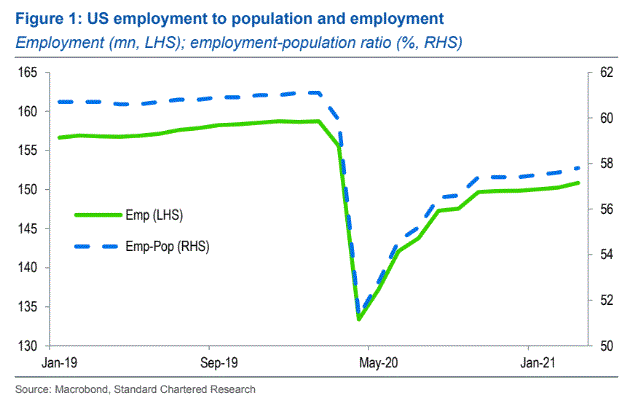
2mn+ jobs would be enough to get 10Y UST yields back over 1.60%, in our view, even if such strength is not proof of what the Fed dubs “substantial progress”. This could further erode the low asset-market volatility of recent months. Below 1mn jobs, yields could come off sharply. We do not see 1.0-1.5mn jobs as a sufficiently significant positive surprise to bond investors. Yields could fall on relief that the surprise was not greater. For FX, the 2mn+ outcome with higher yields would probably be risk-off, and a USD plus. Vulnerable high-yielding EM currencies such as the TRY would likely suffer the most. In G10,commodity currencies may be vulnerable because of positioning and because investors see the yield impact as more important than the activity surprise. The best outcome for EM and commodity currencies is probably job growth between the 900,000 and 1.25mn, strong but not threatening from a Fed perspective.