Speculation is mounting that Greater Melbourne will be plunged into its fourth hard lockdown after a Victorian man caught the Indian strain of the virus while staying in an Adelaide quarantine hotel earlier this month before bringing it into Melbourne.
The man in his 30s from Wollert had travelled extensively around Melbourne while he was most likely infectious, including on public transport.
To date, the virus has spread to eight other people in Northern Melbourne. However, one of the infected attended the Collingwood-Port Adelaide football game at the MCG last weekend, which authorities are concerned could be a super spreader event.
Authorities are also yet to find the missing link between the Wollert man and case 5:
“It may be the missing link. His initial recollections don’t overlap with any of the Wollert case’s exposure sites, so there’s no definitive link to that case, even though we know there’s a genomic link,” Prof Sutton said.
“There may still be another intermediary. We need to explore that.”
This morning the outbreak has grown to fifteen linked cases and another lockdown looms as a real possiblity.
I hate to sound like a broken record, but this incident highlights, yet again, the lunacy of using densely-packed hotels in capital cities for quarantining purposes. These sites have adjoining rooms, shared hallways and shared ventilation. These factors make them ideal conduits for passing the virus between guests, onto staff, and then into the community.
Regular quarantine leakages into the community since the pandemic began is empirical evidence supporting this view.
Quarantine simply must be shifted out of hotels into low density, open air facilities outside of capital cities. Northern Territory’s Howard Springs Facility provides the ideal template:
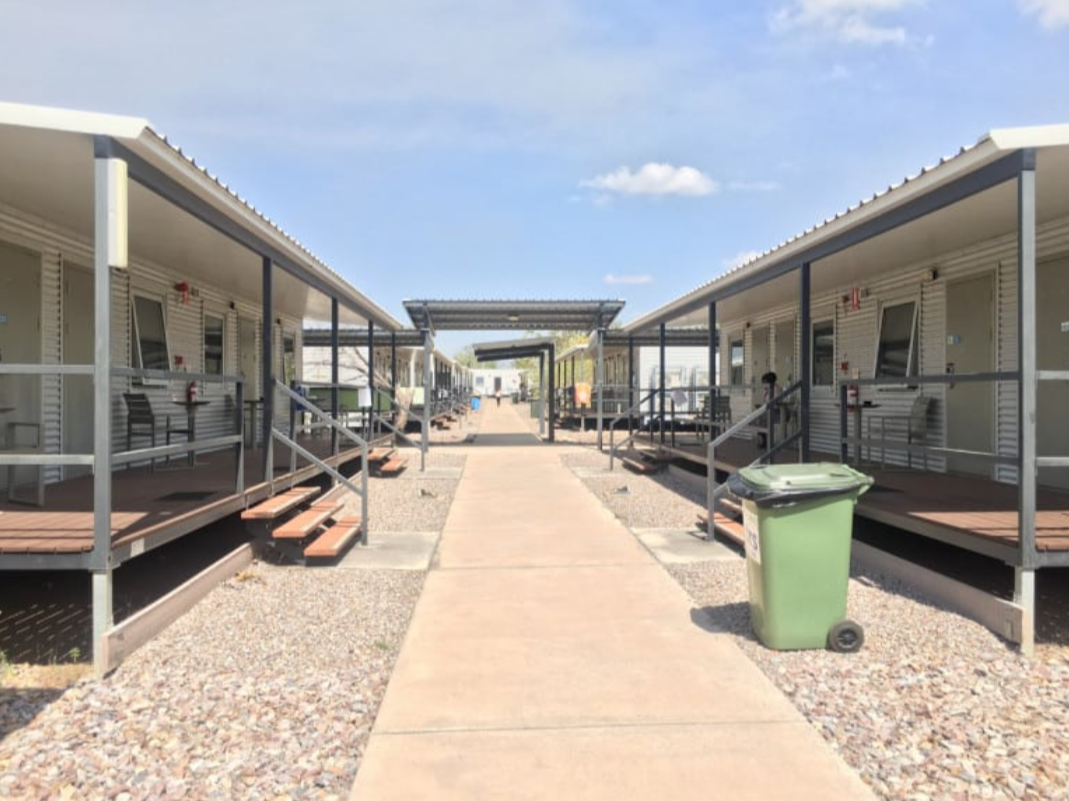
The spacing of guests and abundant fresh air makes Howard Springs the ideal quarantine facility.
These types of facilities offer obvious benefits over conducting quarantine in capital city hotels, including:
- They are located away from major population centres;
- They provide abundant fresh air and space between guests and staff; and
- They provide greater comfort than being stuffed into a hotel room for two weeks.
The costs of shutting down major population centres due to quarantine breaches far outweighs the cost of building these facilities.
Yet this month’s federal budget contained billions of dollars of funding for everything but the construction of national quarantine facilities. This is despite the federal government having constitutional responsibility for quarantine.
A robust quarantine system remains Australia’s primary defence against the virus and the only way to prevent further virus outbreaks and costly shutdowns.
The failure of our governments to learn from their repeated mistakes is deplorable.