
After the GFC, the developed world spent years killing its own growth unnecessarily as it sought to dramatically consolidate public deficits built up by stimulus. This was one key component of secular stagnation. Now, the rules have changed. Goldman sums it up:
The old fiscal worry
- Policymakers and economists have rethought old ideas about fiscal sustainability in recent years as interest rates have declined. In today’s Daily, we recap a recent discussion of new approaches to assessing fiscal sustainability among leading macroeconomists.
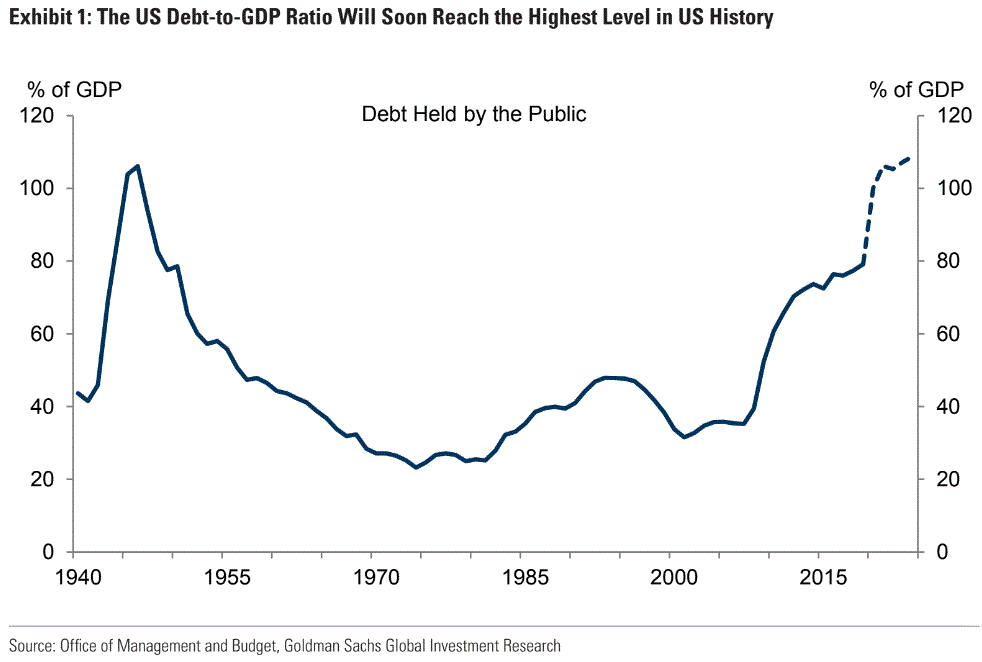
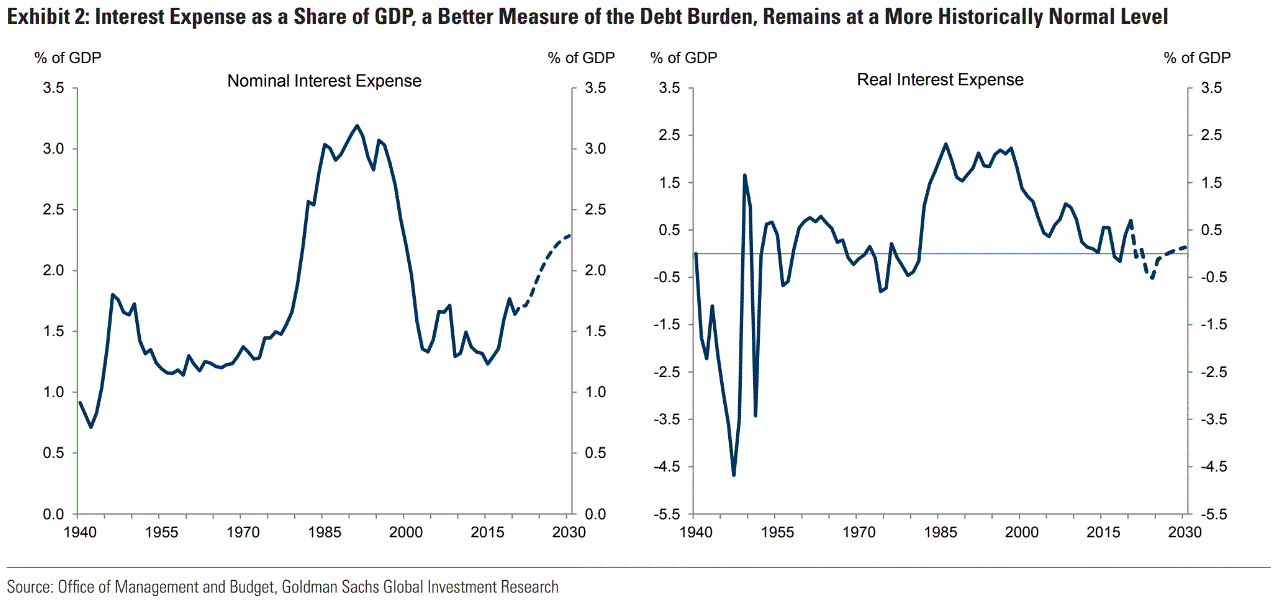
- Many investors and policymakers are accustomed to thinking about fiscal sustainability in terms of the debt-to-GDP ratio, which will soon rise to the highest level in US history. In a recent study, Jason Furman and LawrenceSummers argue that a better measure of the debt burden is real interest expense as a share of GDP, which captures the cost of servicing the debt, adjusting for inflation. That measure is currently at a more historically normal level.
- Debt servicing costs are low at the moment in part because economic activity is still depressed and markets do not expect the Fed to normalize interest rates fora while. But even the further increases in yields that our interest rate strategists forecast would leave debt-servicing costs well within the normal historical range.
- The participants in the recent discussion identified two key risks to this mostly reassuring new view of fiscal sustainability. First, slowing the rise in debt servicing costs will likely require changes to entitlement spending, which under current law is projected to grow indefinitely as a share of GDP. Second, the neutral interest rate is quite uncertain in the long run, and a high debt-to-GDP ratio would amplify the fiscal cost of any surprise increase in interest rates.
The new fiscal happiness
If on no other front then this is where Modern Monetary Theory has penetrated the political economy.
I really wouldn’t worry too much about long-term inflation, if it rises then so will the tax take and inflate the principal away.
Where MMT will become a problem in time is arsehole politicians printing money to spend on whatever they like, not on what we need.
It will be interesting to see which way the Morrison Government goes. Traditional bearers of the austerity torch are closing in, at the AFR:
S&P’s lead credit analyst for Australia, Anthony Walker, says that federal and state deficits of about 14 per cent of GDP forecast for fiscal 2021 are “inconsistent with a triple-A rating if it were to remain anywhere near that level”.
…“A narrowing towards 3 per cent in two years’ time is more consistent with a triple-A rating,” Mr Walker said, with the general government deficit measure that S&P uses in mind.
“If it was still around 4 per cent, 5 per cent, or 6 per cent in a couple of years’ time, then there could be a situation where the negative outlook is triggered and the rating is lowered.
My advice is to ignore them completely.
