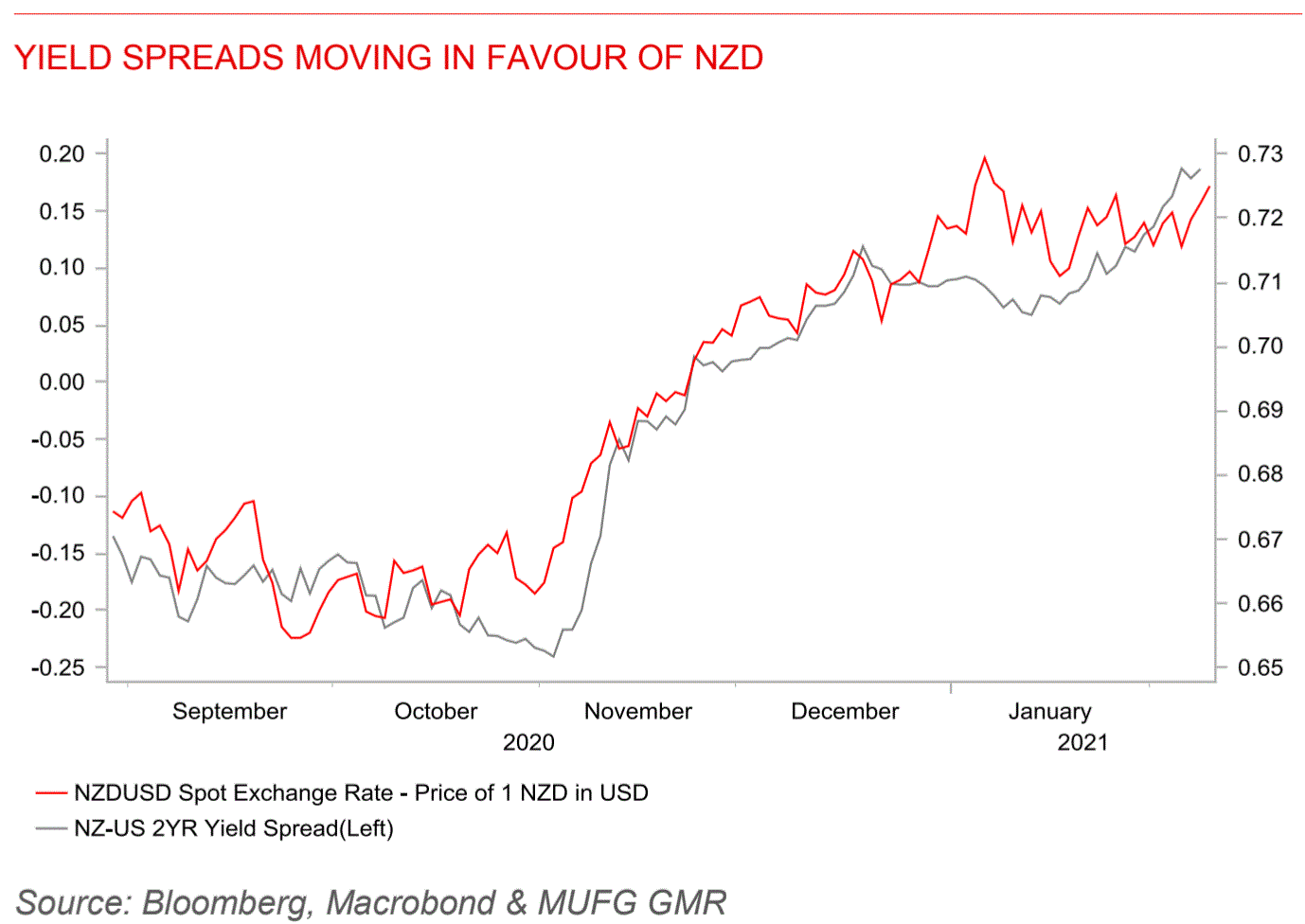
For many years now MB has promoted the notion that macroprudential tightening can suppress house prices and stop currencies from following interest rates higher. Today that idea is not working in New Zealand after the RBNZ announced renewed MP tightening the currency took off, dragging up the Australian dollar with it. MUFG has more:
RBNZ responds to building housing market risks thus dollar has continued to reverse recent gains during the Asian with the dollar index having extended decline to almost 1% from the intra-day high on Friday prior to the release of the weaker than non-farm payrolls report for January. The US dollar sell off overnight has been relatively broad-based. The top performing currency has been the Russian rouble which is befitting from the rising price of crude oil in the current reflationary trading environment (click here). The price of Brent has extended its advance above USD60/barrel overnight hitting an intra-day high ofUSD61.27/barrel. Other commodity-related currencies have also strengthened including the New Zealand dollar which has briefly risen back above 0.7250. Policy developments inNew Zealand have attracted market attention overnight after the RBNZ tightened macro-prudential policy in an attempt to dampen building risks in the domestic housing market. The RBNZ has stated that it will reinstate mortgage lending restrictions on 1st March and tighten them further for investors from 1stMay.The re-introduced lending restrictions mean that most owner-occupiers will need a deposit to get a mortgage, while investor will need 30%. From 1st May, the required down-payment for investors will rise to 40%.
RBNZ Deputy Governor Geoff Bascand warned that “a growing number of highly indebted borrowers, especially investors, are now financially vulnerable to house price corrections and disruptions to their ability to service debt”. They are concerned about the risk of a sharp correction in the housing market poses for financial stability especially as there is “evidence of a speculative dynamic emerging with many buyers becoming highly leveraged”. Finance Minister Grant Robertson has also added that the government will soon unveil measures to help curb housing demand. The building risks to financial stability from the housing market have been one of the negative side effects of running loose monetary policy to support growth. According to one measure, house prices have increased by 12.8% over the past year. As a first step the RBNZ and government are focusing on macro-prudential measures to dampen risks posed by the housing market. However, the developments will also encourage some speculation that the RBNZ may eventually need to tighten monetary policy sooner as well. The kiwi is already benefitting from the scaling back of expectations for further RBNZ rate cuts as the economic recovery in New Zealand has proven stronger than expected.
Context is key here. At the moment markets are seized by the reflation trade so any sign of tightening is interpreted as bullish. This will not last. As the global recovery accelerates and the early tighteners begin to lag, their currencies will underperform. I expect precisely the same dynamic to hit China and CNY in H2.
That is, so long as the RBNZ has the will to slow the housing market with more MP as necessary. It works but it takes time.
David Llewellyn-Smith is Chief Strategist at the MB Fund and MB Super. David is the founding publisher and editor of MacroBusiness and was the founding publisher and global economy editor of The Diplomat, the Asia Pacific’s leading geo-politics and economics portal.
He is also a former gold trader and economic commentator at The Sydney Morning Herald, The Age, the ABC and Business Spectator. He is the co-author of The Great Crash of 2008 with Ross Garnaut and was the editor of the second Garnaut Climate Change Review.