
The property lobby is putting on its bravest face in the face of the COVID-19 economic meltdown, soothing punters that the market will quickly bounce back once the lockdown has ended:
Propertyology director Simon Pressley said the property market would rebound just like it did after past crises, such as the 1990s recession, the global financial crisis (GFC) of 2007-2009 and the 2019 market downturn.
“While we all take one for the team to contain this god-awful nuisance of a germ, it is shelter that we are bunkering down in,” he said.
“For the moment, real estate prices are largely on hold while everyone is confined to cocoons, (but) there will be an enormous release of pent-up demand for goods and services.
“For property, it’s likely to be akin to a flock of seagulls fighting over a chip. Ten years from now, those who took advantage will be laughing all the way to the bank”…
The biggest global economic downturn in history hit from mid-2007 to early 2009. But Melbourne’s property market was only marginally affected, with realestate.com.au figures showing the median property price fell just 1.31 per cent from September 2008 to May 2009.
Mr Pressley said that thanks to the GFC, Australia was now much better equipped to deal with the coronavirus crisis economically…
There are four strong reasons to believe that the property market will not ‘snap back’ into a boom this time around.
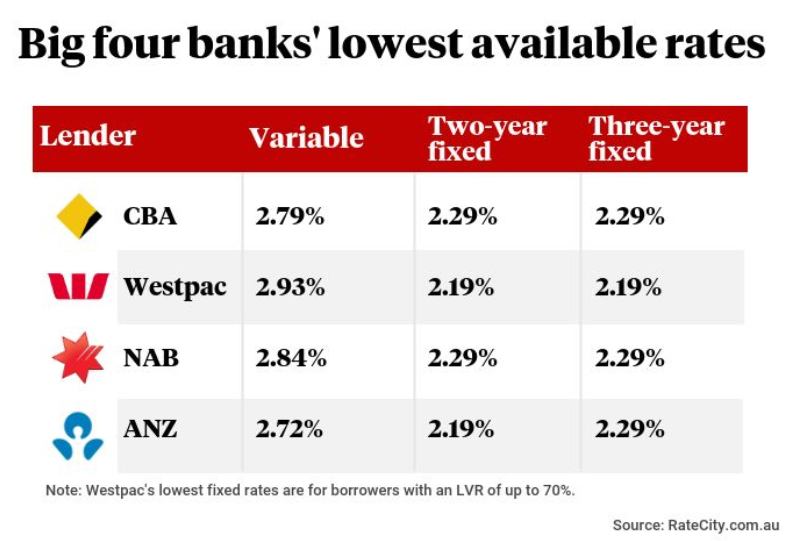
First, the 30-year tail wind from falling nominal mortgage rates is over. Mortgage rates have already fallen to what will likely be their lowest level in history:
Second, recovery from deep global recessions is never fast. Australia’s unemployment rate is likely remain elevated for several years, with falling household incomes a distinct possibility.
Third, net overseas migration is likely to be far lower over the next several years than it was over the past decade.
The weak jobs market, alongside extended restrictions on international travel, will mean that a large chunk of the 2-plus million temporary migrants will return home. There will also be far less demand for so-called ‘skilled’ permanent migrants, which make up around two-thirds of the total permanent intake.
Mass immigration was already unpopular among the community. It will turn toxic amid high unemployment.
Fourth, rents are likely to fall due to the combination of the above factors, alongside the flood of Airbnb’s onto the long-term rental market.
In short, there are strong reasons to believe that Australia’s housing market won’t bounce back like it did after the GFC. The circumstances are totally different this time around.
