
The long boom in temporary visa numbers in Australia has turned into a “shattering” bust according to new official data released to The Australian:
The number of temporary visa holders in Australia dropped by 260,000 in the first three months of this year, with a further 50,000 departing in the first two weeks of April, Acting Immigration Minister Alan Tudge has revealed.
Research obtained by The Australian predicts a further 300,000 people could leave the country to return home by the end of the year…
Analysis by former senior Immigration Department official Abul Rizvi estimates that the number of temporary visa holders could drop to 1.82 million from more than 2.4 million at the start of the year…
He estimated one-fifth of foreign students and one-quarter of temporary foreign workers would go home by the end of this year…
Grattan Institute chief executive John Daley said weaker population growth would focus attention on the recent period of weak growth per capita.
“Per capita recessions will become real technical recessions”, Mr Daley said. “Total growth matters to Woolworths and Westpac and other businesses whose profits depend on population, but it doesn’t help the local gym instructor”…
Mr Rizvi said two decades of high temporary immigration had come to a “shattering halt”… Mr Rizvi urged the government to provide greater support to the estimated 150,000 remaining foreign workers…
Here’s how the so-called “shattering” decline in temporary visa numbers would look, according to Abul Rizvi’s projections:
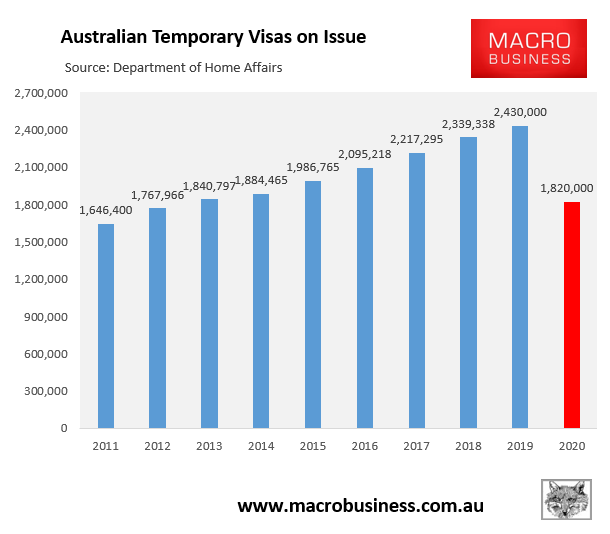
As you can see, temporary visa numbers would still be ridiculously high commensurate with 2012-2013 levels.
The absurdity is that Australian policy makers let temporary visa numbers get so high in the first place amid such a weak economy that was already exhibiting chronically high labour underutilisation and zero real wage growth before the coronavirus outbreak:
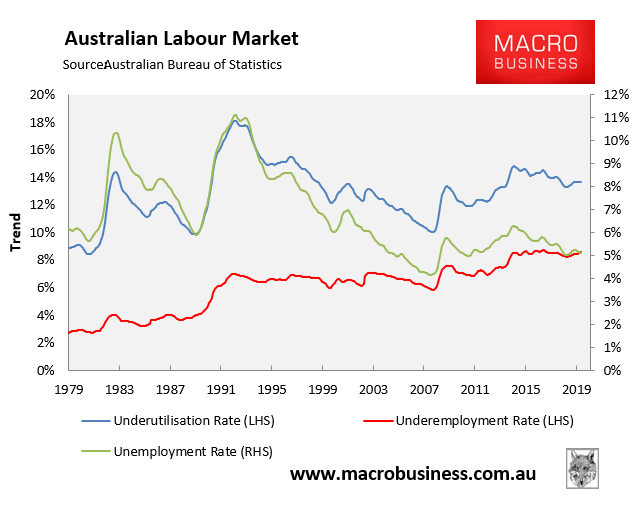
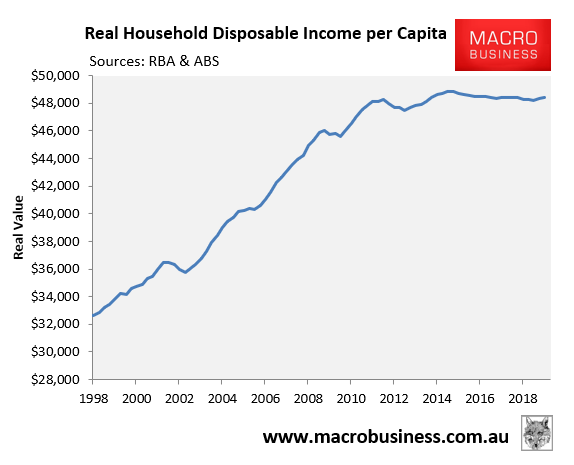
Big Australia shills like Abul Rizvi claimed temporary visas were necessary to plug “skills shortages” across the economy. They also claimed temporary visas gave the economy “flexibility”: the migrant intake could quickly expand when skills were needed but then in times of strife those on temporary visas could return to their home countries. These temporary visas were supposed to act as a shock absorber for the Australian economy.
Now that the Australian economy is facing its biggest downturn in the post-World War II period, with mass unemployment brewing, these same shills are now complaining that temporary visa numbers are falling.
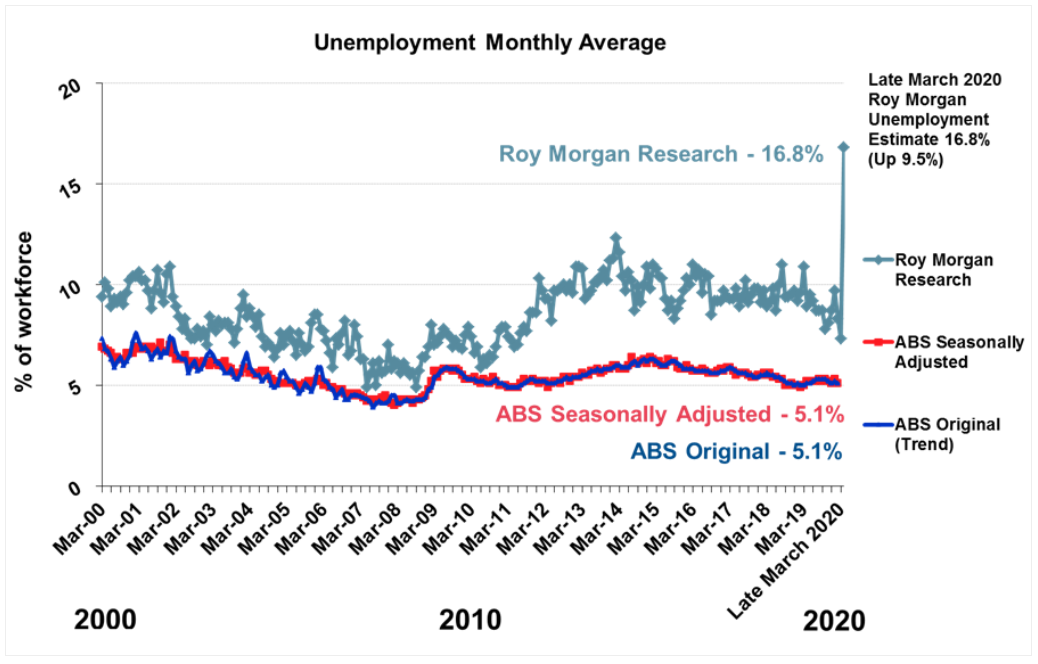
Keeping migrant numbers to artificially high would only worsen Australia’s unemployment queues and further depress wages.
It’s time for this touted “flexibility” in the visa system to be embraced and for a large chunk of temporary migrants to go home.
