She is not happy. Via Westpac’s marvellous Red Book:
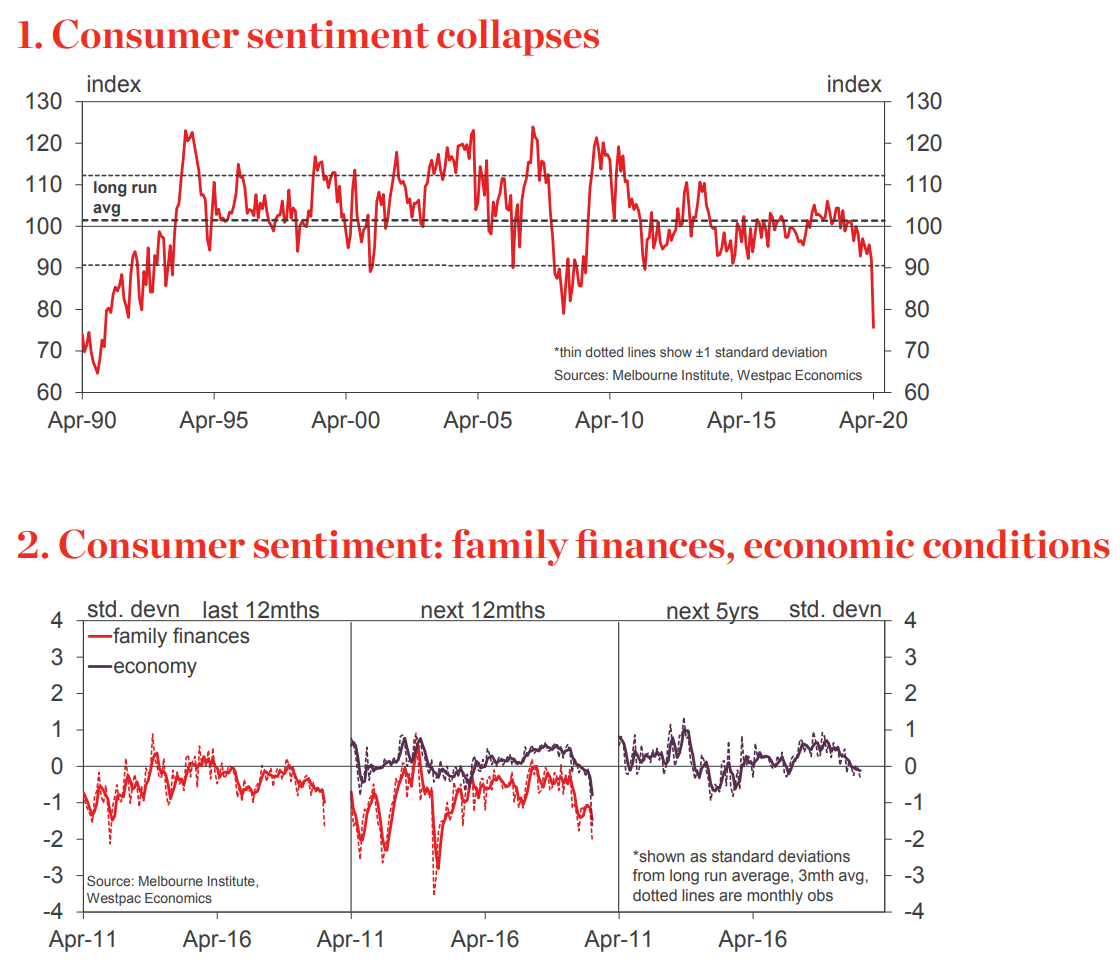
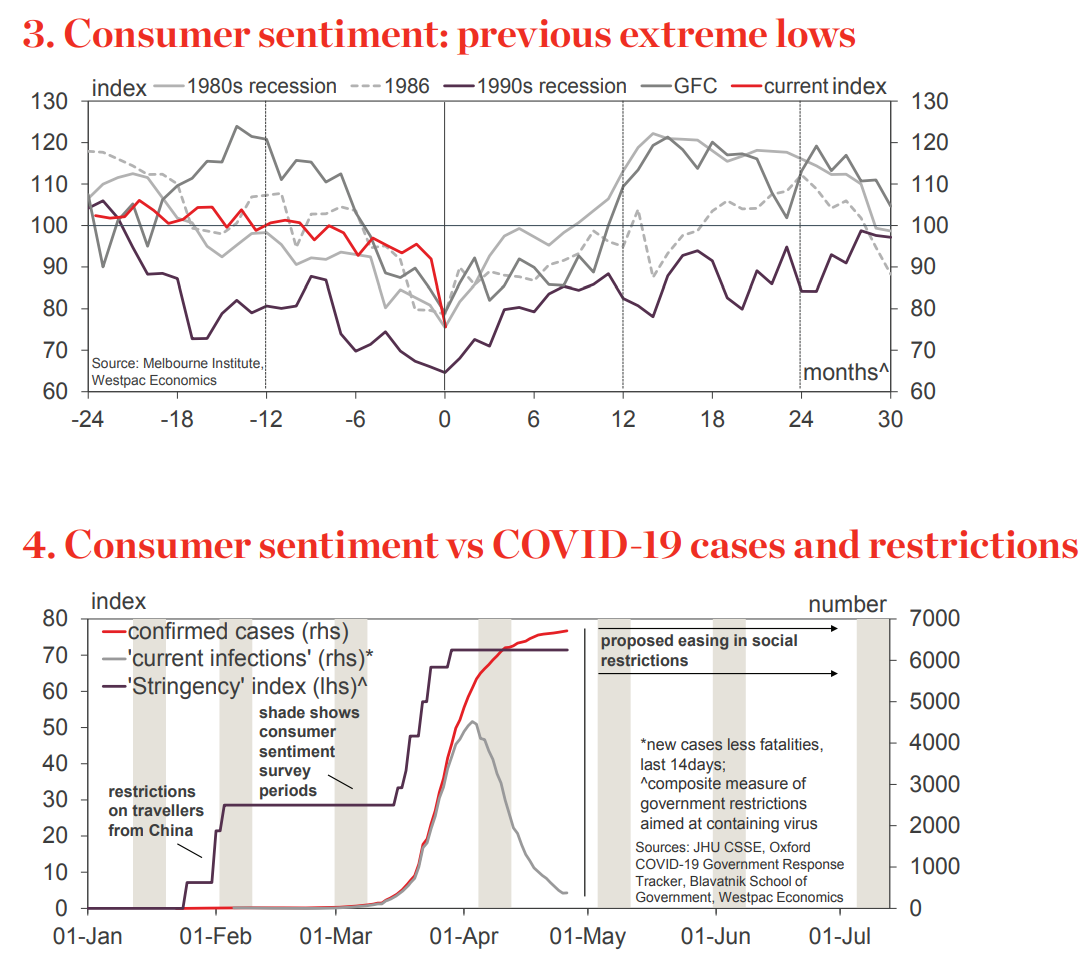
― The Westpac–Melbourne Institute Consumer Sentiment Index plunged 17.7% to 75.6 in April from 91.9 in March. The fall marks the single biggest monthly decline in the 47yr history of the survey and takes the Index beyond GFC lows to levels only seen during the deep recessions of the early 1990s and early 1980s.
― The collapse is in response to a dramatic worsening in the Coronavirus outbreak, which has moved from serious concern a month ago to full-blown pandemic.
― While the April fall is severe, it could well have been worse. Despite the bleak and threatening backdrop, Australia’s pandemic experience has been less debilitating than for many of our peers abroad. Consumer Sentiment remains above the record lows seen during the darkest days of the early 1990s recession.
― Component-wise, the biggest falls were in the near-term outlook for the economy and attitudes towards spending.
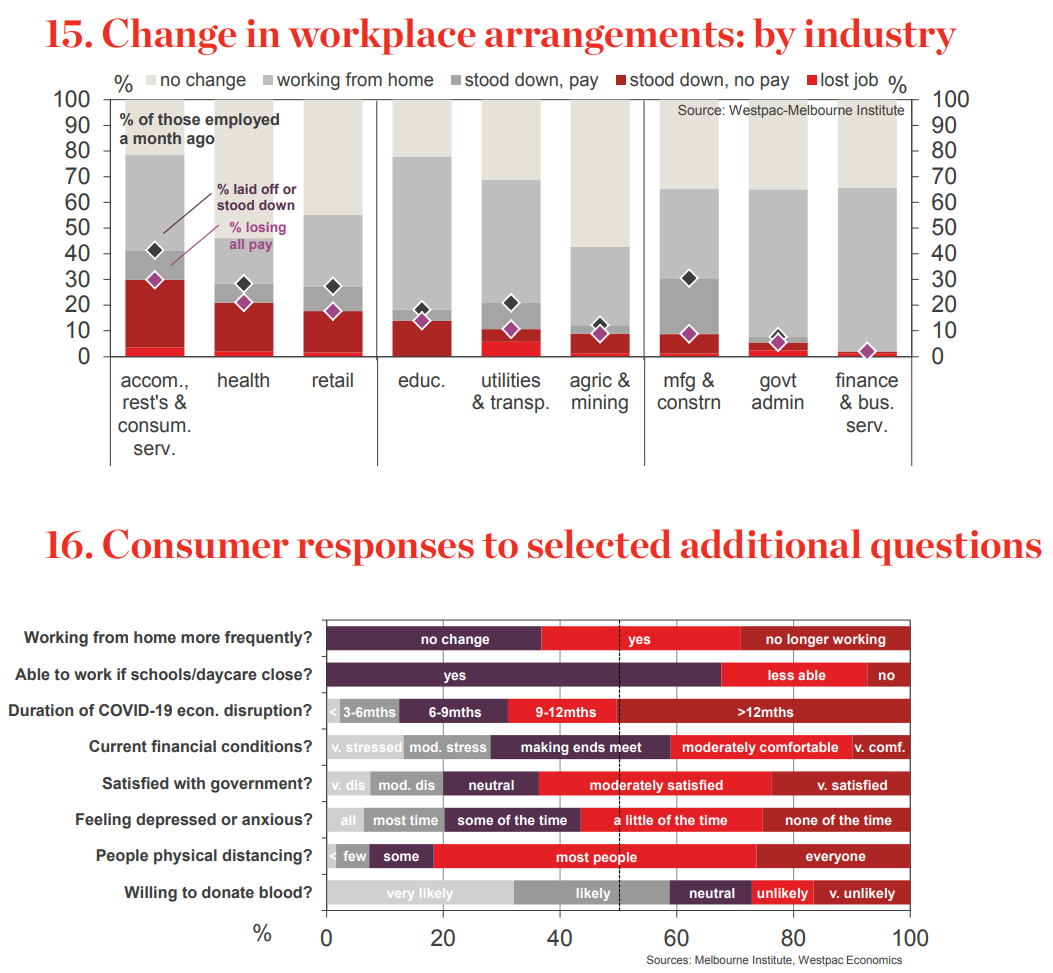
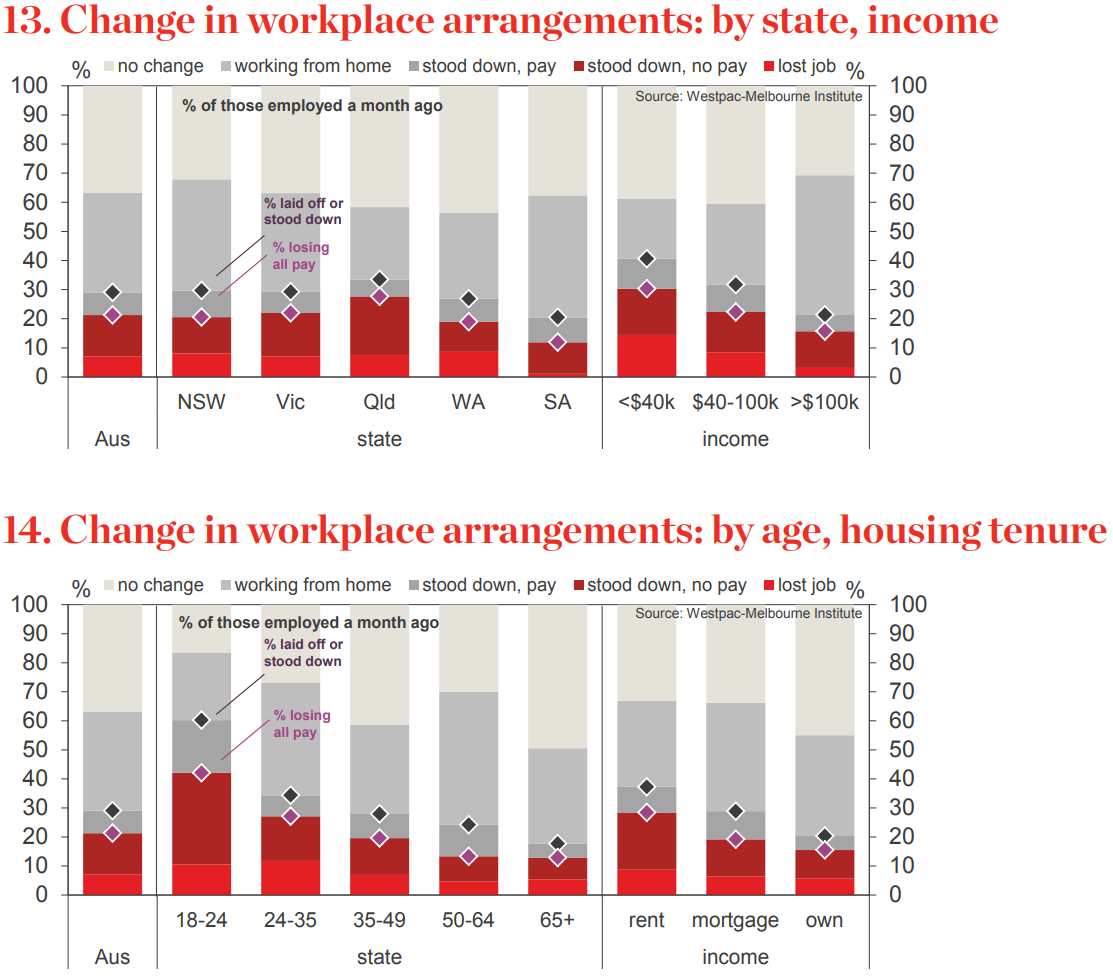
― Responses to additional Coronavirus related questions point to major disruptions to working arrangements, including a high proportion of workers losing all income.
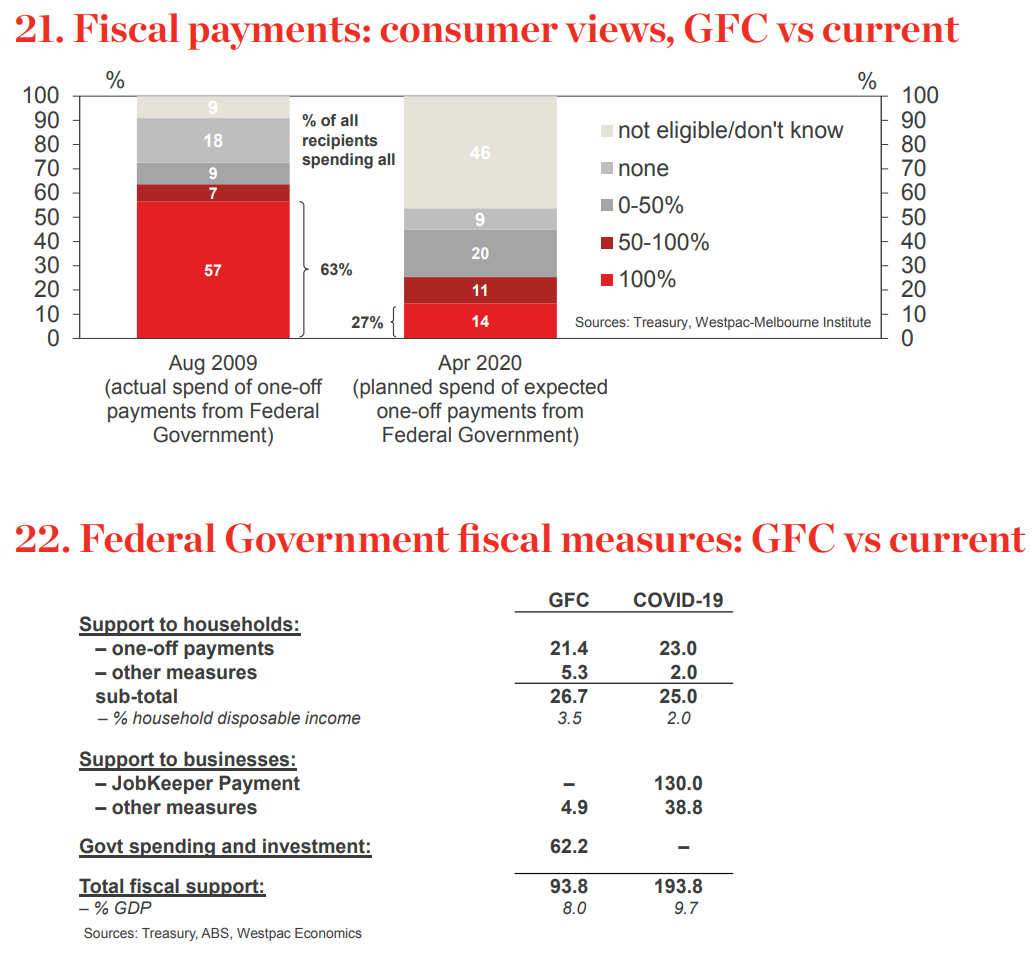
― Post-virus measures of risk aversion are not available – the most recent reading on the Westpac Risk Aversion Index is from March – however it has almost certainly risen from what was a relatively elevated starting point in early 2020, in turn pointing to a lift in savings. Responses to an additional question on fiscal payments suggest a high proportion of these are likely to be saved rather than spent.
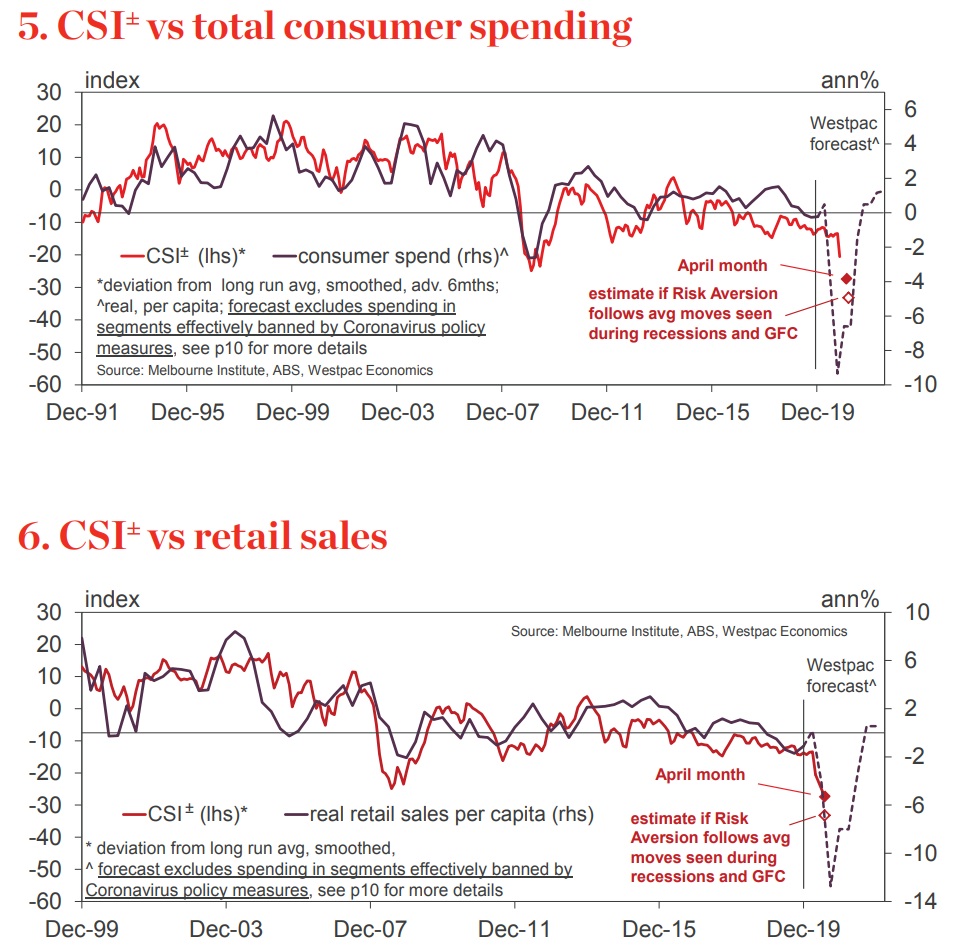
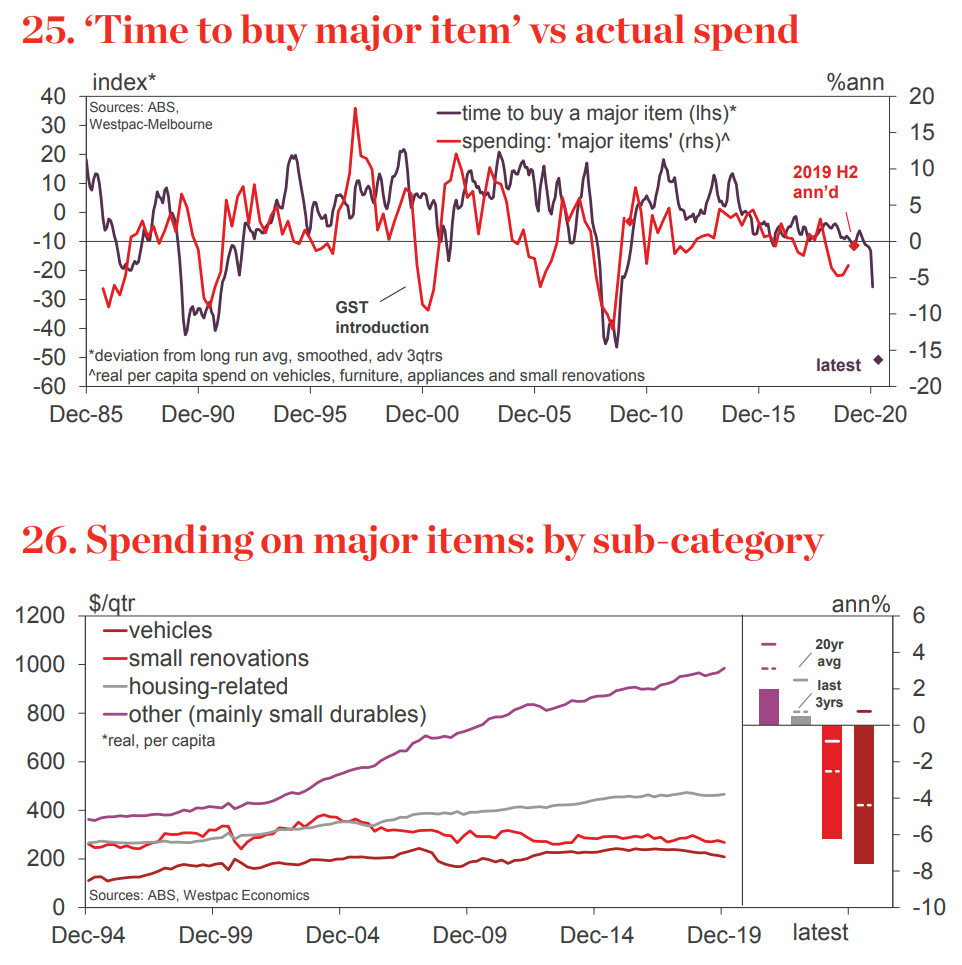
― CSI±, our modifi ed sentiment indicator that we favour as a guide to actual consumer spending, is less useful than usual due to the overriding impacts of social distancing restrictions. That said, the index should give a reasonable guide to spending, excluding the segments most exposed to restrictions. As such, the latest reading is consistent with per capita spending contracting at a 4-5% annual pace.
― Durables spending is set to fall sharply in coming months. The ‘time to buy a major item’ sub-index plunged 31.6% in April – the sharpest fall on record – to 76.2, the lowest reading since the record low of 71 set during the GFC. The drop refl ects multiple factors including: health concerns around being in shopping environments; ‘social distancing’ restrictions; direct pressures on budgets and a reluctance to make ‘big ticket’ purchases.
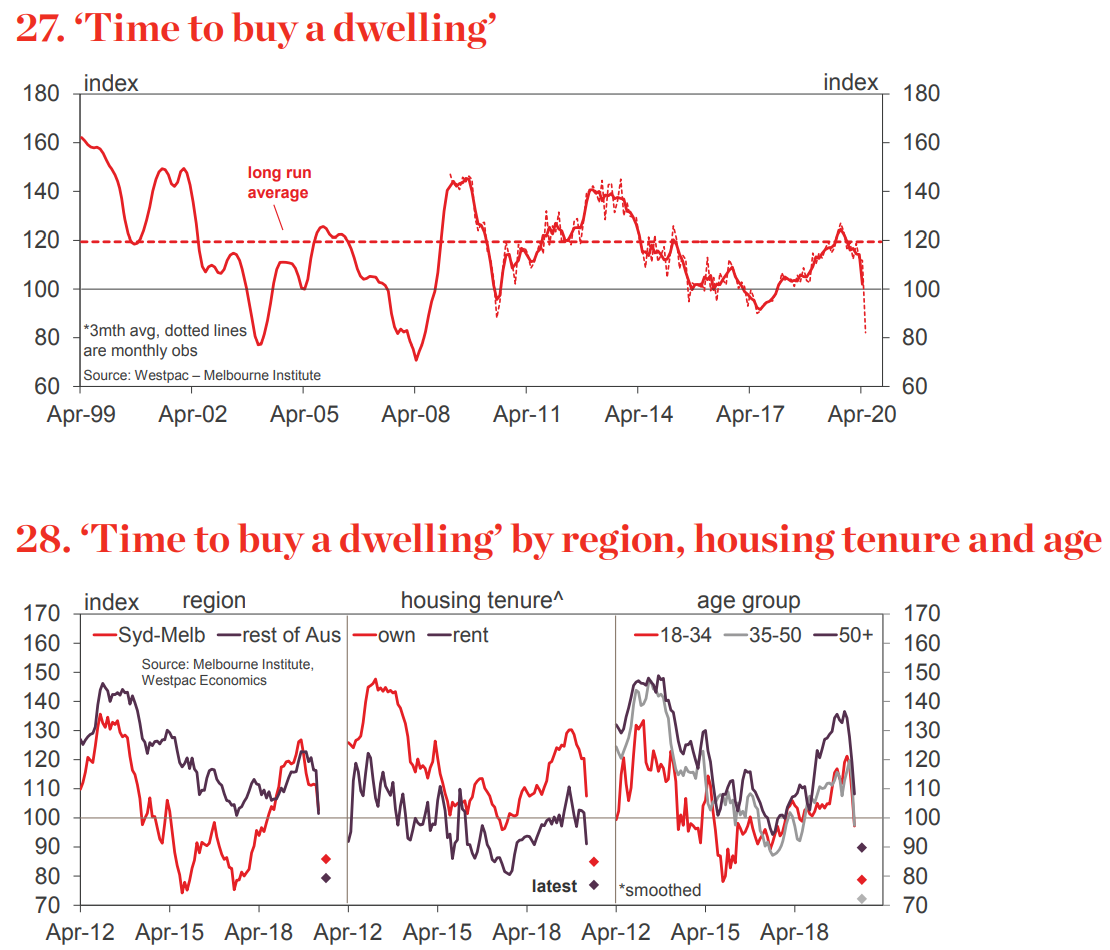
― Sentiment around housing also collapsed in April. The ‘time to buy a dwelling’ index dropped 26.6% – the biggest monthly decline on record. While the index remains above previous cycle lows, it comes despite a further decline in mortgage rates.
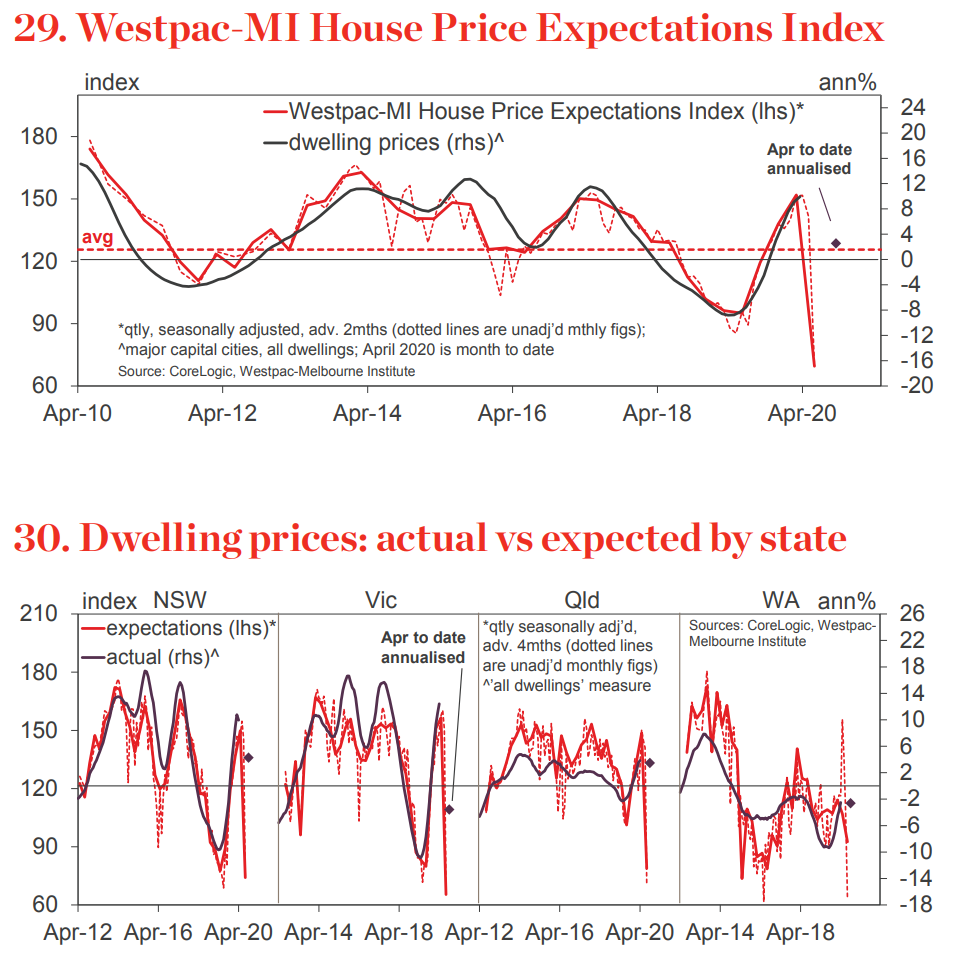
― The Westpac-Melbourne Institute Consumer House Price Expectations Index recorded an extremely sharp 50.8% pull back, the monthly drop four times bigger than any we have seen since running this question regularly in 2009. A material price correction now looks inevitable.
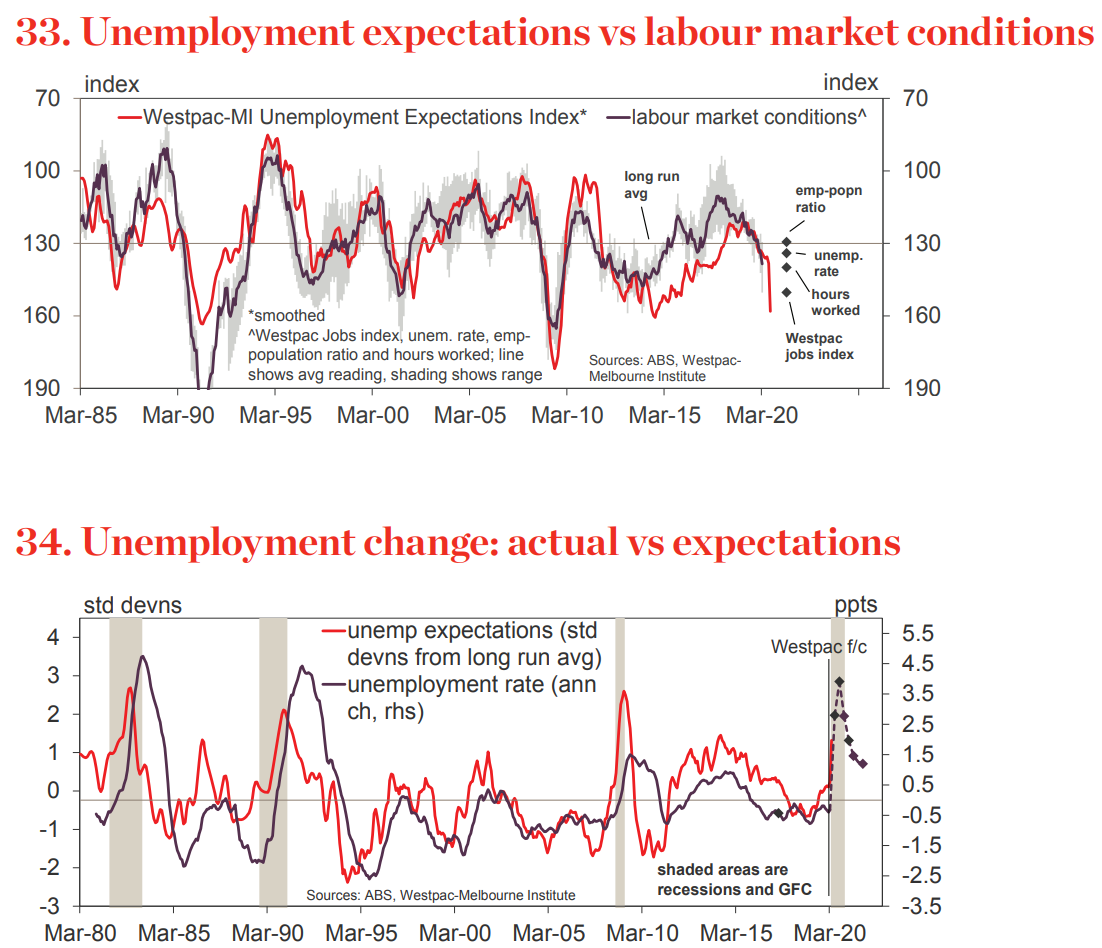
― The Westpac-Melbourne Institute Unemployment Expectations Index jumped 8.2% in April following an 8.5% jump in March. While the index has deteriorated sharply, the overall level is not as dire as for general sentiment – the latest reading is still well below the GFC recession peaks (recall that higher readings indicate more consumers expect unemployment to rise). Some of this likely refl ects an expectation that the Coronavirus shock to labour markets is likely to be temporary.
In short, confidence is destroyed. There’s likely no snap-back coming. And the stimulus to date has only been support which is quickly being squirrelled away.
If ScoMo launches a major reform push around corporate tax cuts into the morass, he will sink with households.
What we need is more traditional stimulus and lot’s of it.
David Llewellyn-Smith is Chief Strategist at the MB Fund and MB Super. David is the founding publisher and editor of MacroBusiness and was the founding publisher and global economy editor of The Diplomat, the Asia Pacific’s leading geo-politics and economics portal.
He is also a former gold trader and economic commentator at The Sydney Morning Herald, The Age, the ABC and Business Spectator. He is the co-author of The Great Crash of 2008 with Ross Garnaut and was the editor of the second Garnaut Climate Change Review.