Ahem…or, is confused by complex industrial relations laws:
Major retail group Wesfarmers has added to the humiliation of the sector’s “endemic problem” of wage theft, with target staff being ripped off by $9 million.
The Perth-based conglomerate admitted to the underpayment this morning when reporting the company’s half-year earnings.
“Payroll errors” at Wesfarmers now equates to $24 million after including the previously revealed $15 million at its industrial and safety division.
This morning’s announcement comes on the back of Coles setting aside $20 million on Tuesday to correct its own payment scandal, following a long list of other businesses across the country.
Wy do these “errors” never result in overpayment?
Becasue wage theft is not some quirk in the mass immigration economic model. It is the mass immigration economic model.
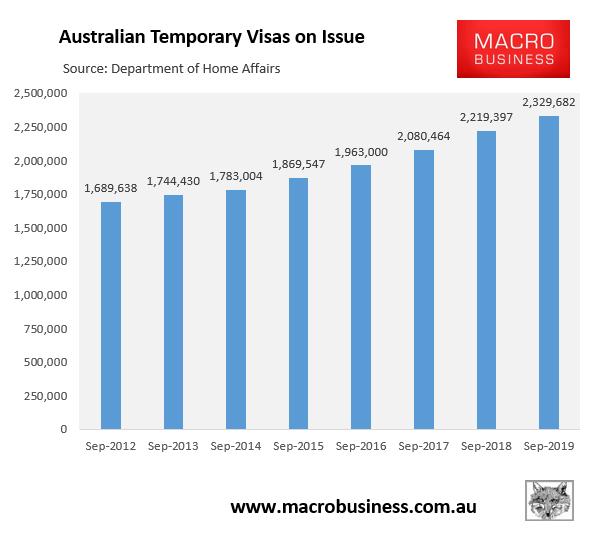
The systemic wage theft from ballooning numbers of temporary migrants is entrenched across the entire Australian economy:
Advertisement
Entire industries have become heavily reliant on migrant workers to perform low-skilled work in the labour market for below award rates, which is unambiguously undercutting local workers and lowering overall wage growth.
Indeed, last year’s Migrant Workers Taskforce’s 141-page report found that “wage underpayment is widespread and has become more entrenched over time”, with as many as half of all migrant workers exploited.
Advertisement
The impact is most pernicious on younger Australians, as explained recently by the Grattan Institute:
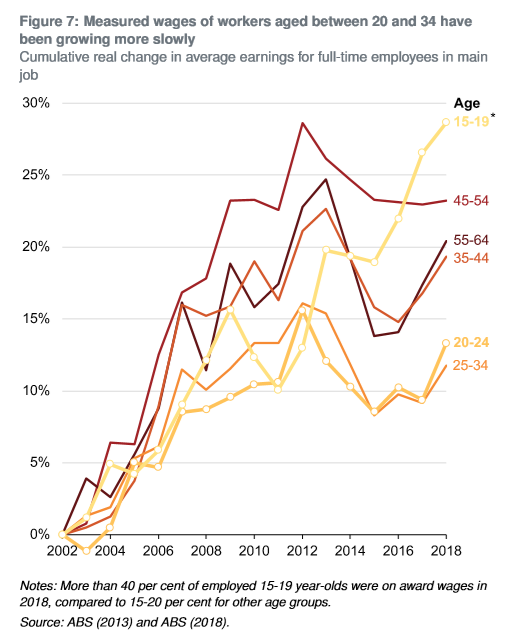
As the Productivity Commission noted, where migration does displace existing populations, it tends to affect people with low skills and youth most. That seems to be happening in Australia. And because international students and backpackers are primarily looking for part-time work, they may affect under-employment more than unemployment…
Low-skill migrants might also put downward pressure on wages (if accurately measured). The measured wages of those aged 20 to 34 have not risen as fast as the wages of older workers for some time (Figure 7)…
Australia is now running a predominantly low-skill migration system. People from this system form a material proportion of the younger workforce. Because of visa conditions, many of these migrants have incentives to work for less than minimum wages, and there is anecdotal evidence that many do. It is impossible for data sources on the Australian labour force to pick up all of this phenomenon. It is possible that the scale of this influx to the labour market is depressing wages and increasing under-employment specifically for low-skill younger workers.
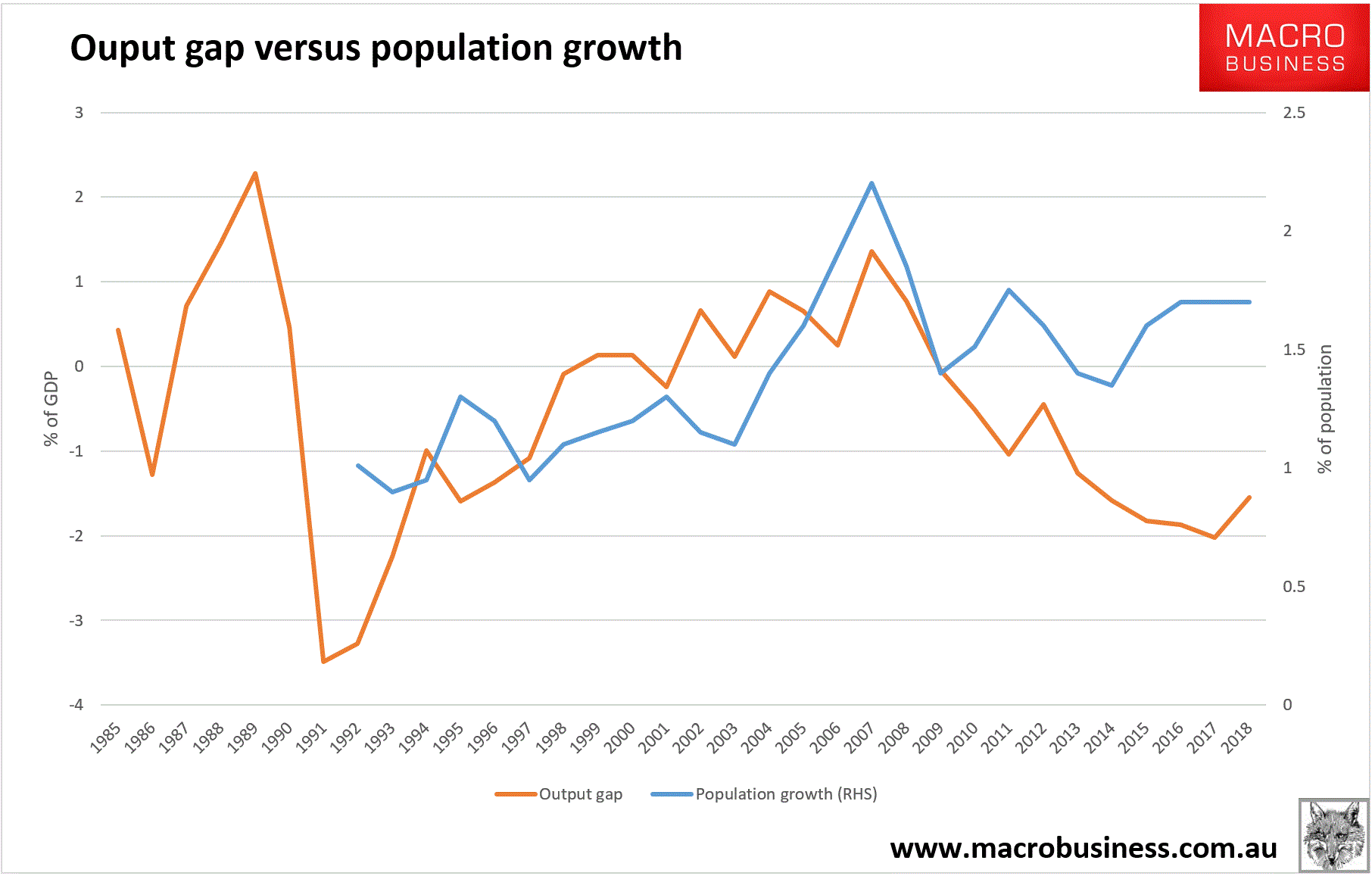
The economics is simple: continually increasing labour supply via immigration necessarily reduces workers’ bargaining power and ergo wages growth. It disguishes the deleterious impacts upon demand by backfilling falling wages with more warm bodies.
Advertisement
Thus you end up with a permanent output gap that steals wages for profits from everybody:
But let’s pretend otherwise because that’s the Strayan way.
David Llewellyn-Smith is Chief Strategist at the MB Fund and MB Super. David is the founding publisher and editor of MacroBusiness and was the founding publisher and global economy editor of The Diplomat, the Asia Pacific's leading geo-politics and economics portal.
He is also a former gold trader and economic commentator at The Sydney Morning Herald, The Age, the ABC and Business Spectator. He is the co-author of The Great Crash of 2008 with Ross Garnaut and was the editor of the second Garnaut Climate Change Review.