Via UBS’ George Theranou, who has been way out in front of all analysts on this for years:
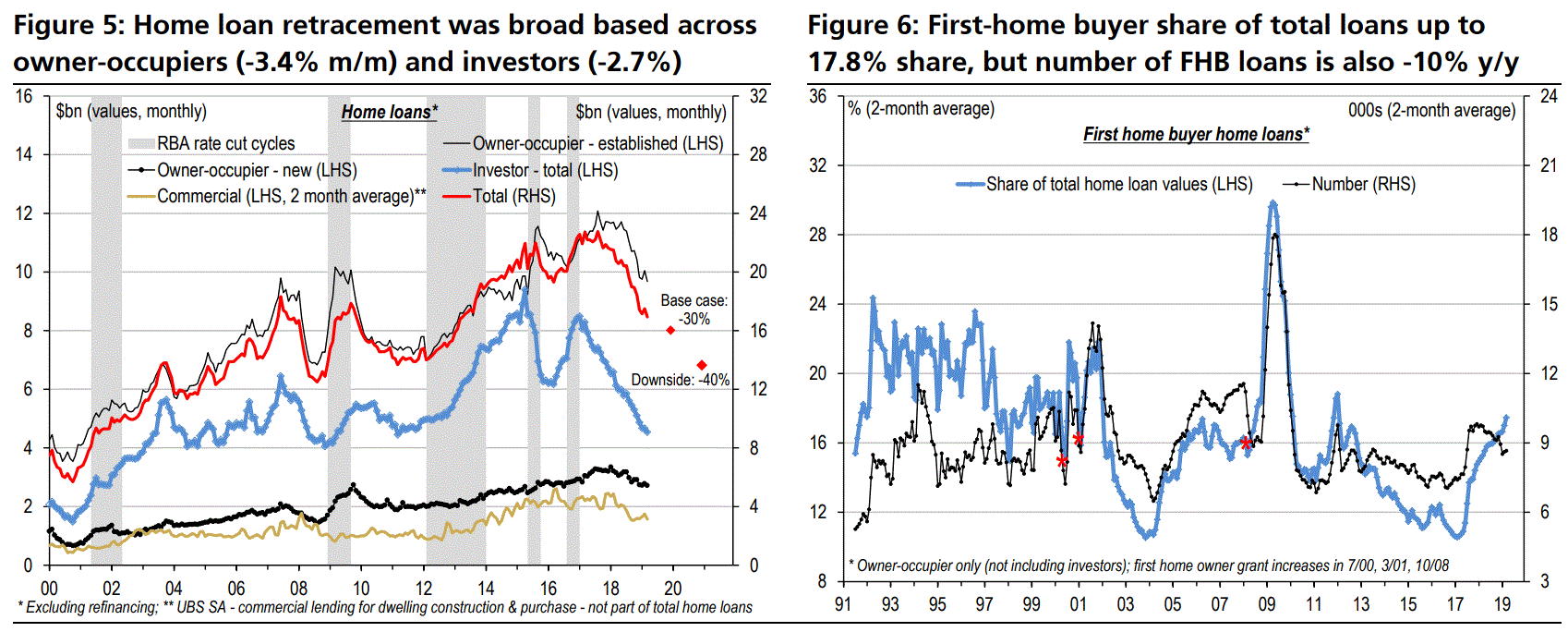
Proposed FHB Deposit Scheme doesn’t materially change our outlook The First Home Buyer Deposit Scheme proposed by the Government (& supported by Labor) potentially allows FHBs to purchase with deposits as low as 5% without paying LMI (normally applicable for deposits <20%). The program is capped at 10k loans p.a. (or ~10% of FHB loans in the last year), & limited to $500m (or ~$50k per loan). Positively, it could add up to ~$3bn+ to loan demand, but is a tiny ~1% share of annual total home loans of $227bn. Borrowers also still need to meet responsible lending & credit assessments, so this doesn’t make a material difference to our outlook.
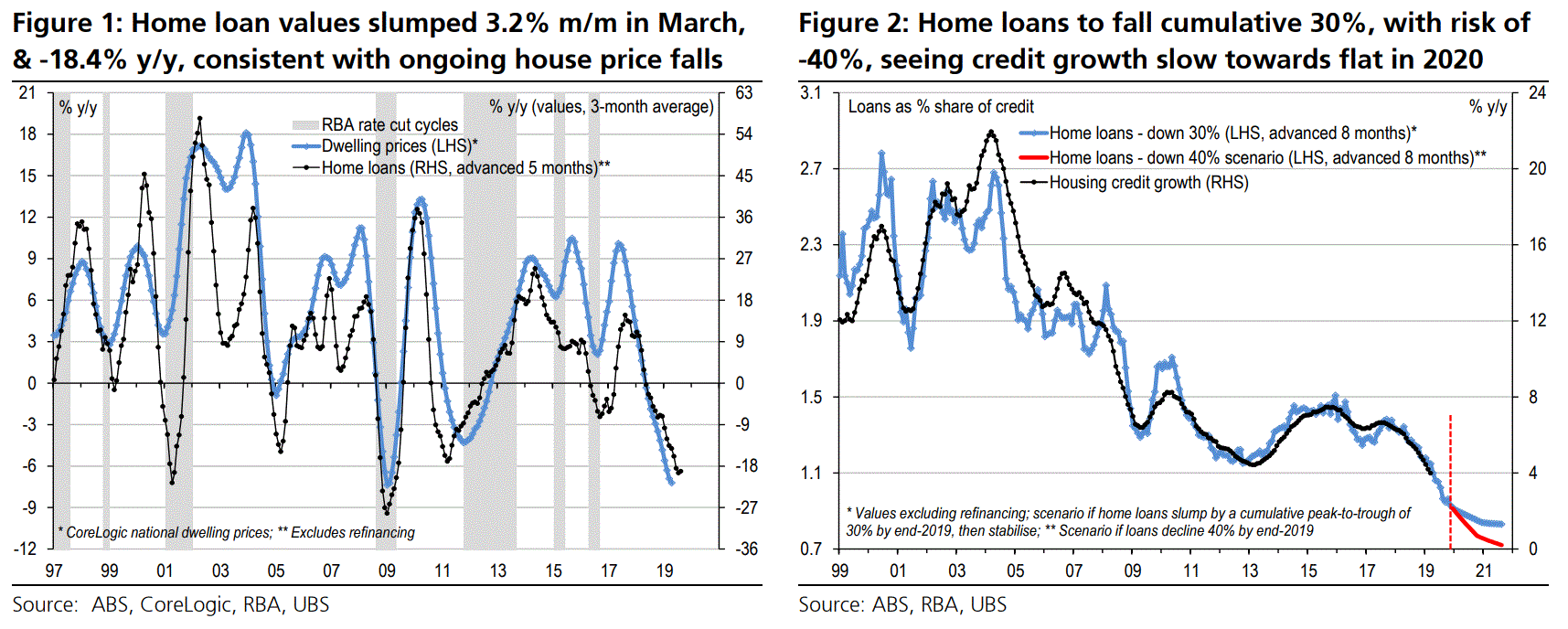
Implications: ongoing tighter credit to see home loans -30%, with risk of -40% Overall, we reiterate that housing hasn’t bottomed as ongoing credit tightening will see loans collapse -30% with risk of a disorderly -40% (so far -26%), seeing housing credit likely slow to 2% y/y by 2020, with increasing risk of flat; & record peak-to-trough drop in prices of 14% (with Sydney & Melbourne ~-20%), nearly double the ~8% decline so far. We also expect real GDP to slow sharply to 1.9% y/y in 2019, the weakest since the GFC, seeing unemployment rise. This sees the RBA cut 25bps in both July & August.
The full text of this article is available to MacroBusiness subscribers
David Llewellyn-Smith is Chief Strategist at the MB Fund and MB Super. David is the founding publisher and editor of MacroBusiness and was the founding publisher and global economy editor of The Diplomat, the Asia Pacific's leading geo-politics and economics portal.
He is also a former gold trader and economic commentator at The Sydney Morning Herald, The Age, the ABC and Business Spectator. He is the co-author of The Great Crash of 2008 with Ross Garnaut and was the editor of the second Garnaut Climate Change Review.