The AFR has some anecdotes from LoanDolphin:
“In some instances, borrowers with a portfolio of three or more properties are selling property to ease the burden and capacity to refinance.”
…”The impact of interest-only loan restrictions has largely played out, but the effect of restrictions on high debt-to-income customers and more scrutiny on income, expenses and valuations are still to come.”
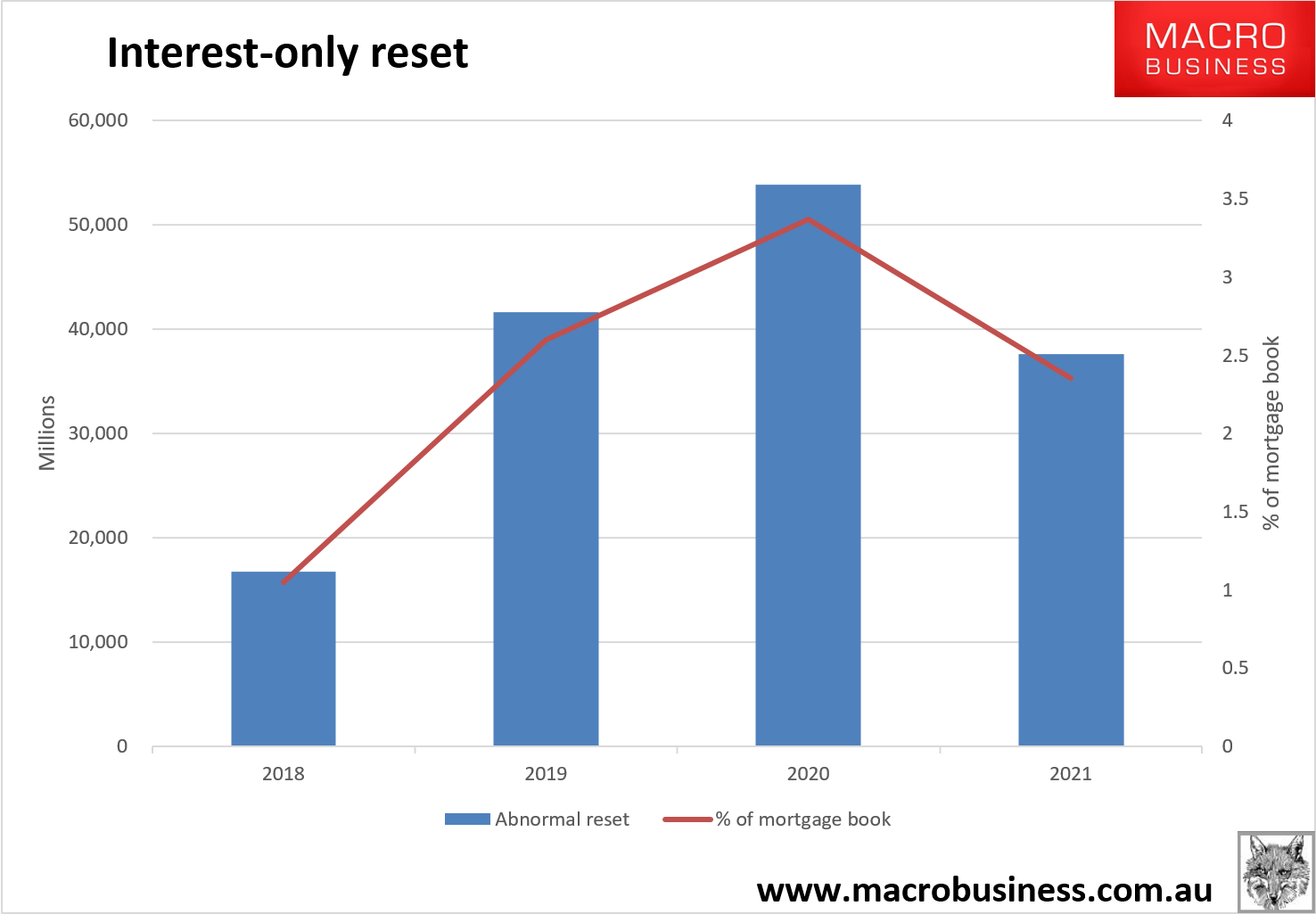
The interest-only shock has not “played out”. It does not peak until 2020:
But, yes, the APRA tightening is still to come. The rich have got anxiety about it:
When it comes to mortgage repayments, high-income earners are the most likely to be overcome by financial stress, at least according to the latest Consumer Anxiety Index by the National Bank of Australia (NAB).
According to the index, mortgage repayment is one of the contributors to the financial stress of households. For the past three months, one in three consumers said they experienced some form of financial hardship.
While low-income earners and middle-aged Australians claimed to have experienced the highest level of financial stress, it is actually the high-income earners who said mortgage repayments were one of their biggest concerns. In fact, 26% of those in the highest income group said they were impacted by their home mortgage payments more than their children’s expenses and level of household debt.
They are right to be worried, also being most exposed to the Chinese withdrawal of capital.
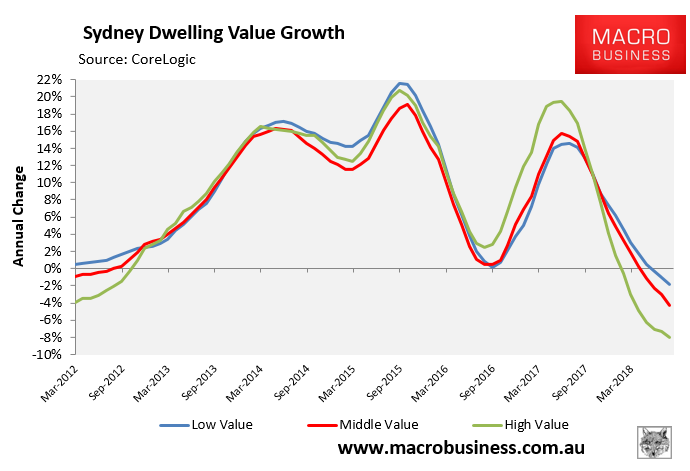
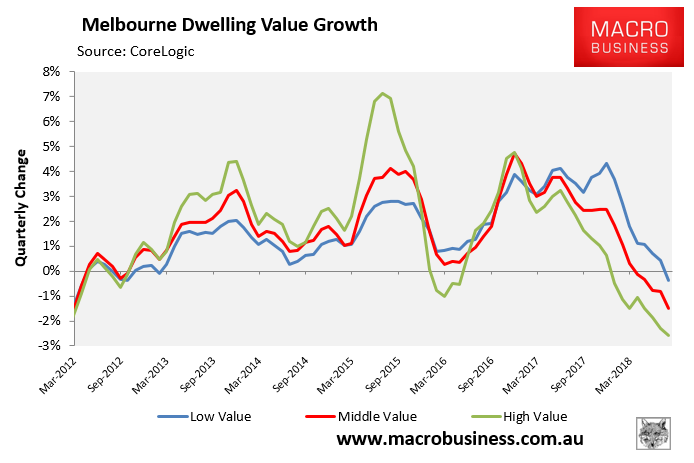
The combined forces has them way out in front of the correction:
More to come.