Super news, Aussie gas suppliers have been trumped again by US, via Reuters:
U.S. liquefied natural gas (LNG) company Cheniere Energy Inc said on Friday it had signed a 25-year deal to supply Taiwan’s CPC Corp, which CPC valued at roughly $25 billion.
Cheniere said it will sell 2 million tonnes of LNG per year on a delivered basis to the state-owned oil and gas company, starting in 2021. It said the purchase price will be pegged to the Henry Hub monthly average, plus a fee.
…“Most importantly, it helps to further achieve the diversification of LNG sources and stability of energy supply into the Taiwan market that are among CPC’s key objectives,” CPC Chairman Tai Chein said in a statement on Saturday.
Chein said that LNG buyers see Qatar, Australia and the United States as leading suppliers in the future.
CPC has already been importing substantial volumes from Qatar and Australia.
The deal is also viewed as an important part of Taiwan’s efforts to reduce its trade surplus with the United States, according to a source familiar with the government’s thinking.
The contract is a significant boost to Taiwan’s trade relations with the United States, particularly given the Trump administration’s focus on trade with Asia, the source said.
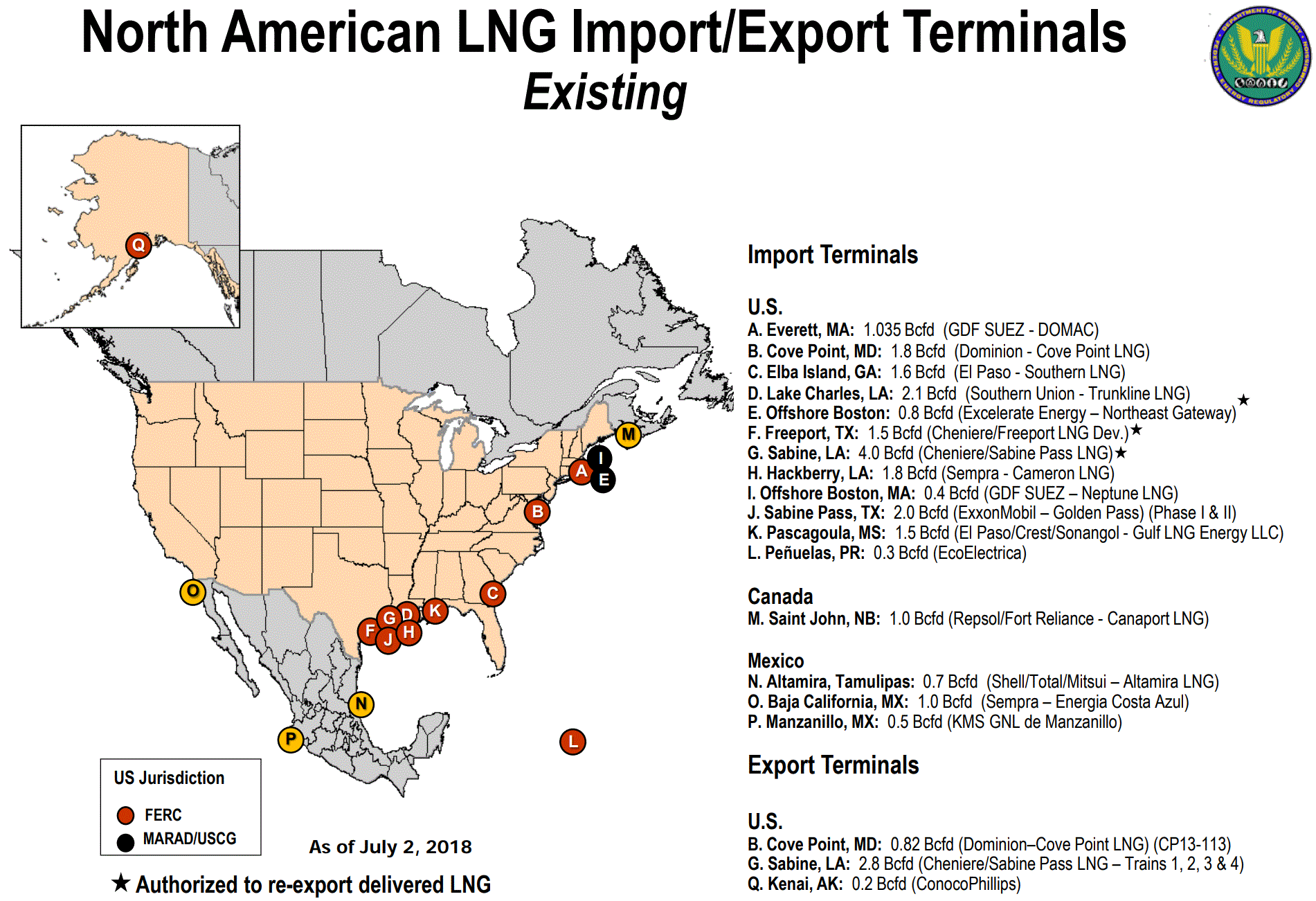
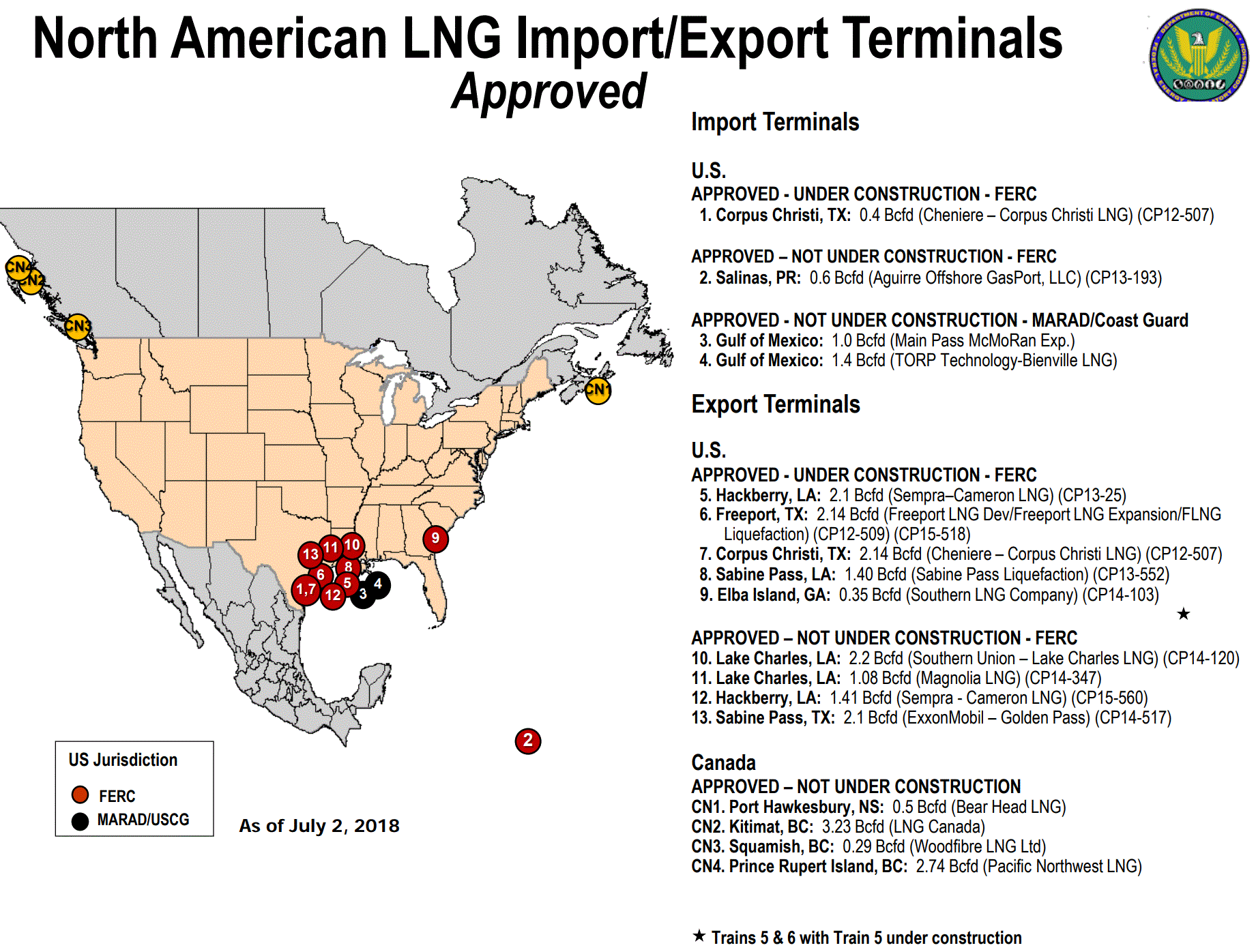
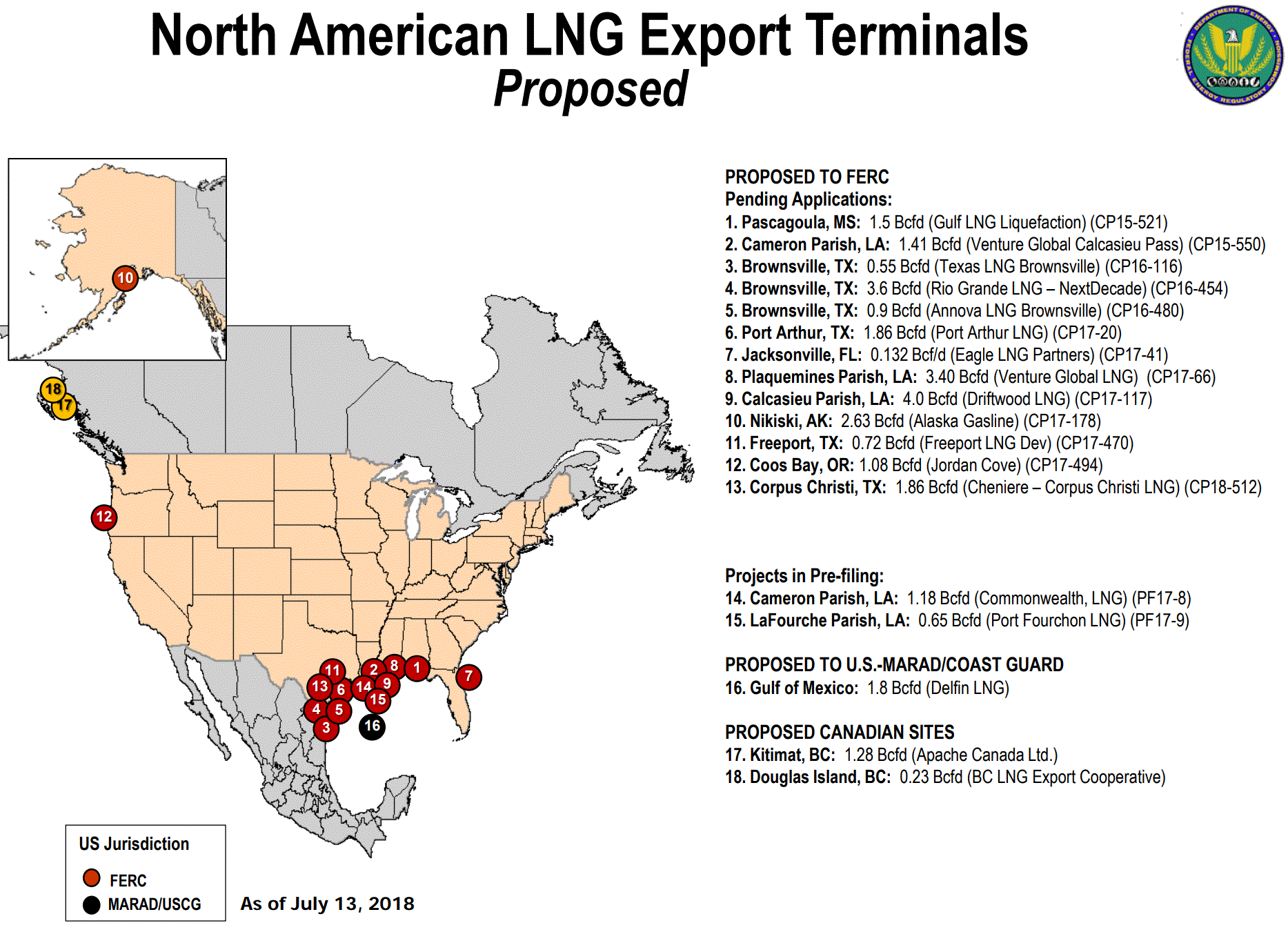
This is one of the reasons that I don’t see Asian LNG markets tightening any time in the 2020s. The locked and loaded US supply pipeline is huge:
Advertisement
There is some 180MTPA of LNG approvals in North America. Double Australia’s recent expansion. Qatar and others are coming too. Not all will be built of course but many will and they’ll roll off as needed vis demand.
The reason it’s such good news is that it means Asian prices will be capped and, as we know, the lower LNG prices are, the better off is the Australian economy as the power price shock diminishes. From Victoria University modelling on the impact of the Curtis Island white elephant:
Economic modelling done on the impact of the LNG plants was conducted by Victoria University in 2014 when MB and others were warning of perverse outcomes. It shows that the economy is betteroff the lower the LNG price goes:
Construction of the new LNG facilities stimulates national employment, but when building is complete, the direct stimulus ends. In the long-run, the new LNG production has a negligible impact on employment, but lowers the real wage rate.
The explanation of macro effects begins with the impacts on the national labour market. Figure 2 shows percentage deviations away from base case values in national employment (persons employed) and in the national real wage rate.
The LNG projects are expected to increase real GDP.
Figure 3 shows percentage deviations away from base case values in real GDP. The solid line shows the overall impacts. Initially, because of the LNG construction real GDP increases by around 0.3 per cent relative to its base case level (i.e., its level without the new LNG projects). This increase dissipates over time, with the long-run impact being an increase of a little less than 0.2 per cent.
The outcomes for real GDP reflect the balance of two offsetting forces. The expansion in LNG exports at the high global price results in a terms-of-trade increase for the economy. This tends to reduce the real cost of capital, leading to increased capital and increased real GDP. We call this the quantity effect. It is shown in Figure 3 by the upper dashed line. By 2020, the quantity effect adds around 0.8 per cent to real GDP. The annual increment persists thereafter.
Offsetting this, though, is the increase in gas prices for domestic use. The increase gas price allows for larger than normal profit for the local gas producers, but it also raises the cost of production for gas-using industries. Many of these industries cannot pass on these increases, and so cut production. Thus for these industries the increase in cost of gas means reduced production, employment and capital utilisation, resulting in a loss of real GDP for the economy generally. In Figure 3, this adverse price effects is shown by the lower dashed line. By 2020, the price effect subtracts around 0.6 per cent from real GDP.
Low-price (Baseline) compared to full-price (Baseline)
There is some uncertainty about the future international LNG price. The price assumption for the full-price (Baseline) is shown in Figure 1. To gauge the sensitivity of the modelling to changes in that assumption, we have simulated an alternative Baseline in which the price rises from the current average price of $4.50 per Gj to $7.75 per Gj, which is half the increase assumed in the full-price (baseline). Figure 7 shows percentage deviations in real GDP implied in both simulations. In the years to 2018, the absolute difference in results is relatively small, with the full-price (baseline) being less stimulatory than the low price (Baseline). The difference is magnified in the long-run. Roughly, with half the price increase, we get nearly twice the increase in real GDP.
This rule follows for most of the other results. For the long-run, in the low price (Baseline) scenario relative to the full-price (Baseline) scenario the sign of the deviations is the same but the magnitude of the deviations is roughly doubled.
Advertisement
That’s capital mis-allocation and a corrupted tax system for ya.
David Llewellyn-Smith is Chief Strategist at the MB Fund and MB Super. David is the founding publisher and editor of MacroBusiness and was the founding publisher and global economy editor of The Diplomat, the Asia Pacific's leading geo-politics and economics portal.
He is also a former gold trader and economic commentator at The Sydney Morning Herald, The Age, the ABC and Business Spectator. He is the co-author of The Great Crash of 2008 with Ross Garnaut and was the editor of the second Garnaut Climate Change Review.