RMIT has truly entered Bizarro World, crowning Sydney the most liveable city in Australia:
Sydney is the most liveable capital city in Australia…
The city has the shortest distances between homes and activity centres, equal highest percentage of homes close to public open spaces like parks and the largest percentage of people using active transport such as walking or cycling to travel to work.
The findings were released on Wednesday by RMIT University’s Centre for Urban Research Creating Liveable Cities in Australia report, in which it measures city policies against its implementation…
While Sydney is currently outperforming all the other capital cities, the fact remains that there is room for improvement when it comes to the city’s liveability standards.
The report recommends that new targets be set across the board, with specific short-, medium- and long-term goals for implementation and improvement…
As well as developments in public transport and dwelling density, currently unmeasured areas such as housing affordability, employment, food environments and alcohol environments need to be considered.
Sydney “has the shortest distances between homes and activity centres, equal highest percentage of homes close to public open spaces like parks and the largest percentage of people using active transport” precisely because it has crammed people like sardines into high-density shoe boxes.
However, this most certainly does not make Sydney “liveable”. Using the RMIT’s stupid definition, Tokyo must be the most liveable city in the world, given it is the most densely populated.
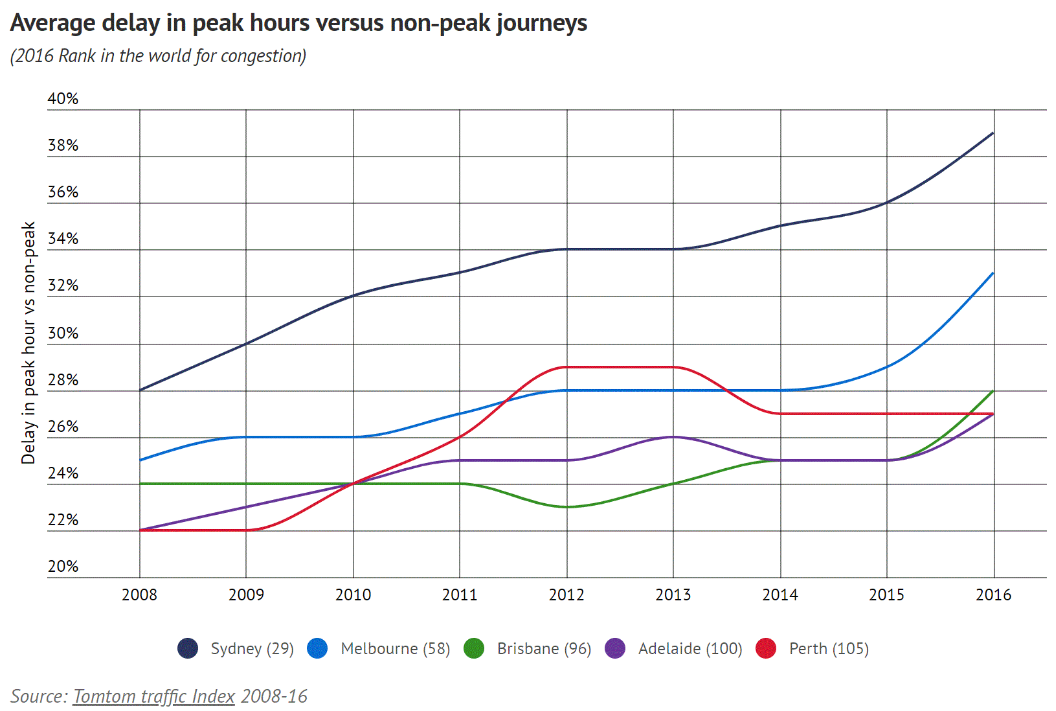
Conveniently, RMIT has ignored the fact that Sydney is stuck in permanent peak hour:
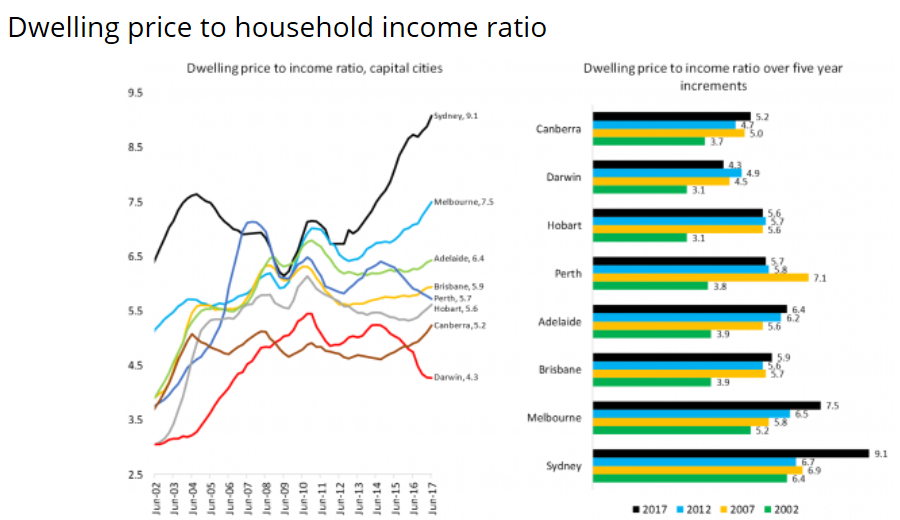
Sydney has by far the most expensive housing in the nation:
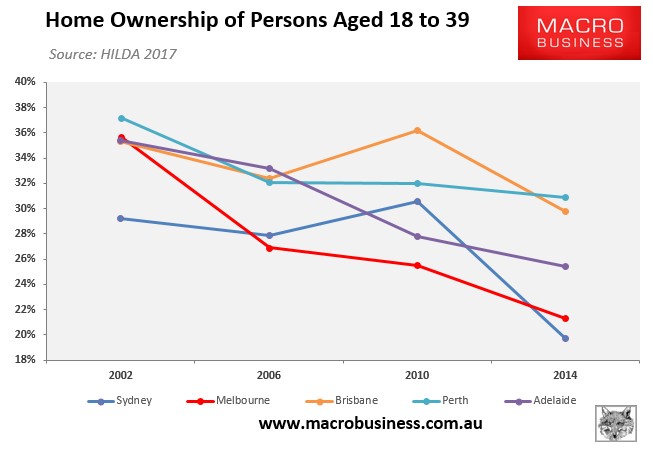
Sydney has the lowest home ownership rate:
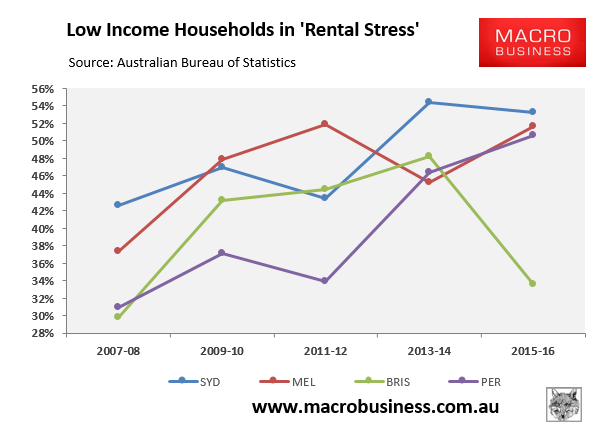
Sydney has the nation’s highest rental stress:
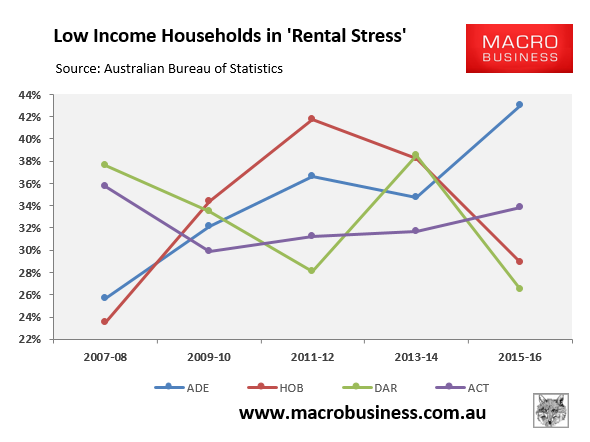
And Sydney also has the highest cost of living in Australia.
The RMIT report also directly contradicts Infrastructure Australia’s recent study, which projected that a bigger and more dense Sydney will significantly worsen congestion and actually reduce residents’ access to jobs, schools, hospitals and green space:
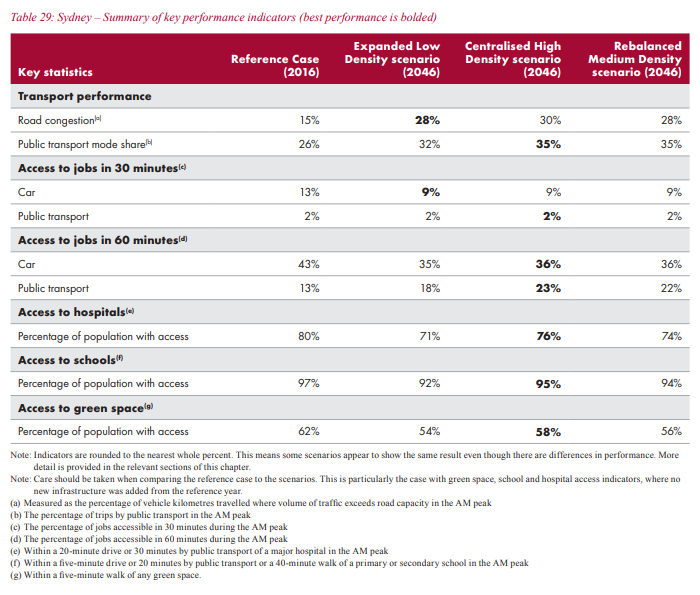
Nice views though.