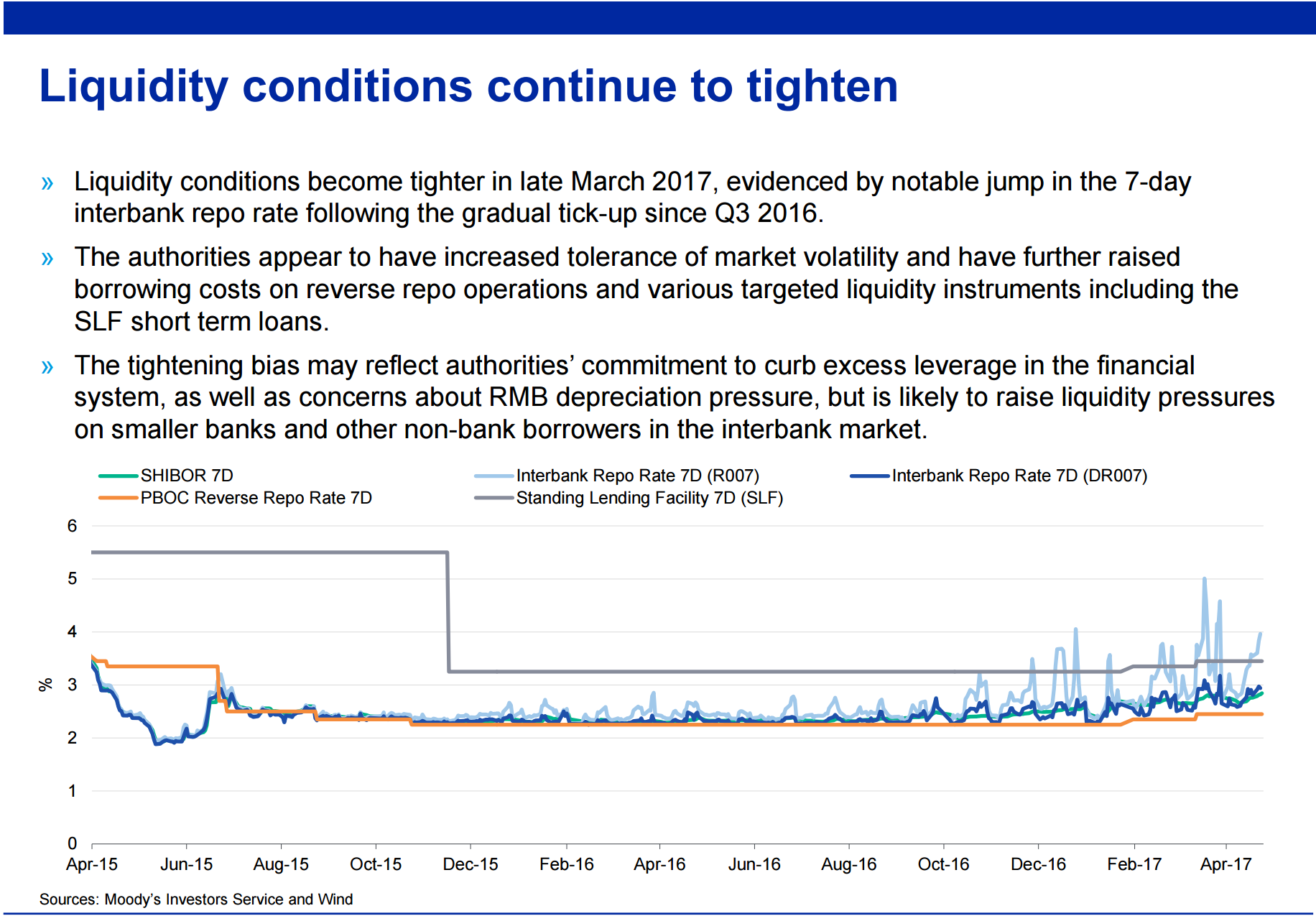
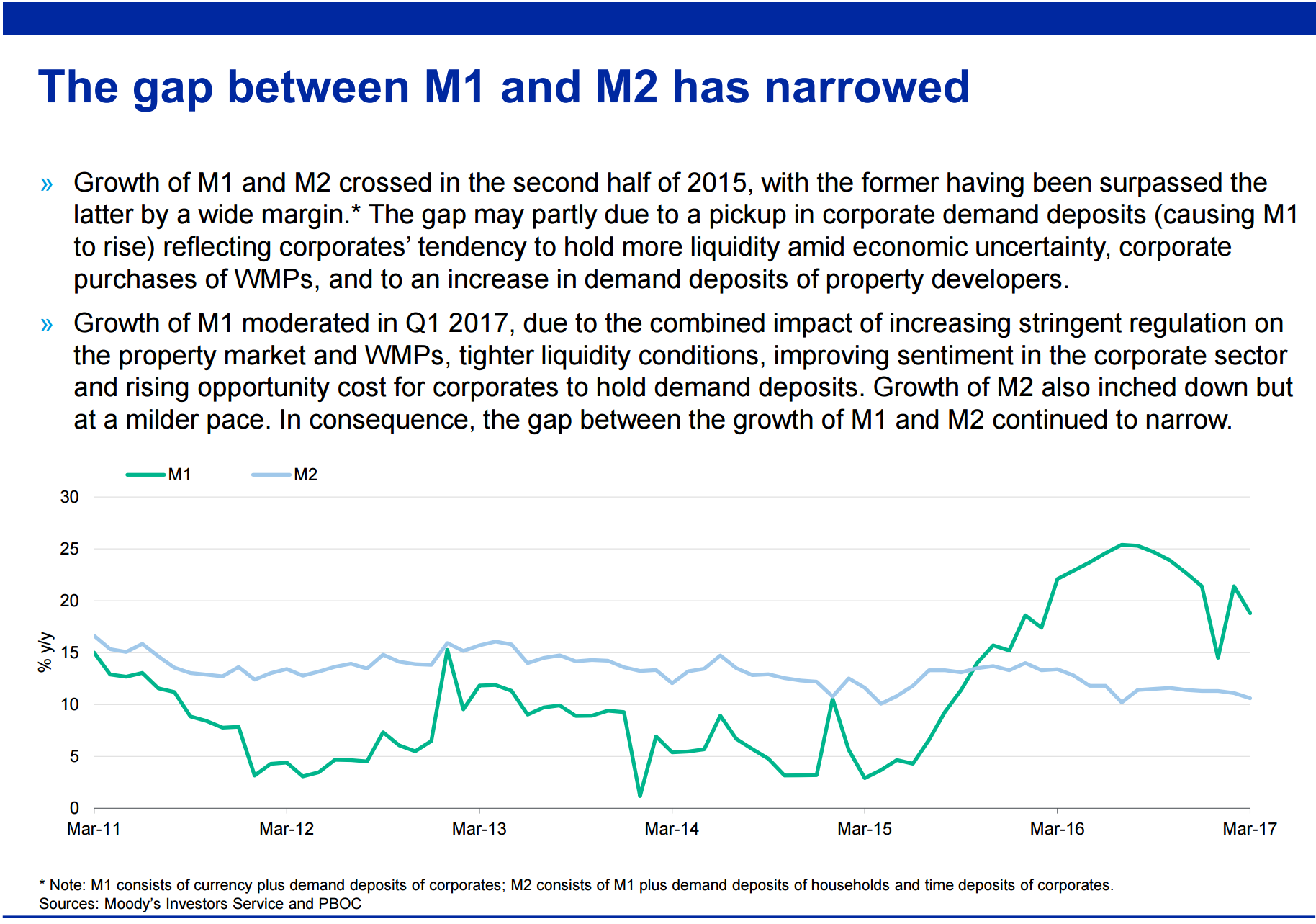
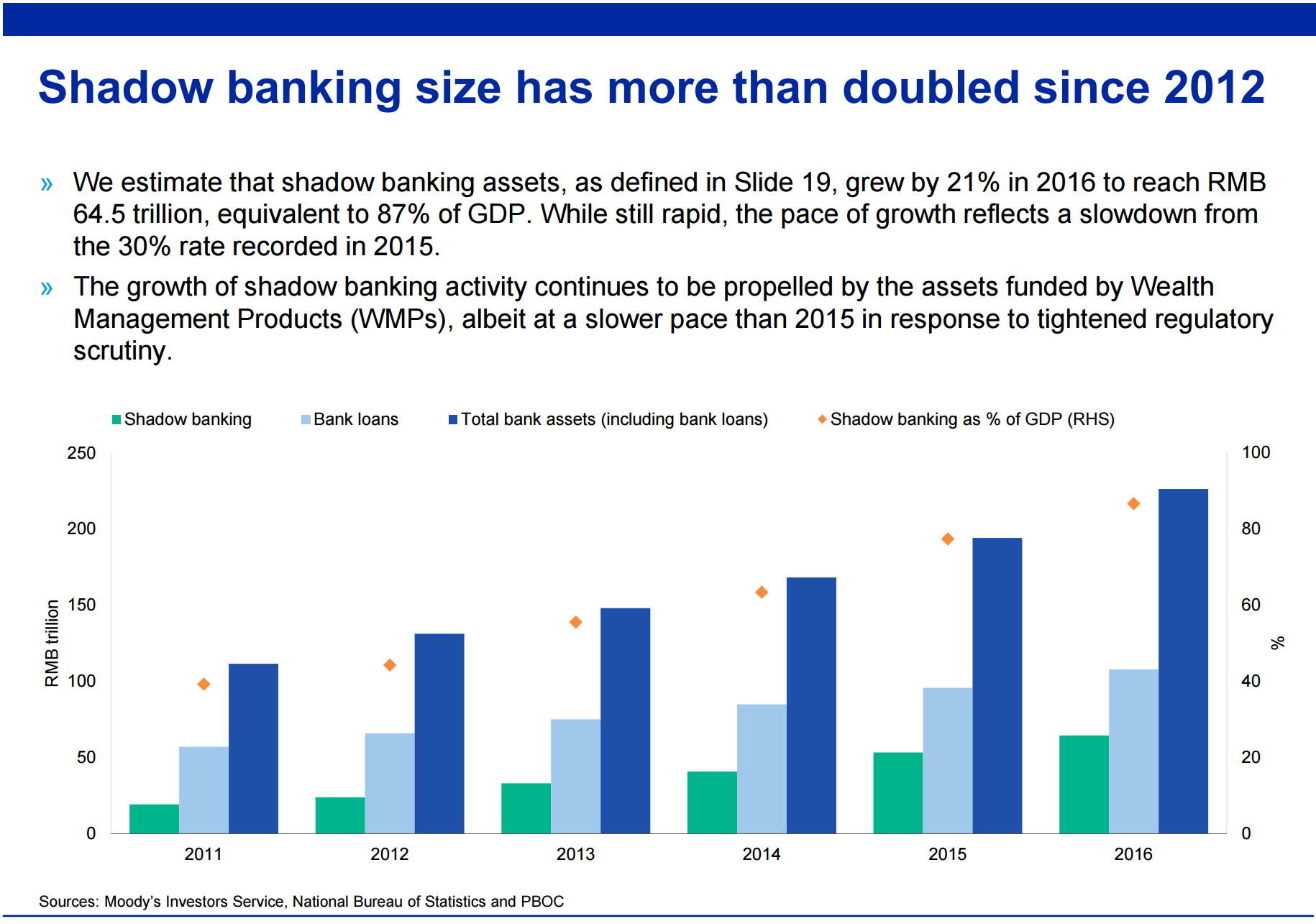
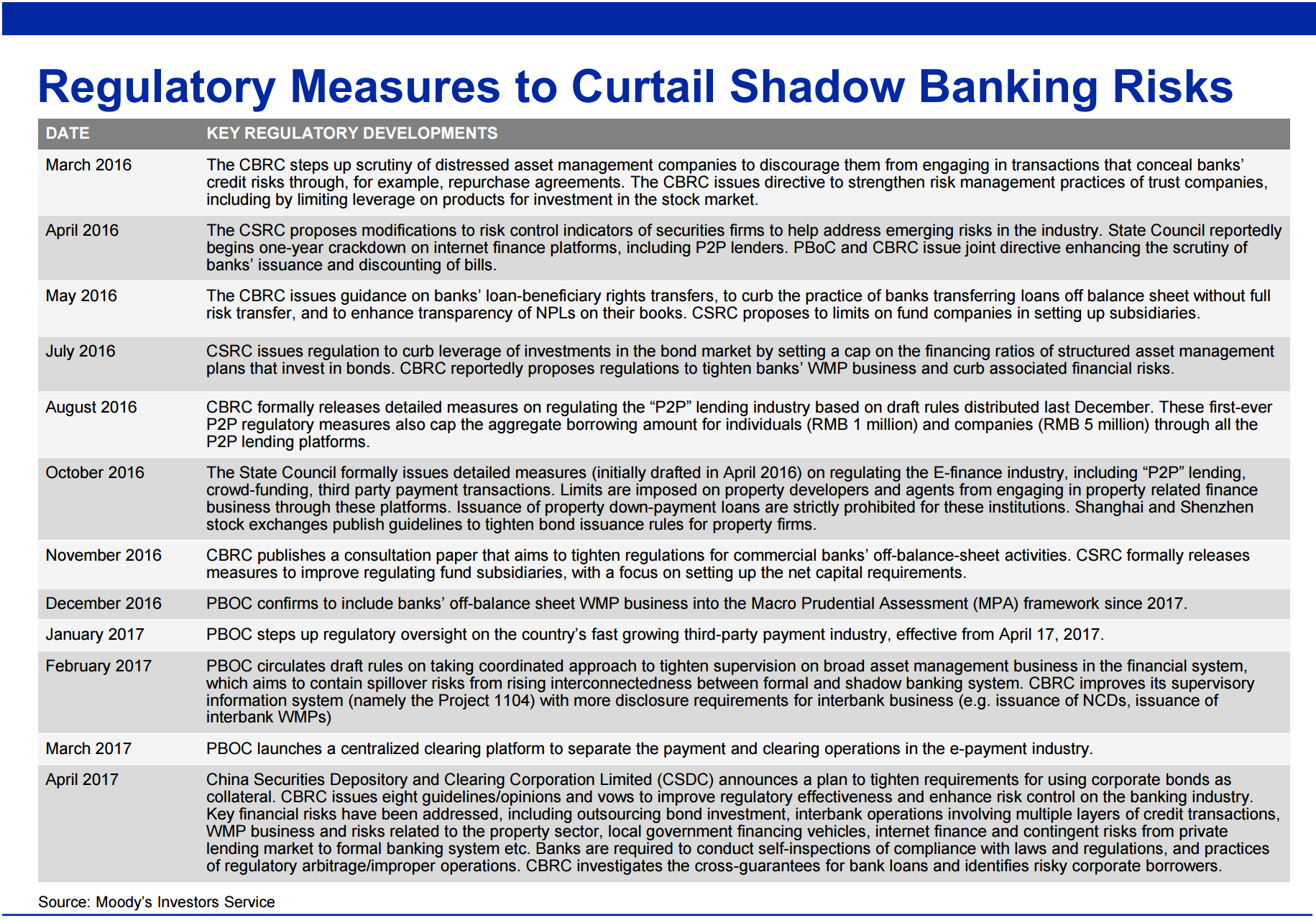
» Systemic liquidity conditions have continued to tighten, reflecting intensified regulatory efforts to constrain the growth of leverage. The 7-day interbank repo rate reached 5% in late March, and the spread between Wealth Management Products (WMP) yields and one year benchmark deposit rates further widened. The PBoC’s tightening bias in monetary policy and the quarter-end Macro Prudential Assessment (MPA) evaluation may have both contributed to this trend.
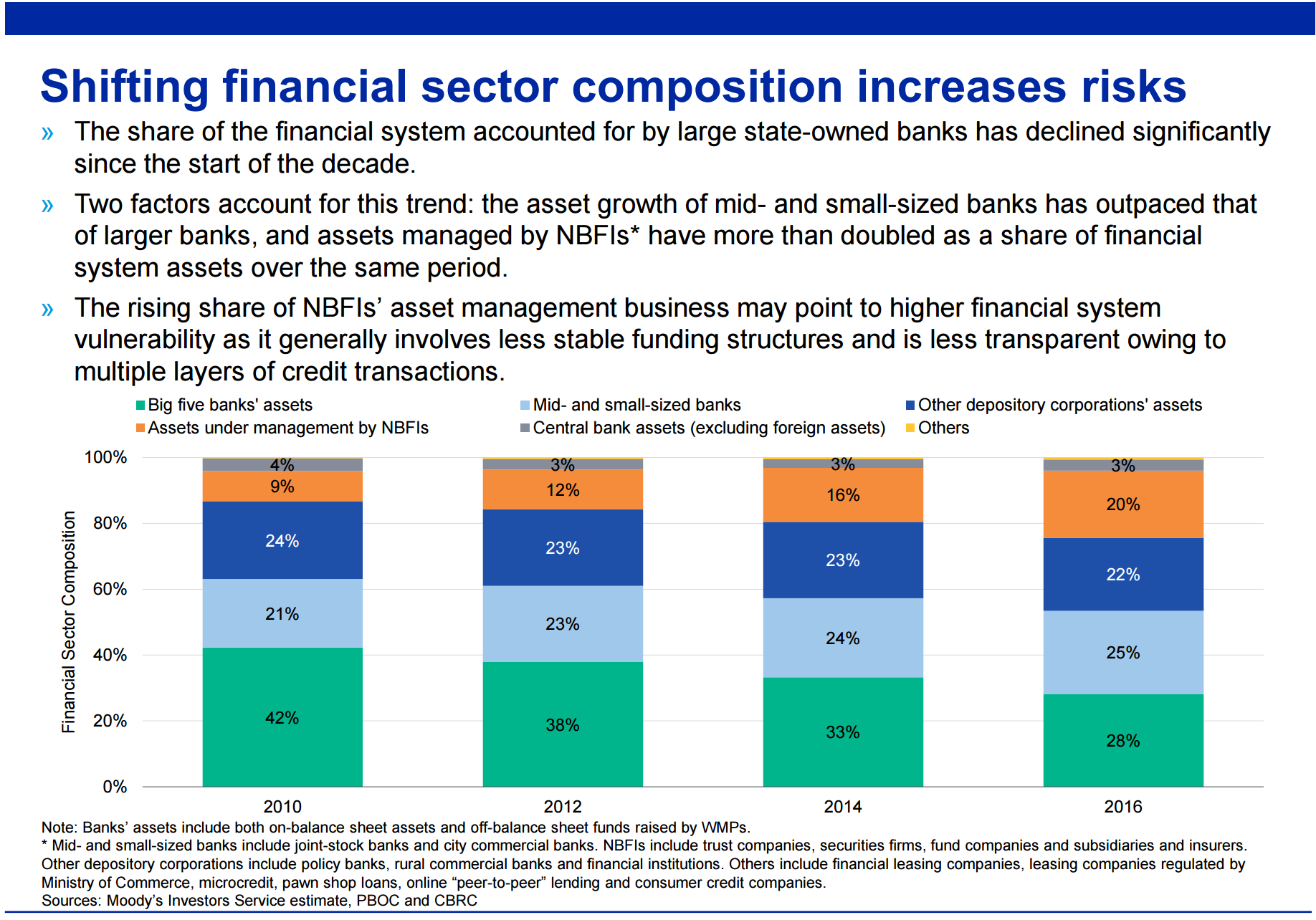
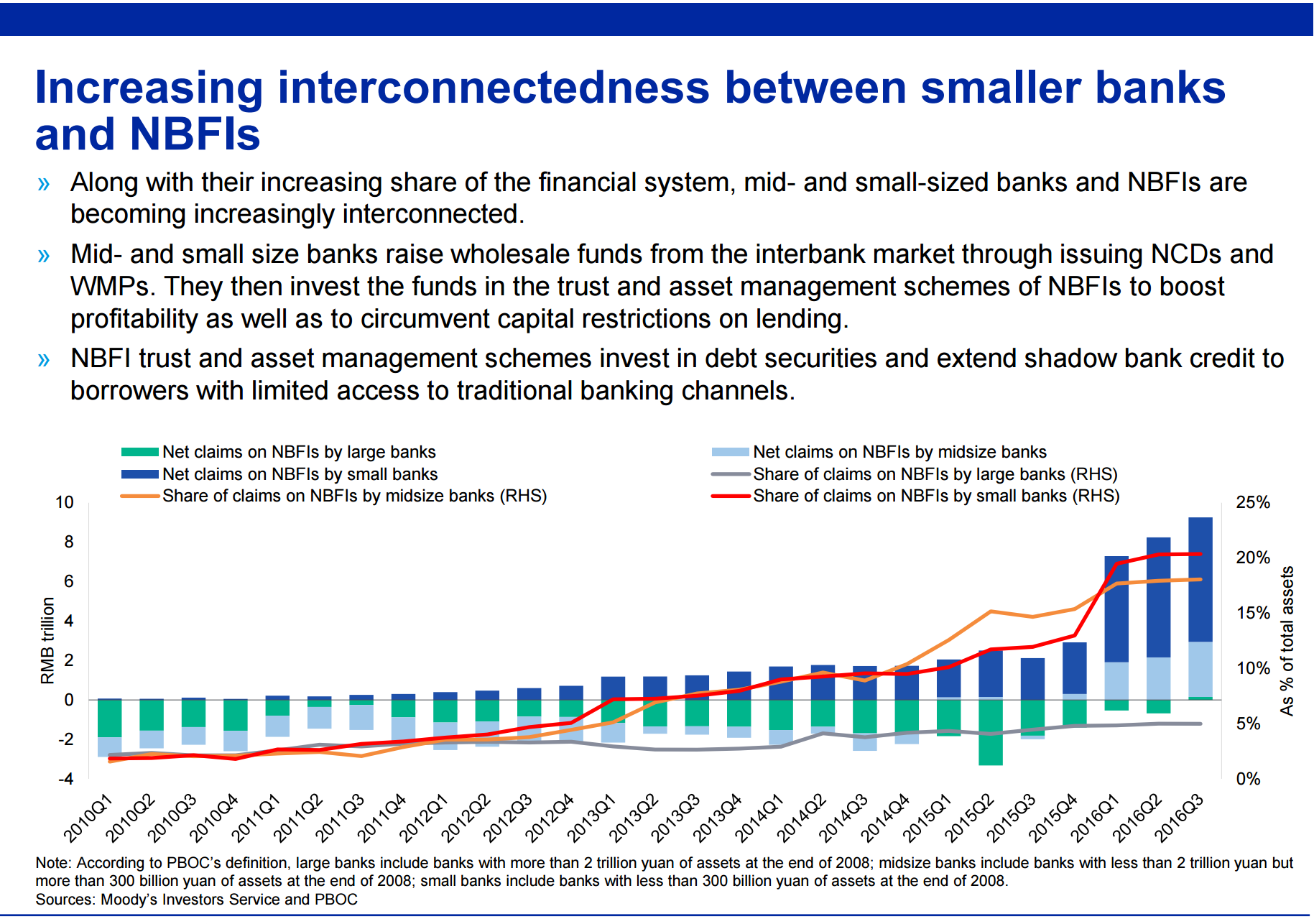
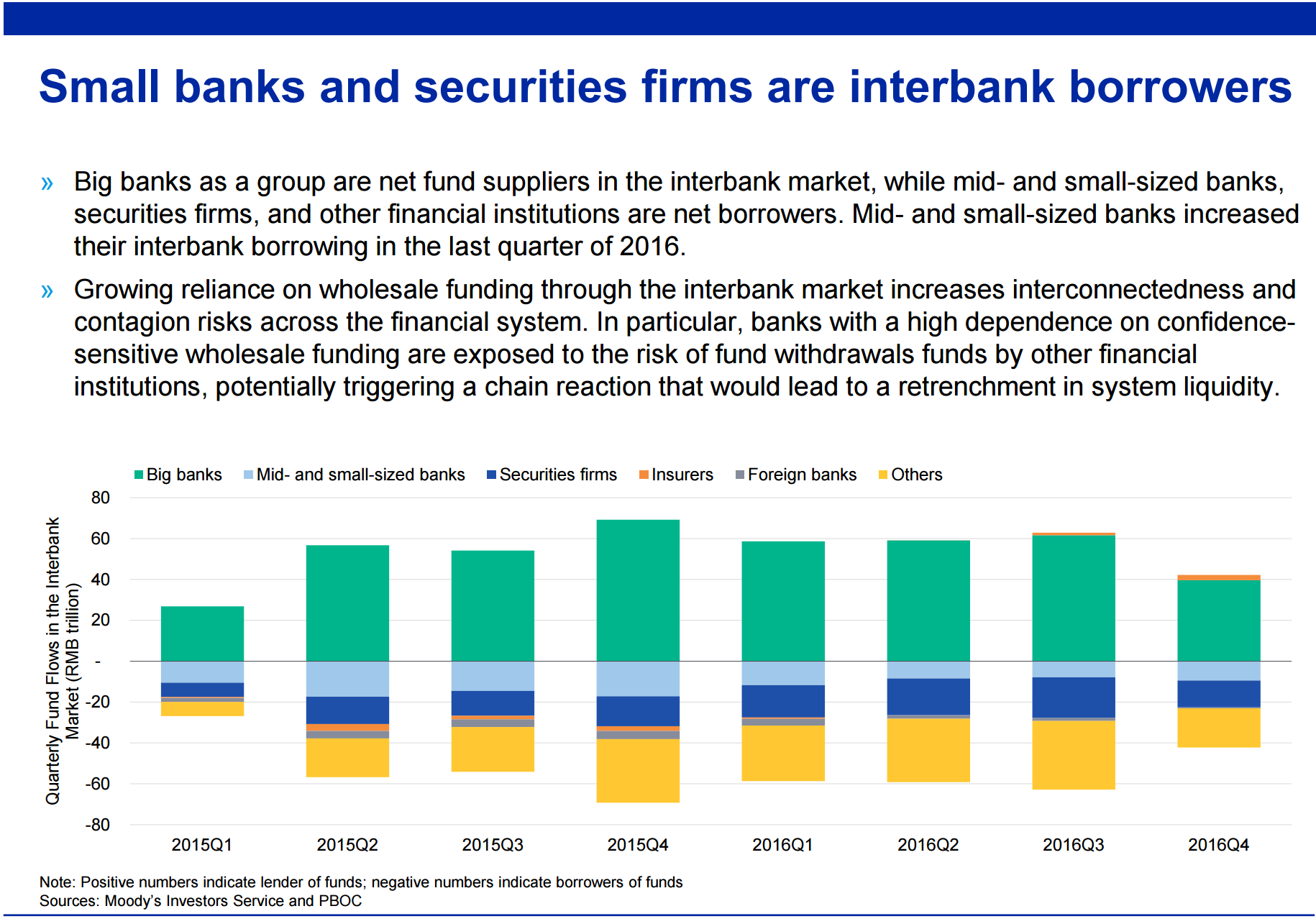
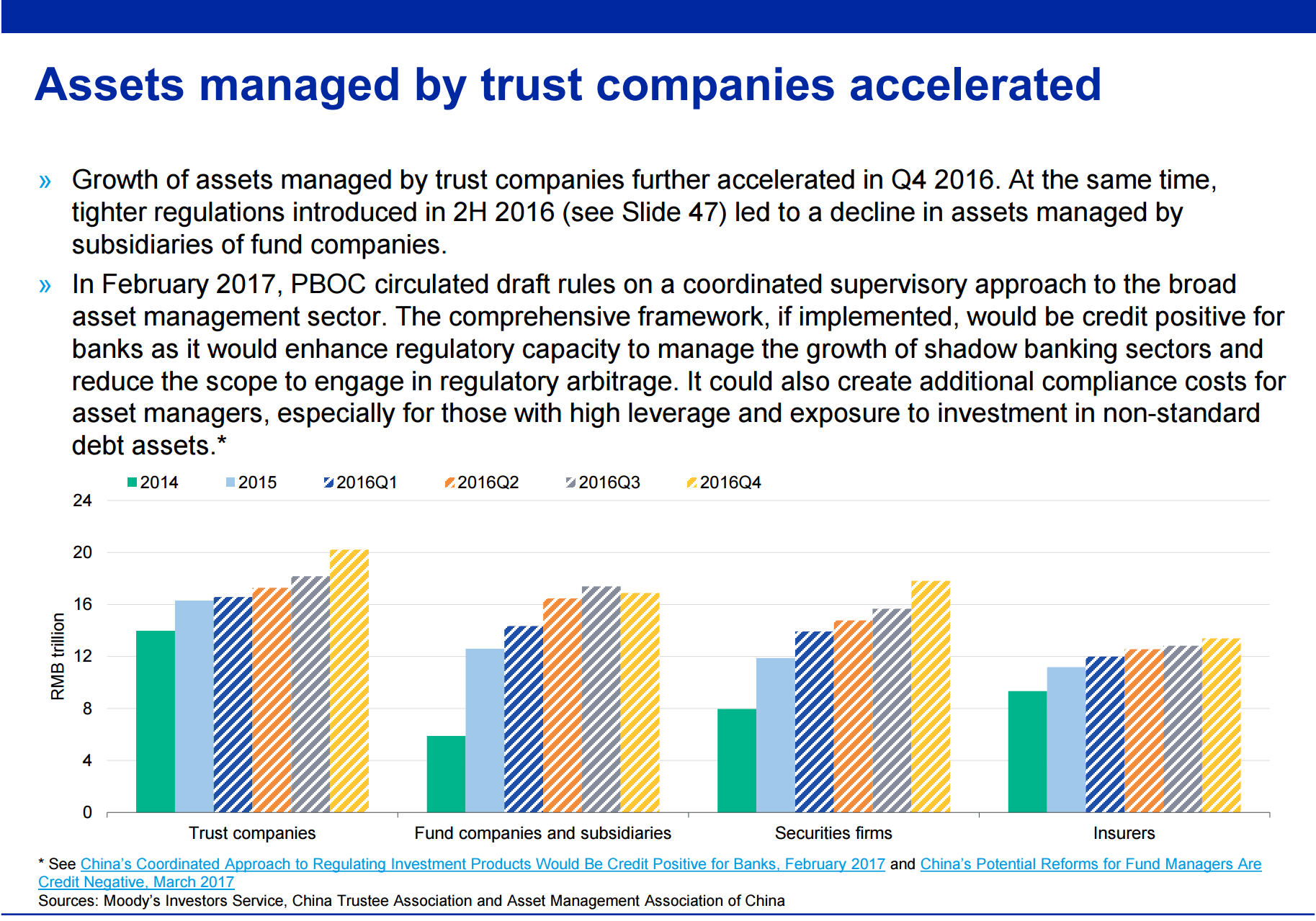
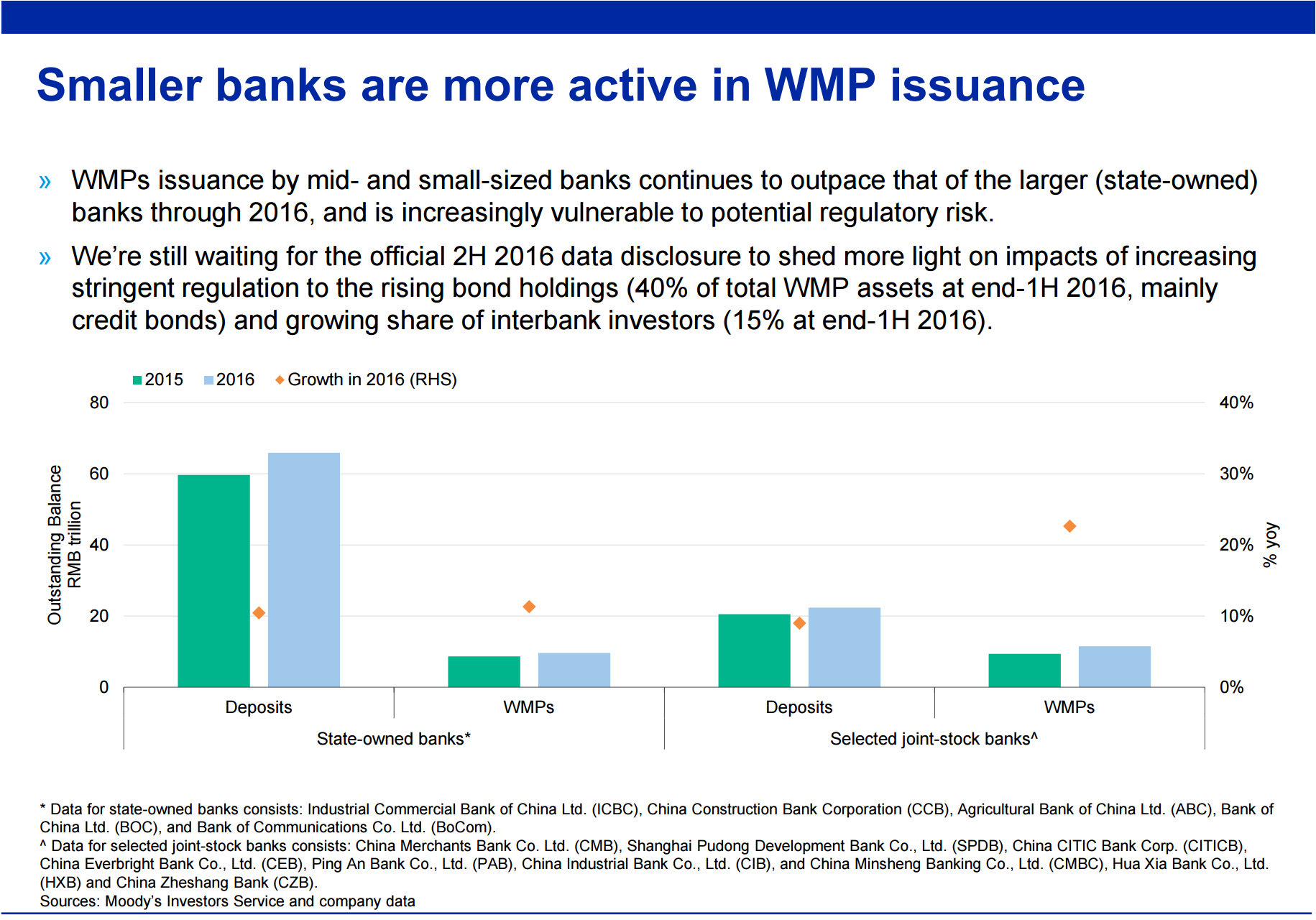
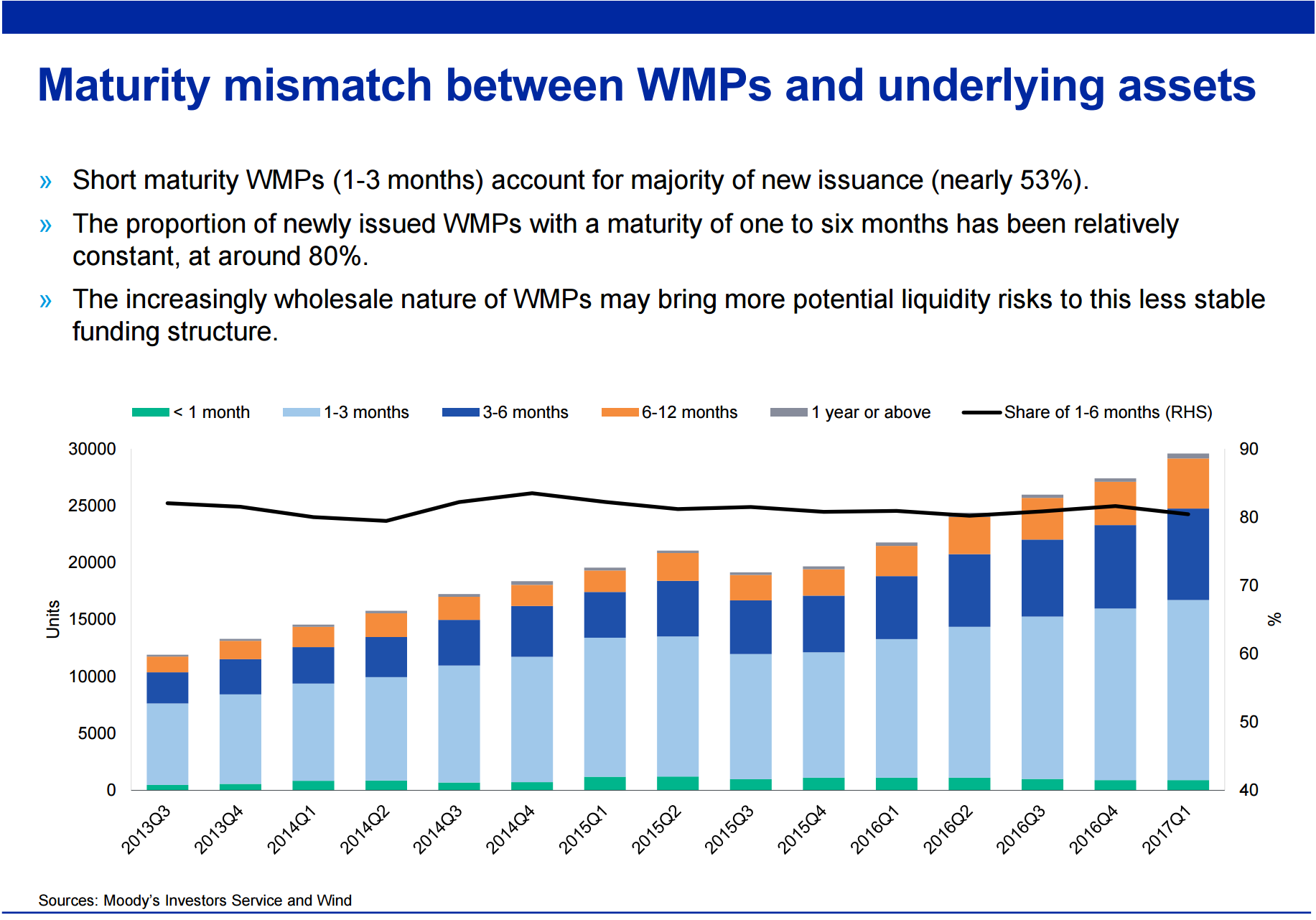
» However, the interconnectedness between mid- and small-sized banks and the shadow banking sector continues to grow, increasing the risk that funding structures could be fragile if confronted with a negative liquidity shock. In particular, tighter systemic liquidity conditions could crystalize the risks inherent in the more complex and opaque funding structures used by smaller banks. These banks are vulnerable to the withdrawal of wholesale funding which they have used to finance their investments in the trust and asset management schemes of non-bank financial intermediaries (NBFIs) to boost profitability as well as to circumvent capital restrictions on lending.
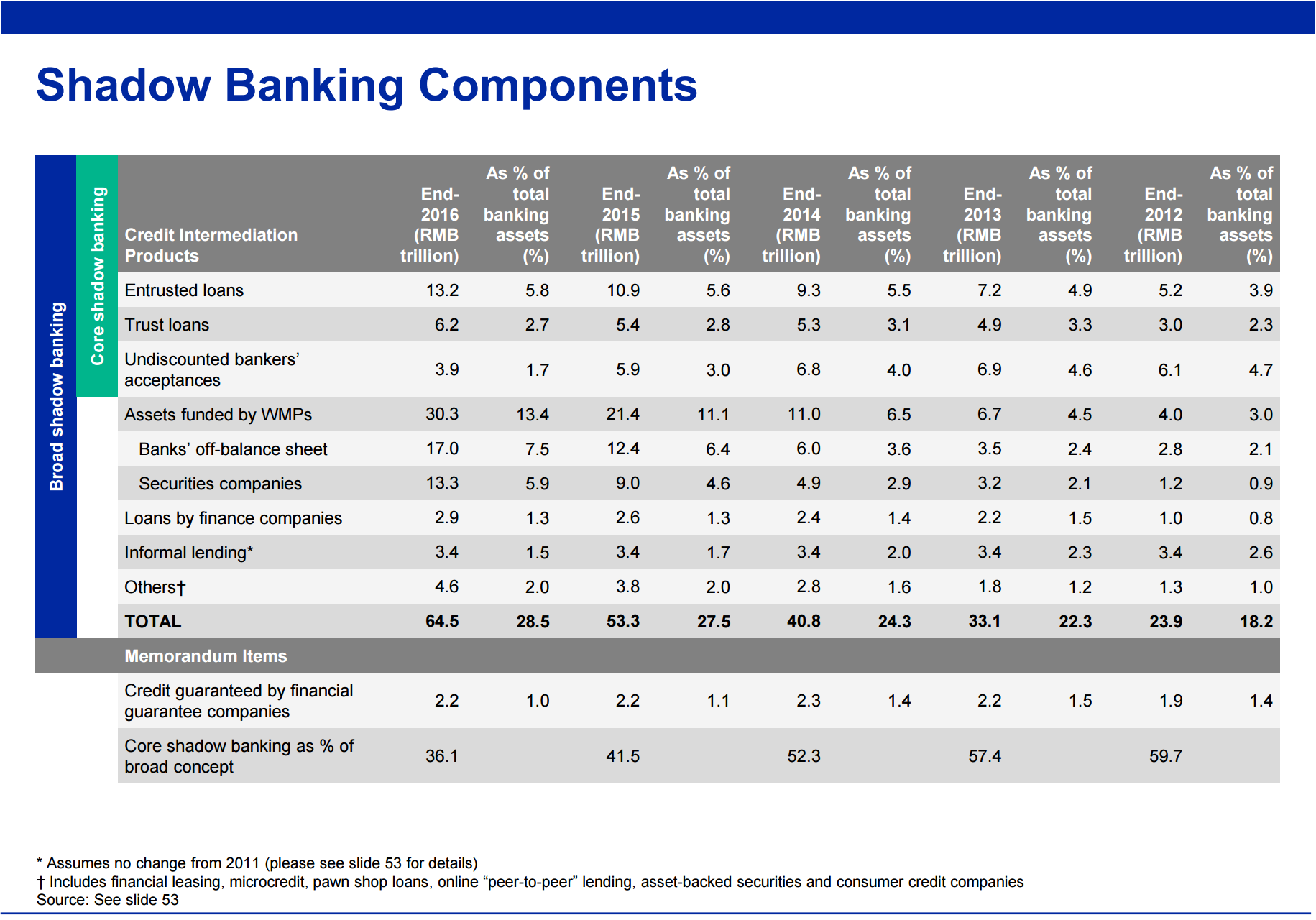
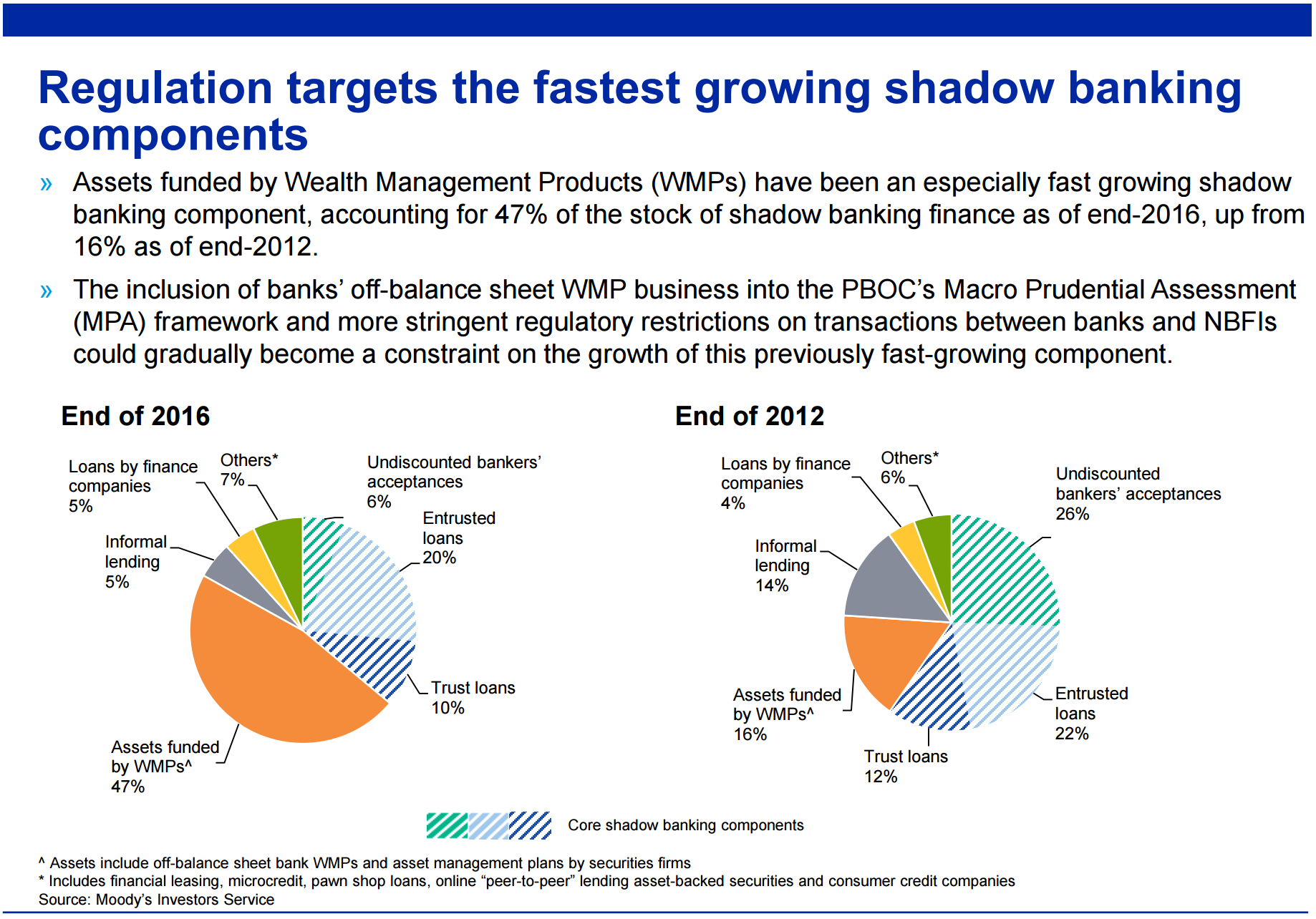
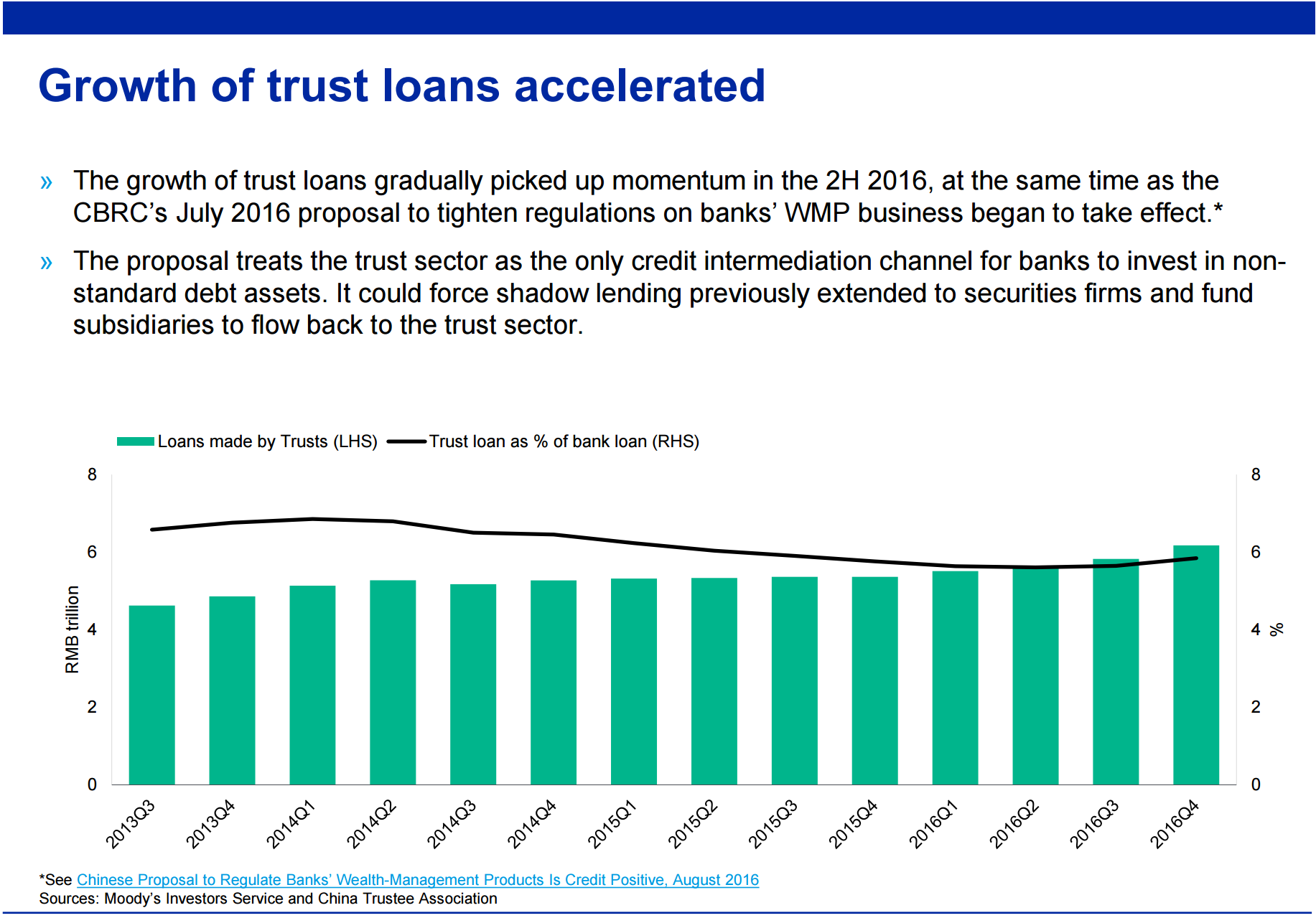
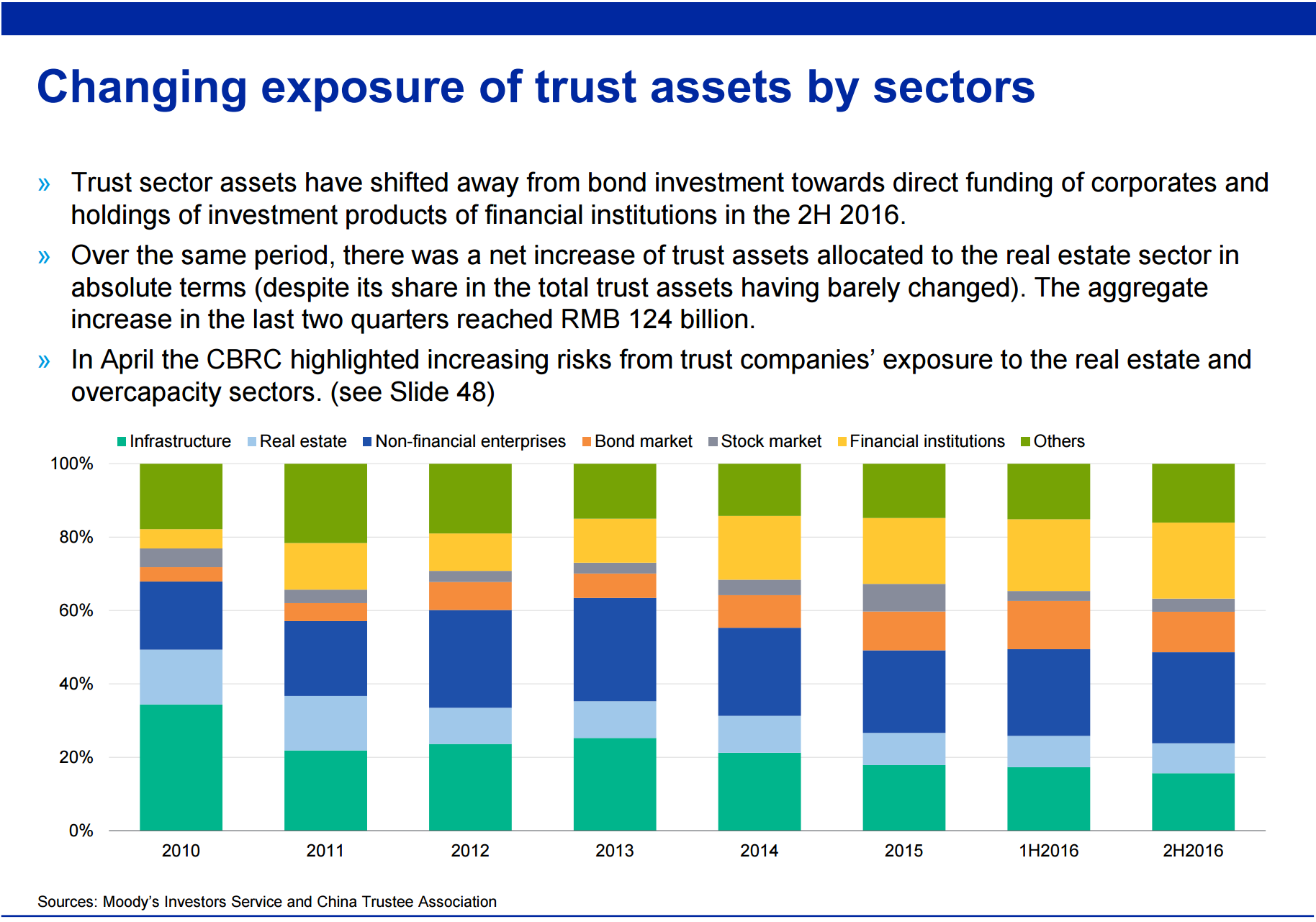
» Measures to curb system-wide leverage appear to be having unintended consequences in reviving “core” shadow banking activities that had previously been constrained by regulation. Borrowers in sectors such as property, LGFVs and overcapacity industries with high financing needs face reduced access to both traditional bank loans and the primary bond market. There are increasing signs that these borrowers are turning to shadow banks as an alternative funding source, which in turn is driving demand for trust loans and entrusted loans in particular.
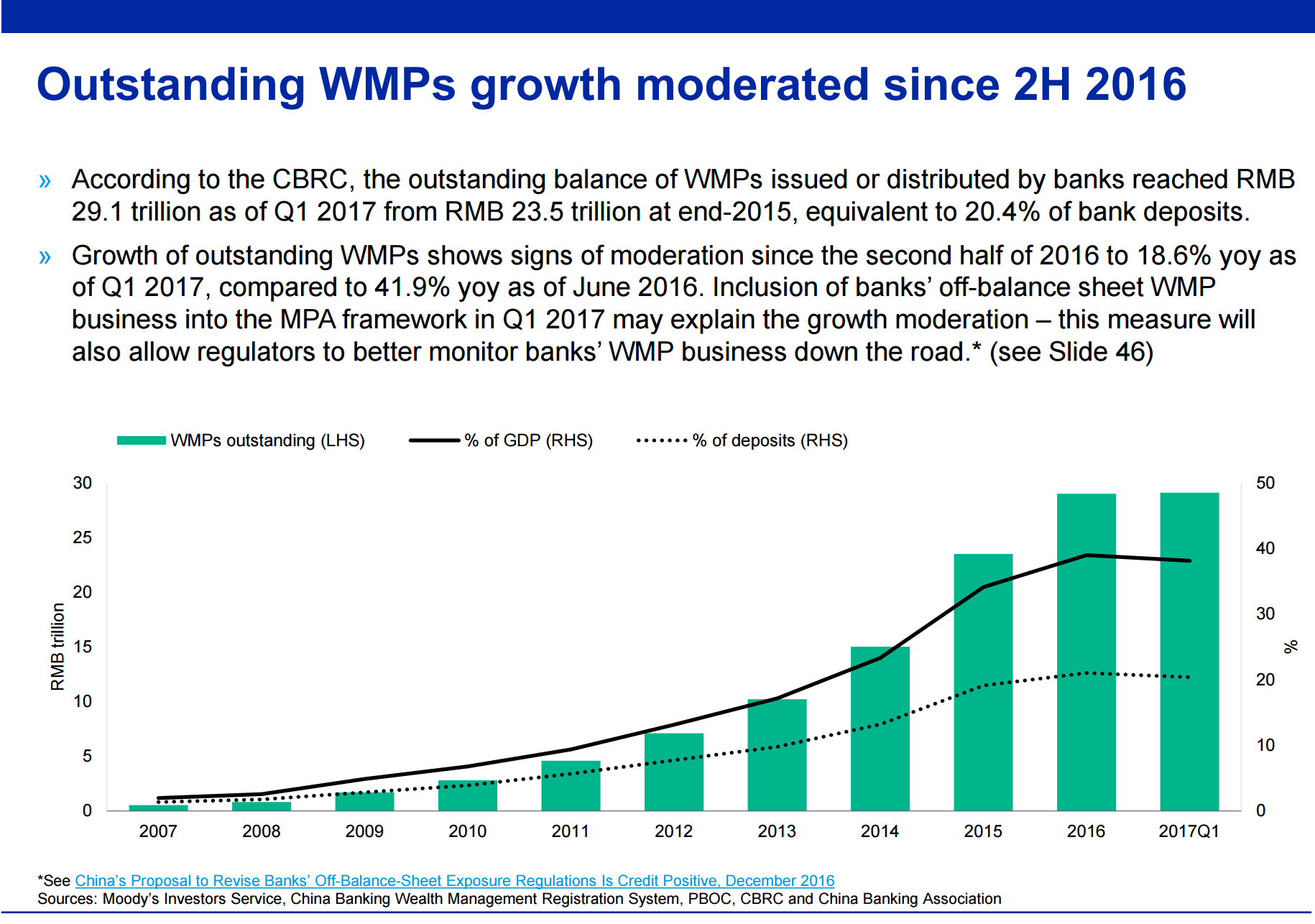
» By contrast, the pace of growth of banks’ WMPs has begun to slow as regulatory oversight is enhanced. Having been the fastest growing shadow banking component for the past several years, the slowdown in the growth of banks’ outstanding WMPs became more apparent in Q1 2017. The slowdown followed the inclusion of the off-balance sheet WMP business into the MPA framework. However, there have been delays in publishing official data which would shed more light of the impact of increasingly stringent regulation on bond holdings by WMPs (40% of total WMP assets at end-1H 2016) and the share of interbank investors (15% at end-1H 2016) of banks’ WMP business. If this data remains unavailable the transparency of the shadow banking sector would be reduced.
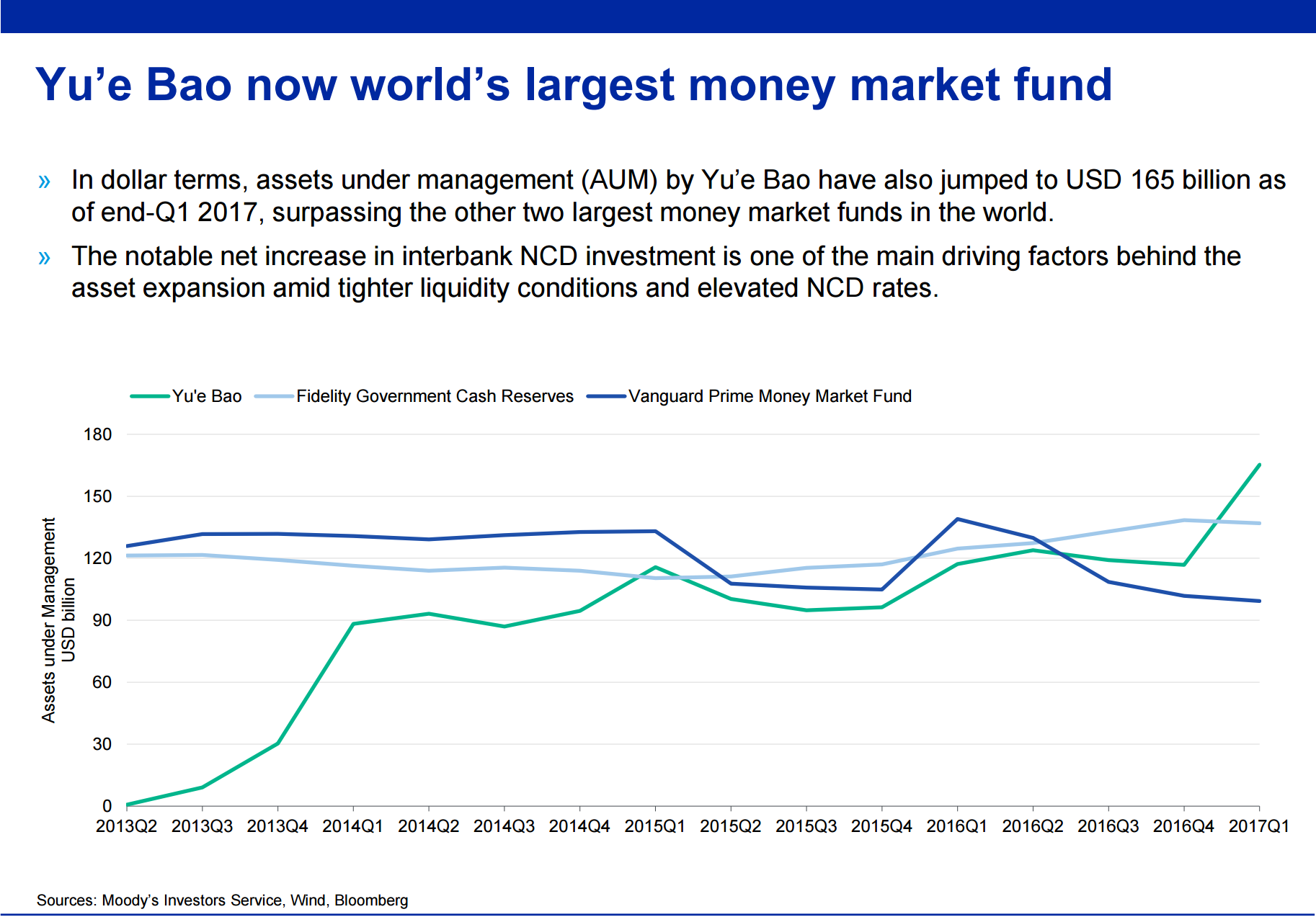
» Yu’e Bao has now become the largest money market fund in the world. In dollar terms, assets under management by Yu’e Bao jumped to USD 165 billion as of end-Q1 2017, surpassing the other two largest money market funds in the world. A net increase in the fund’s investments in interbank Negotiable Certificates of Deposit (NCD) is one of the main driving factors behind the asset expansion amid tighter liquidity conditions and elevated NCD rates.
David Llewellyn-Smith is Chief Strategist at the MB Fund and MB Super. David is the founding publisher and editor of MacroBusiness and was the founding publisher and global economy editor of The Diplomat, the Asia Pacific's leading geo-politics and economics portal.
He is also a former gold trader and economic commentator at The Sydney Morning Herald, The Age, the ABC and Business Spectator. He is the co-author of The Great Crash of 2008 with Ross Garnaut and was the editor of the second Garnaut Climate Change Review.