
Today’s housing finance data for May, released by the Australian Bureau of Statistics (ABS), posted a seasonally adjusted rise in overall housing finance commitments, although the trend in mortgage growth continues to weaken.
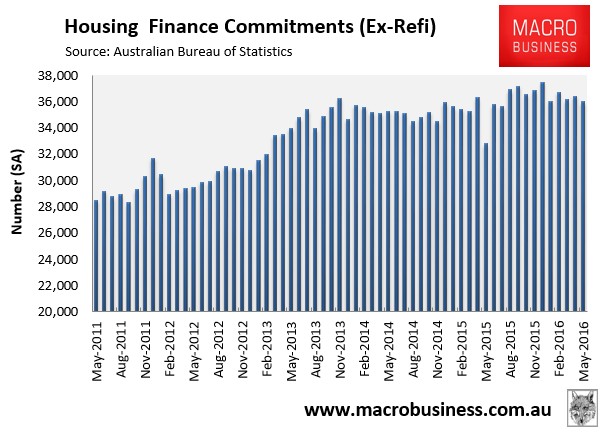
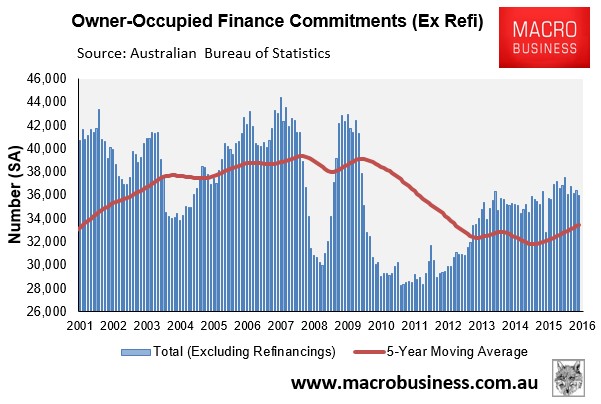
According to the ABS, the total number of owner-occupier finance commitments (excluding refinancings) fell by a seasonally adjusted 1.1% over the month but was 9.8% higher over the year (note the slump last May):
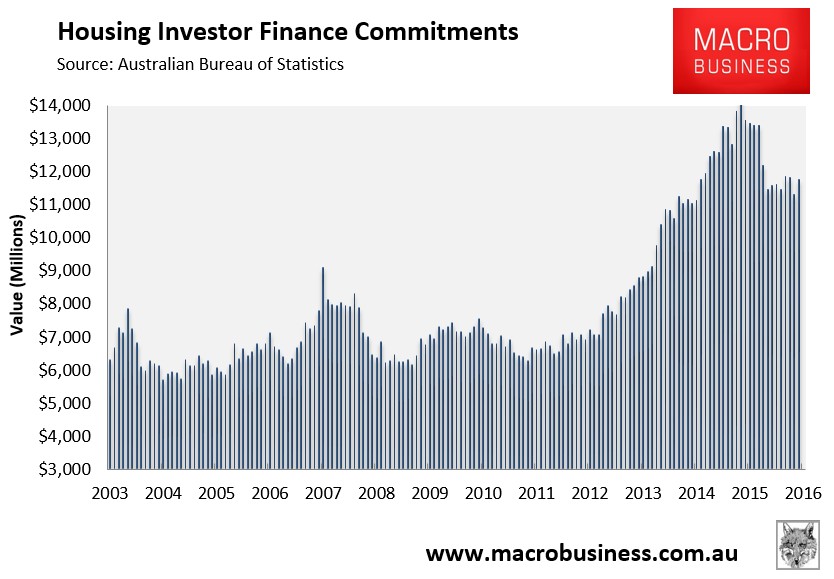
By c0ntrast, the value of investor finance commitments rebounded by 3.9% in May, although it was down by 13.3% over the year (see next chart).
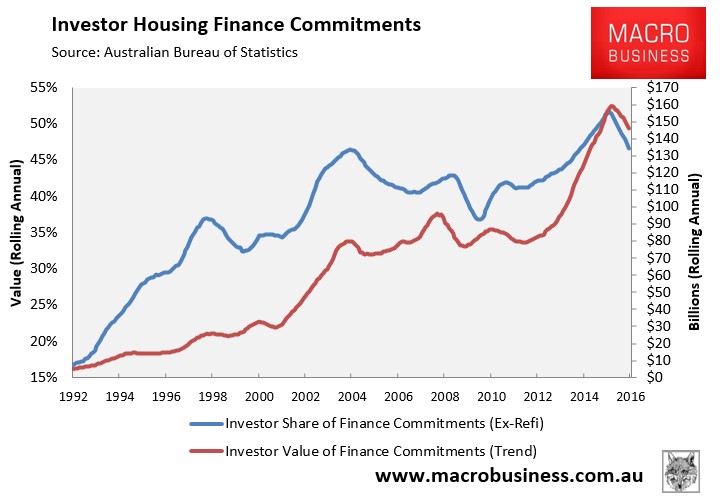
The annual share of total loans going to investors (excluding refinancings) also continued to trend lower, falling to 46.6% in May from a peak of 51.6% in July 2015:
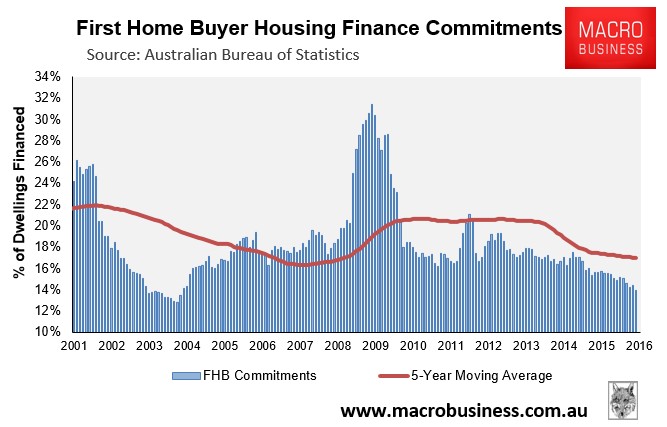
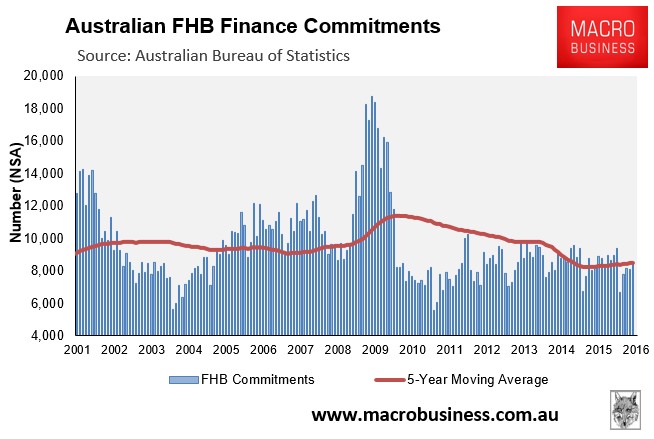
First home buyer (FHB) owner-occupied demand rose in May (due mostly to seasonality). It was up 4.5% over the month and by 2.9% over the year, but represented an appallingly low 13.9% share of total owner-occupied finance commitments, which are stuck in a protracted downtrend (see below charts).
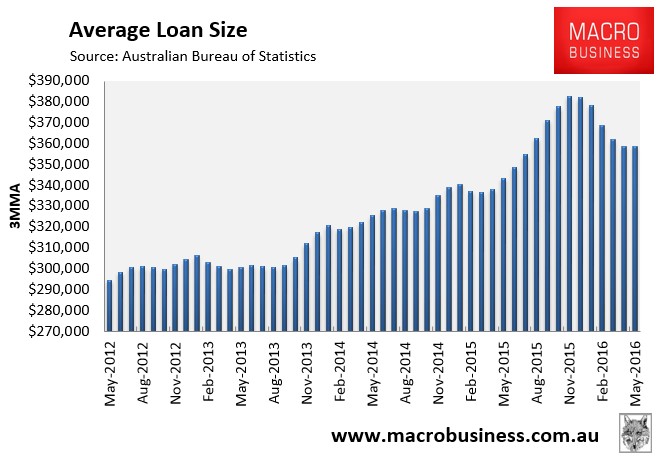
Meanwhile, the average loan size fell by 1.2% in May and was up just 2.9% over the year. The trend has also weakened recently on a 3-month moving average basis:
Finally, the below chart shows that the trend pick-up in the value of owner-occupied housing demand has not offset the sharp fall in investor demand, thus dragging the overall growth of housing finance sharply lower:
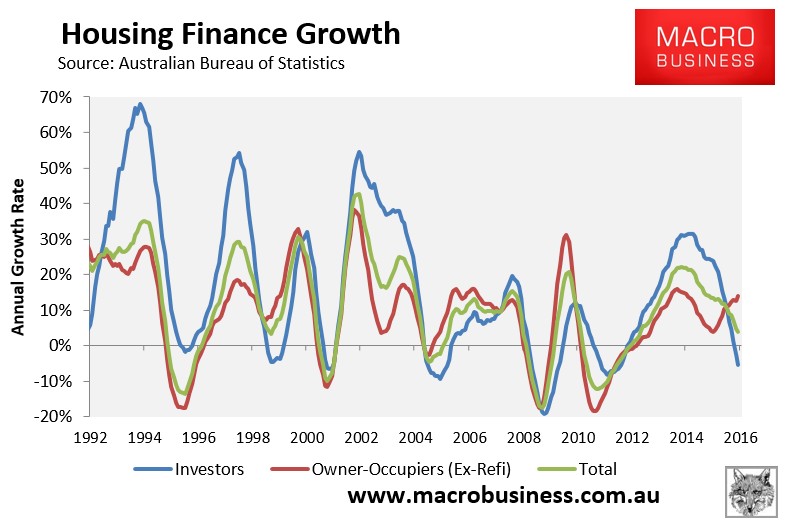
With trend housing finance growth slowing so sharply, this should mean that house price growth nationally should also be weakening (other things equal).
Possible explanations for the recent strong house price growth is that transaction volumes have fallen even more sharply than than mortgage growth, or that there are more cash buyers (e.g. foreigners). Nothing else seems to make sense.
