
From Domainfax:
The biggest foreign funding risk to Australian banks is their overexposure to property, not the possibility of a sovereign downgrade by the credit rating agencies, says the head of fixed income at asset managers AB.
Ashish Shah says rather than warnings from Moody’s, Standard & Poor’s and Fitch about Australia’s fiscal deficit, investors should focus on lenders’ reliance on housing and commercial real estate for their profits.
“Our fundamental view around Australian banks has been a little bit of concern around both the commercial real estate and residential real estate exposure and the behaviour of those markets,” he said during a visit to Sydney on Tuesday.
“Our principal concern is the level of foreign demand and how the market would react to a decline in capital inflows,” he said.
However, many analysts say lenders’ wholesale funding costs in global bond markets were unlikely to rise even if Australia were downgraded a notch.
“The market has in the past shown a willingness to overlook technical downgrades where, as in this case, there has been no deterioration of the underlying credit,” said Nikko Asset Management portfolio manager Chris Rands on Tuesday.
…Mr Shah’s comments on property risk, however, add to a chorus by global economists, fund managers and other forecasters who warn that pockets of Australia’s housing market, particularly in Sydney, are overvalued, and that households are over-indebted.
Fair points but not the end of it. The two risks are related. A downgrade to the sovereign will eat up another rate cut. Bank costs have risen since the negative watch and they will be higher permanently versus baseline. Yesterday CBA CDS fell sharply to 83bps:
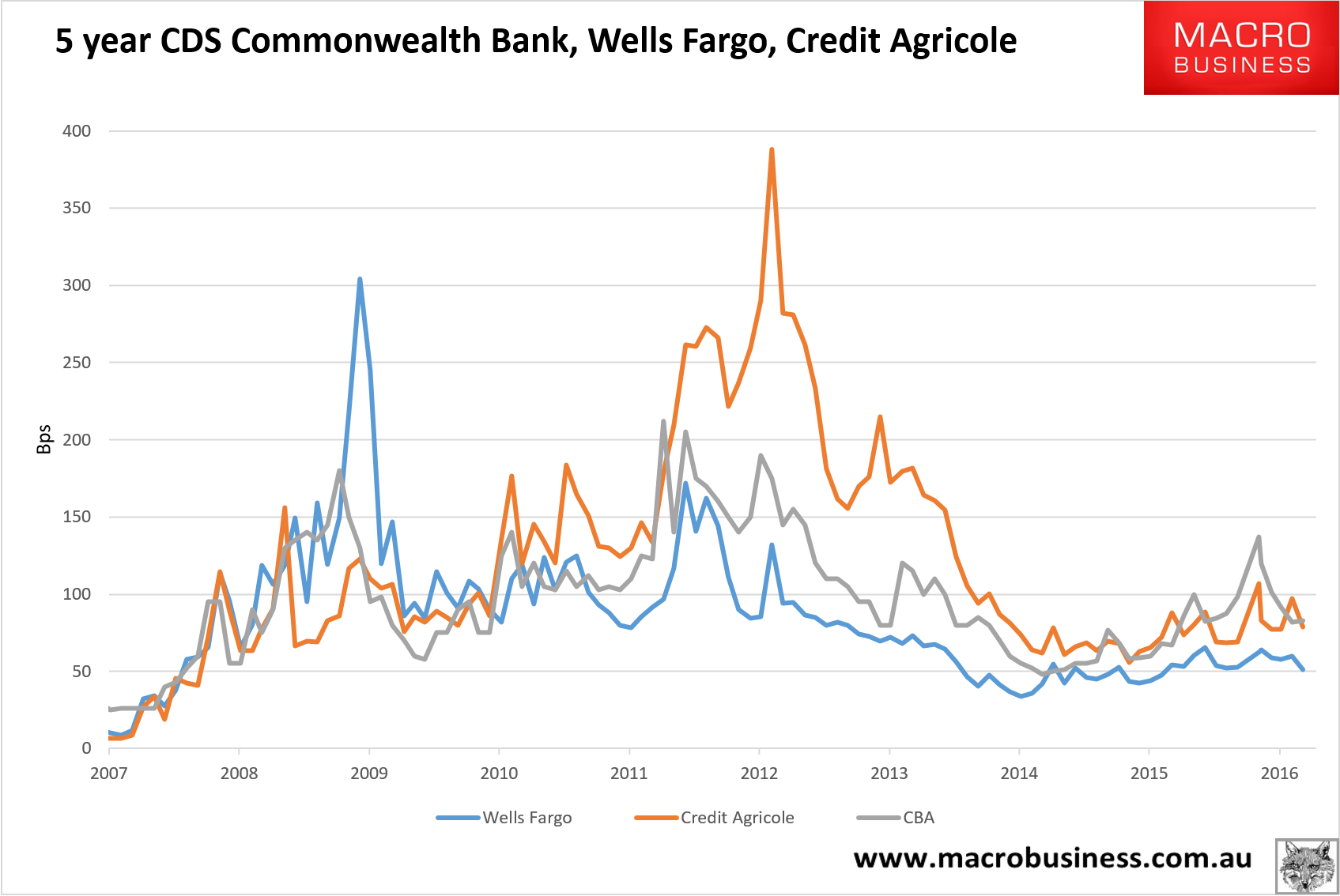
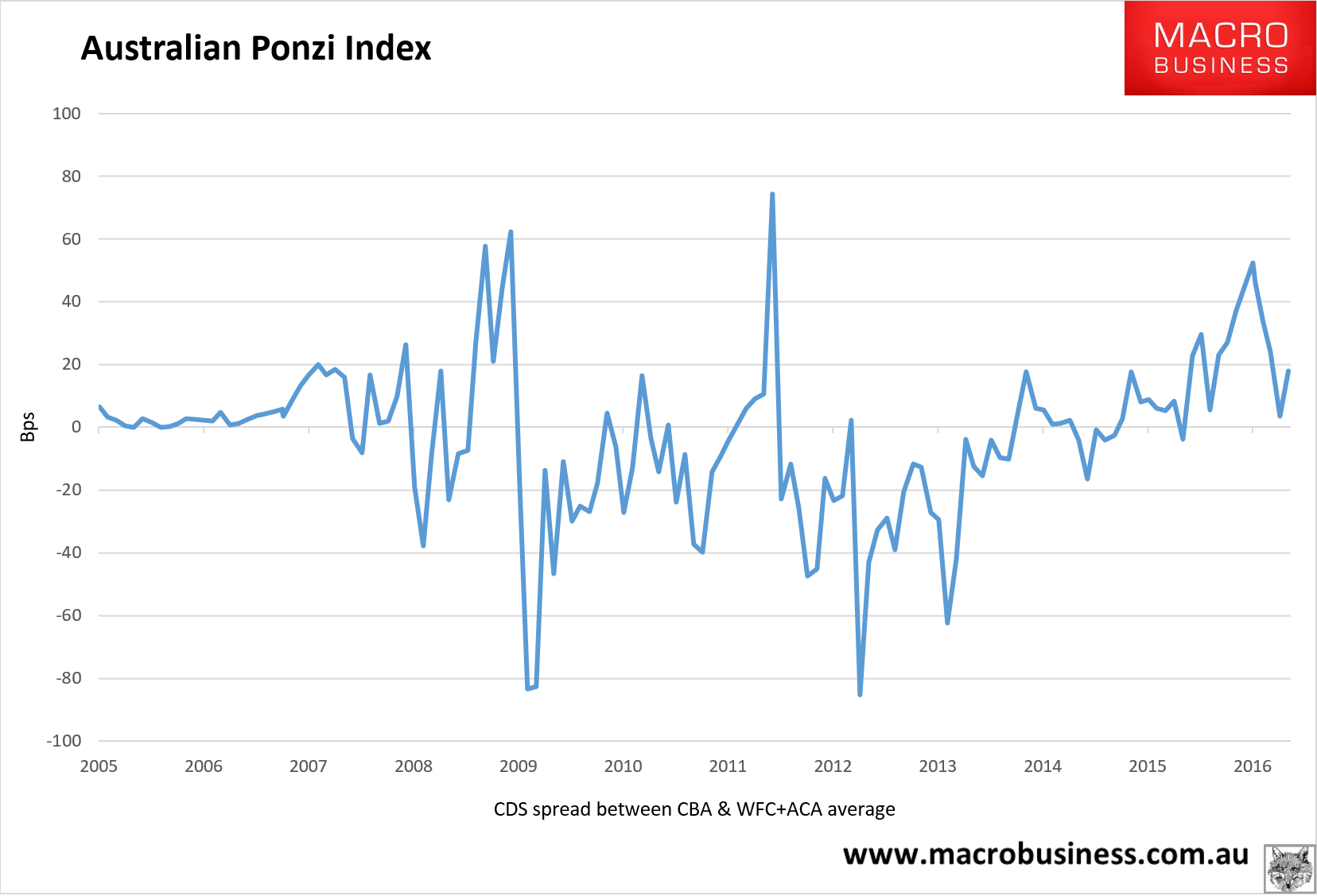
But they fell even more for comparable banks in Europe and the US leading to lift in the Australian Ponzi Index:
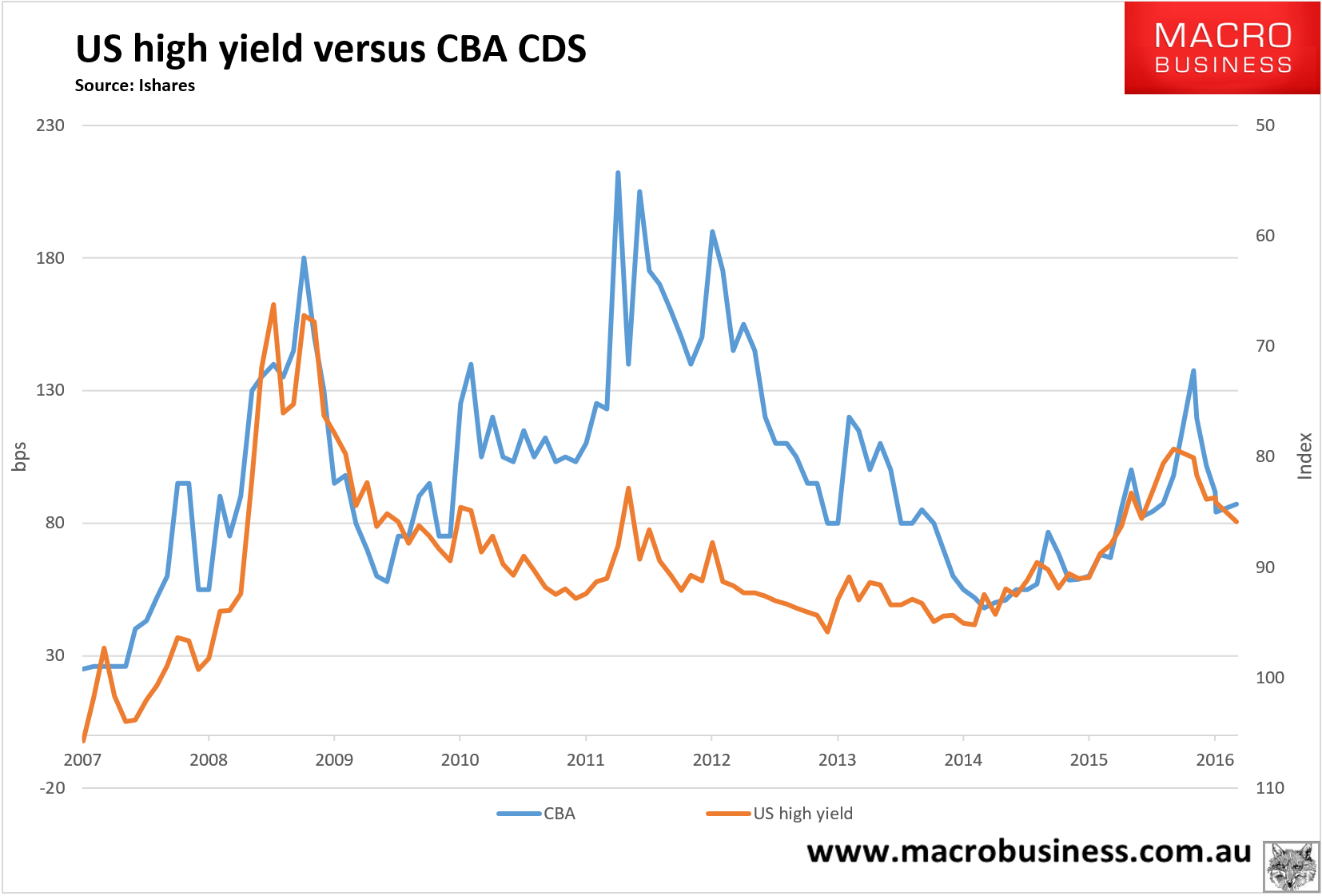
And global high yield spreads tightened more than local banks as well:
As monetary and fiscal headroom is eaten up, and we end up 1% lower with no more cuts in the bag, then house price will be under severe stress during any shock, and capital may flow out then as result.
The AAA is a part of the housing risk.
