
From the AFR:
APRA’s job was made harder by the fact that it has to stem an appetite for credit stimulated by the lowest lending rates on record, said economist Saul Eslake, who called the RBA’s May reduction in rates to “inappropriately low” levels.
“One of the ways in which inappropriately low interest rates are damaging is by encouraging and facilitating excessive risk taking on the part of both borrower and lenders,” Mr Eslake said. “Borrowers can be seduced into borrowing more than they can service. Lenders can be seduced into lending too much to people but also into lending to the wrong sorts of people because they can’t get what they regard as acceptable rates of return on low-risk loans in a low-rate environment.”
…Developer body the Property Council of Australia warned against any further tightening, however.
“The regulators are generally cautious and consult widely and that is why they are respected,” Property Council chief executive Ken Morrison said. “If they are considering further changes, we look forward to speaking with them. The overwhelming trend over the past six to nine months is one that reflects a more balanced and calm market.”
Come on, Saul. Is nobody responsible for anything? APRA’s job should be harder. Cutting rates and tightening prudentially is the only configuration of monetary tools that works in today’s currency war. Rates are going to fall. Push ARPA to tighten. Get behind it.
As for Ken Morrison, he should immediately be struck off the APRA contact list and any contact with the Property Council made explicitly illegal. APRA can gauge its success here by how loudly that Ken Morrison screams.
APRA should immediately cut its investor lending ceiling to 5%. It’s clear that house prices are not falling off a cliff with investor lending growth at 5% for major banks on APRA data:
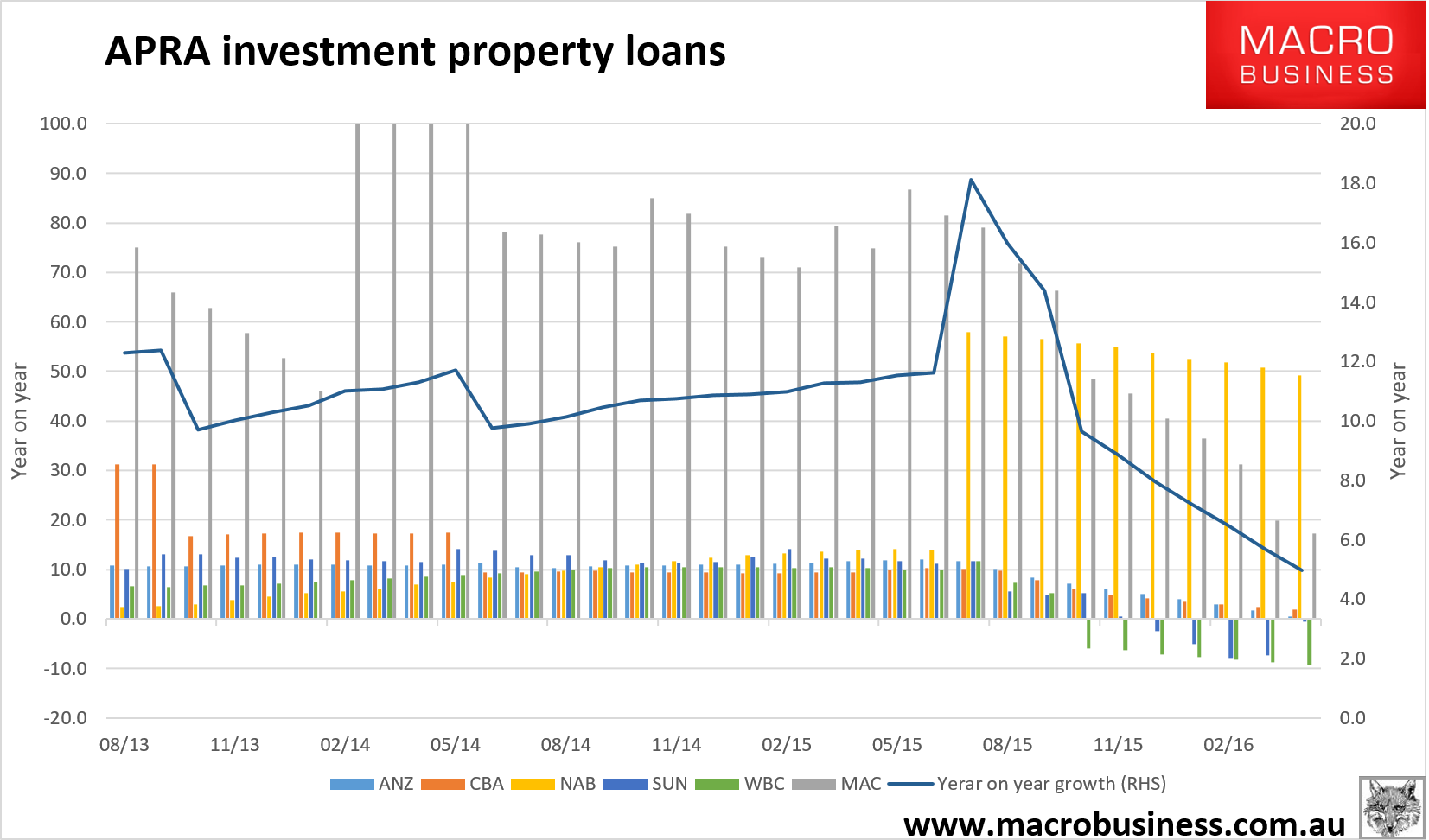
The last thing APRA wants to see is any return of competition in investor lending. It should immediately move to protect the gains it has already made and lower its investor lending cap to 5%.
