
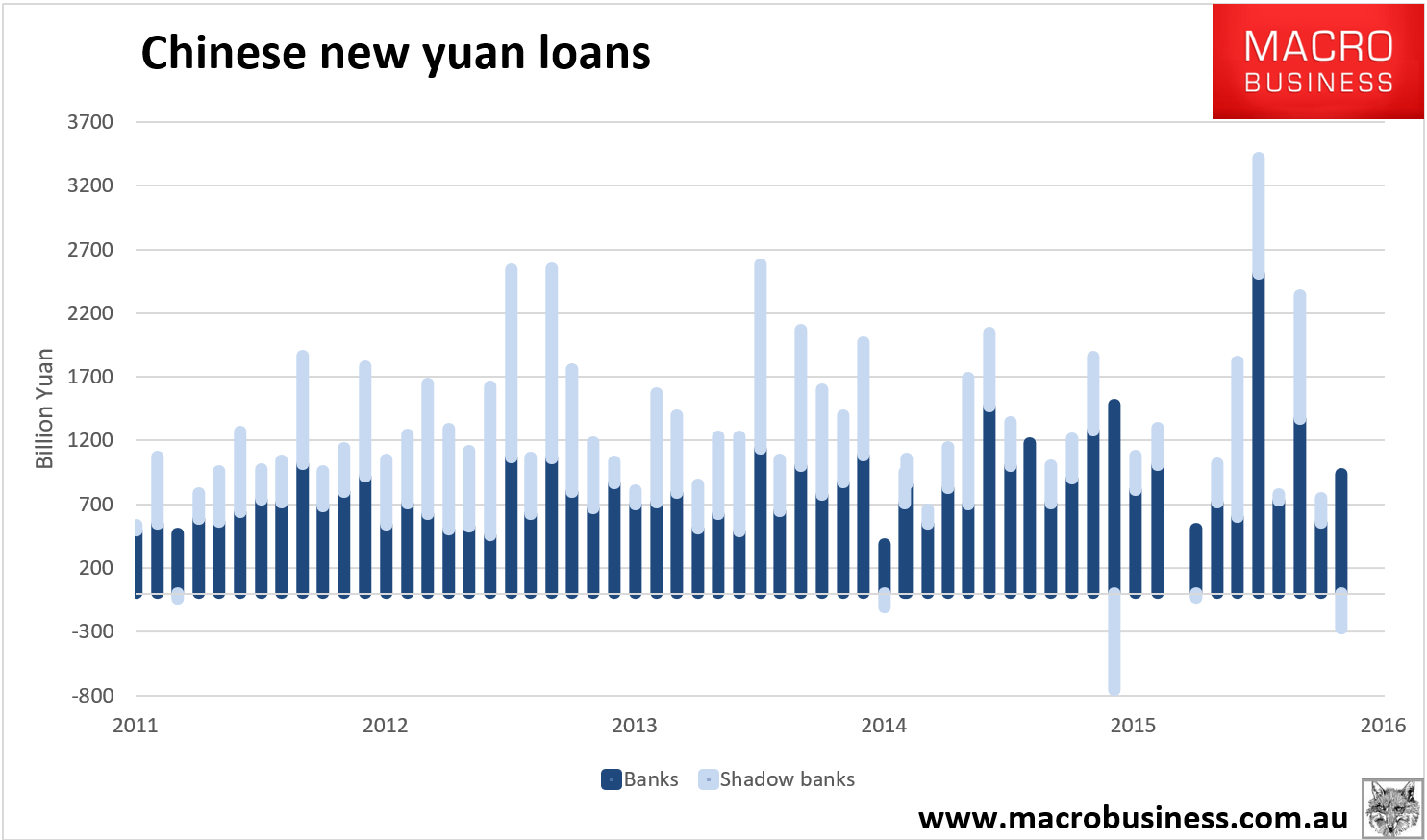
China’s May new yuan loans are out and despite some MSM misreporting they are not good for growth. Banks loans came in solidly at 937.4bn yuan, a decent figure. But the big news was the crash in shadow lending which shrank -277.5bn yuan to cough up a total social financing figure of 659.9bn and a very sharp and ongoing slowdown:
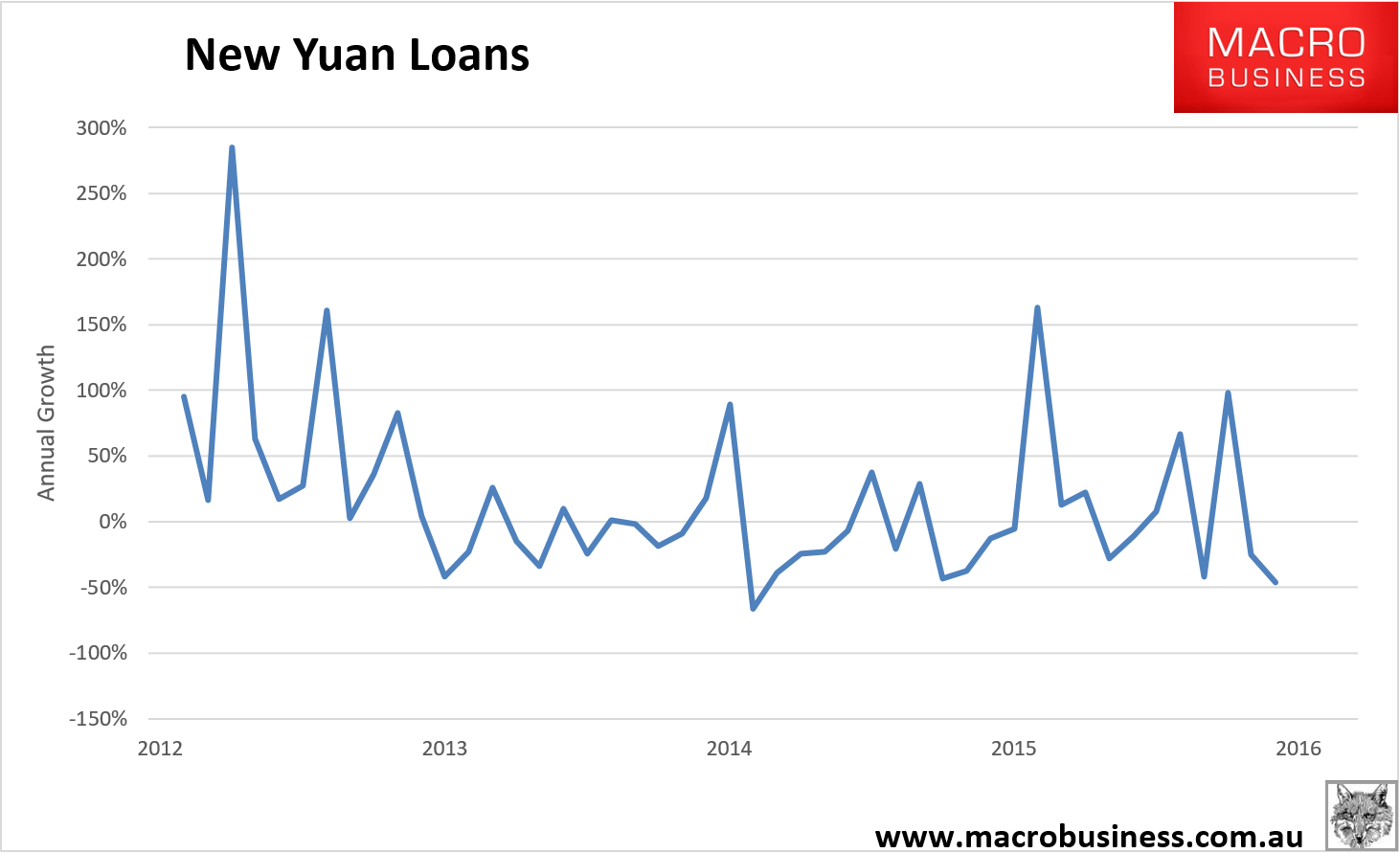
Year on year growth tumbled:
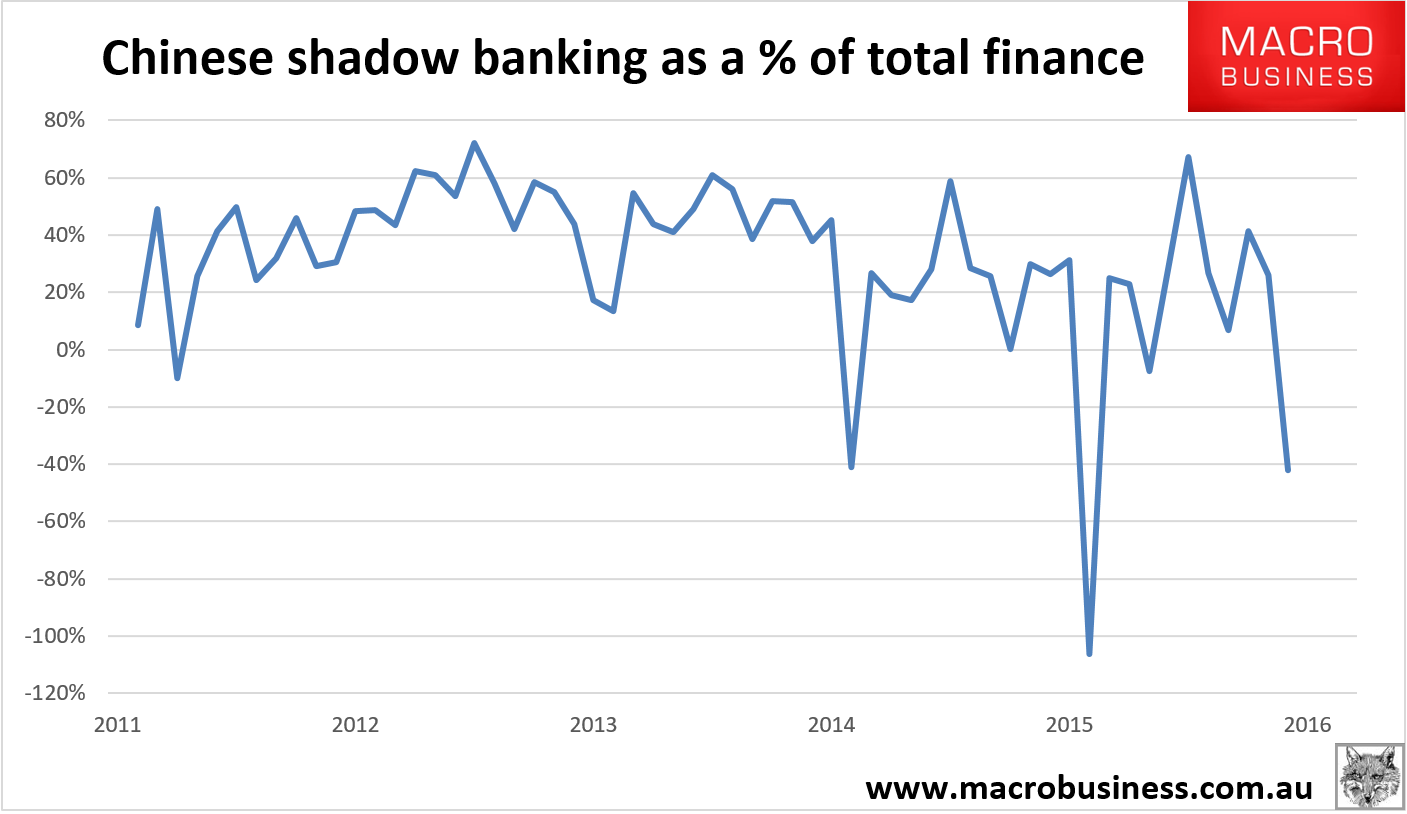
Shadow banking’s share plunged:
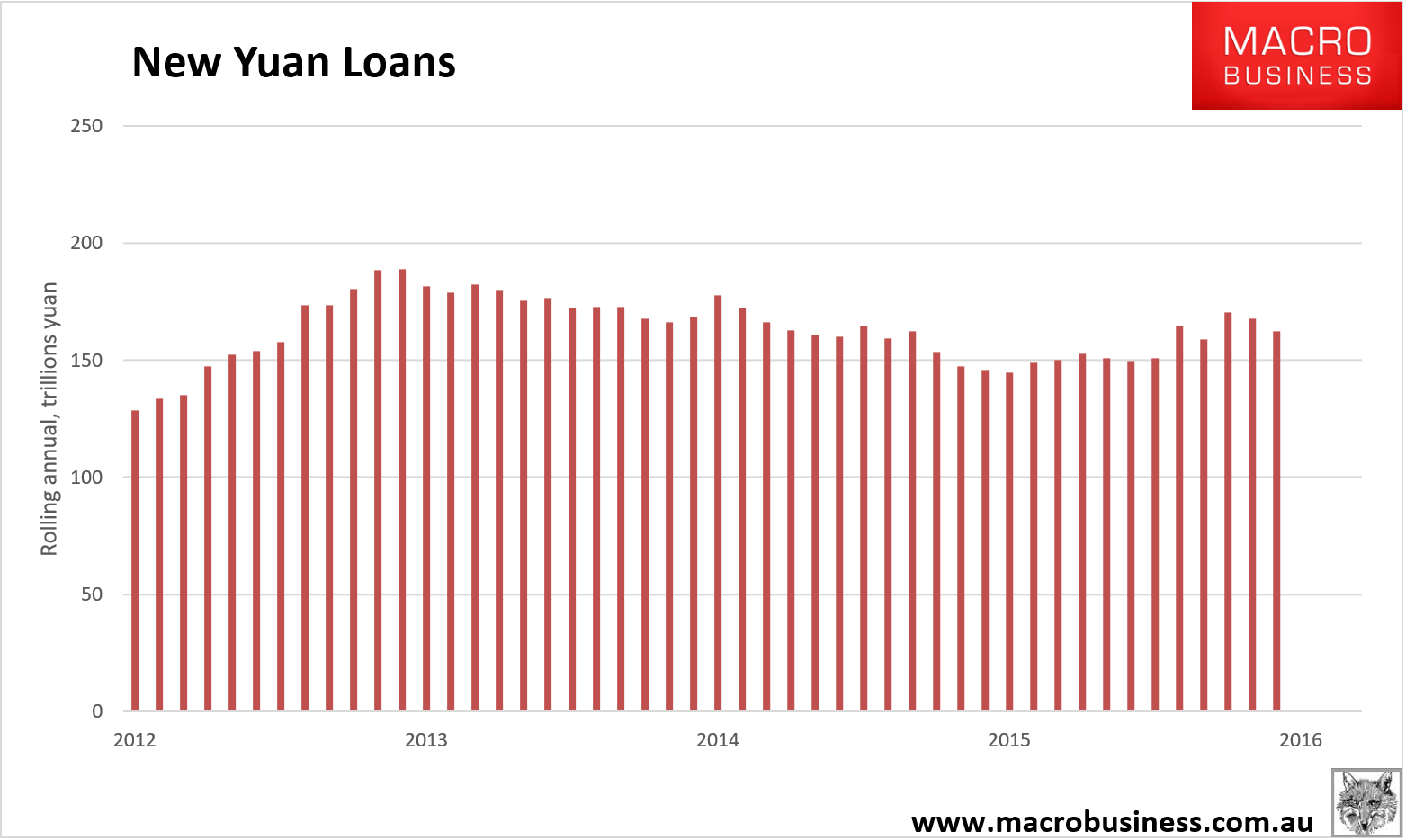
The rolling annual figure has rolled sharply:
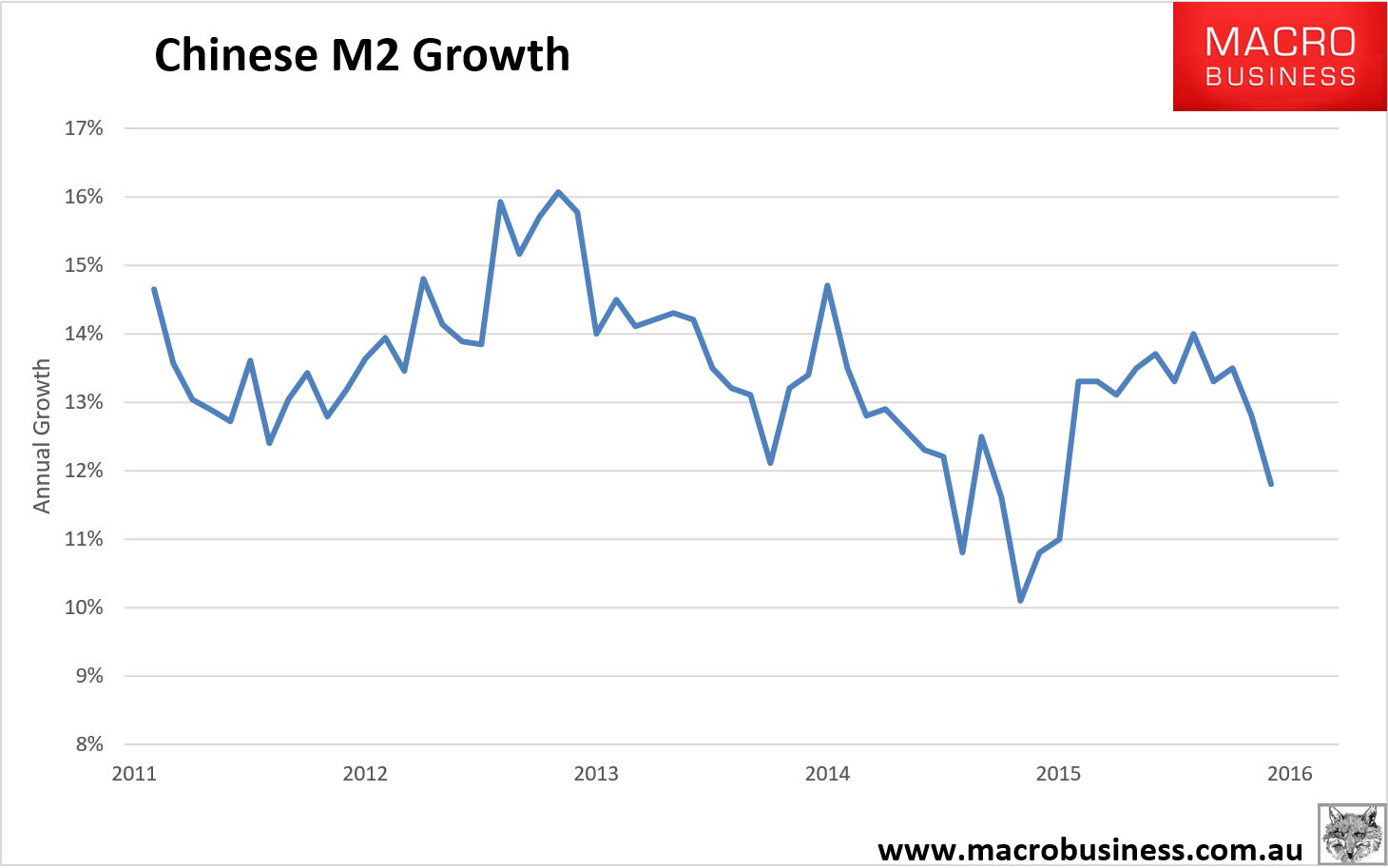
And M2 is falling fast:
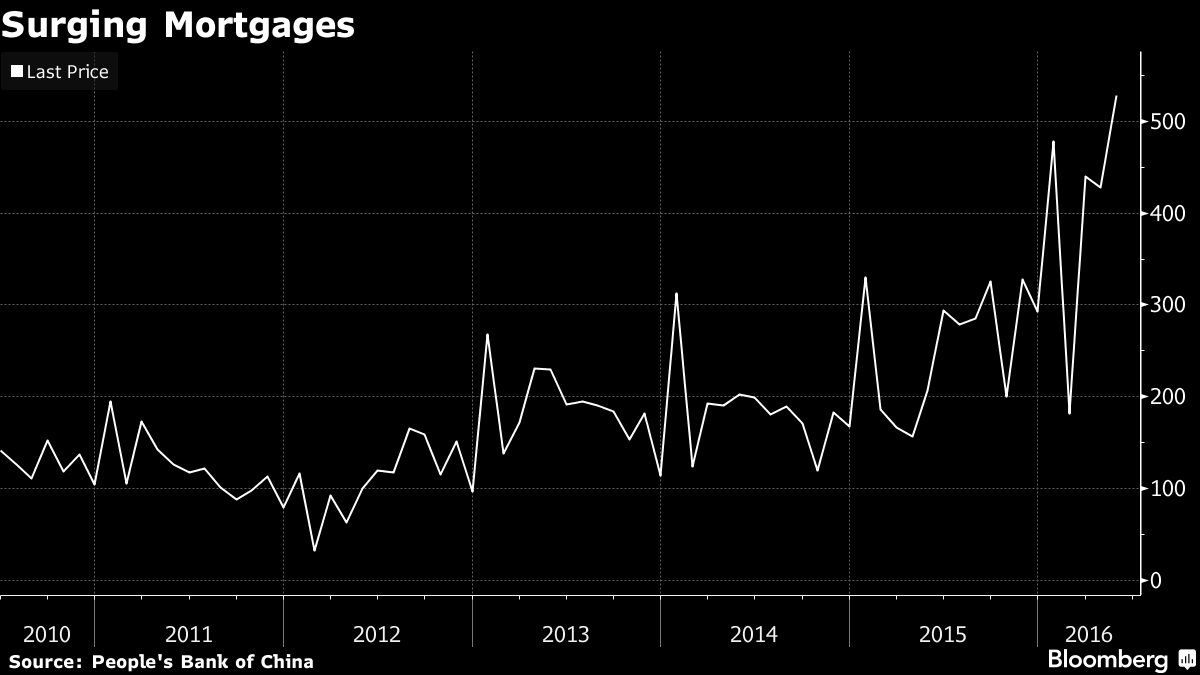
There was one bright spot in mortgages:
However, Chinese shadow banking has strong links with property speculation and development via all sorts of dodgy channels. Goldman has more:
May money and credit data were mixed. RMB loan data surprised the market on the upside but the broader measures of M2 and TSF data were substantially below expectations. Within the strong loan data, a large portion (Rmb 528 bn) was long-term household loans, which are usually mostly mortgage loans. While there are signs of weaker property sales in recent weeks, loan supply often lags contract sales so May credit data likely partially reflected this earlier strength in property sales. As some investors tend to focus considerable attention on RMB loan growth as a gauge of policy stance, June monetary data may ease their concerns about the potential for overly aggressive tightening following the People’s Daily editorial by an “authoritative person” in early May.
However, RMB loans are no longer the main source of liquidity for the real economy and therefore it is more important to look at the broader measures.
Here, the adjusted TSF growth shows a clear deceleration from the April level. While M2 sequential growth rebounded from the exceptionally low April figure, it is still at the sub-10% level. Both TSF and M2 suggest somewhat tighter liquidity conditions, at least compared with a very loose 1Q. As we noted in previous comments, the government already started to tweak its policy stance in April, and the People’s Daily article was released in May. (An analogy for this, in our view, is the driver of a car making a turn before flashing the signal). Still, we view the article as important because it may have changed the policy expectations of economic players such as commercial banks and firms in the real economy.
Tighter monetary conditions, lower future policy expectations, and less administrative pressures within the government were likely the key drivers of slower FAI growth after 1Q. The deceleration in FAI growth in the May data suggests its earlier rebound was totally dependent on policy supports. Meanwhile, FAI from the private sector has continued to decelerate throughout the year.
The H2 China slowing thesis firms up again.
