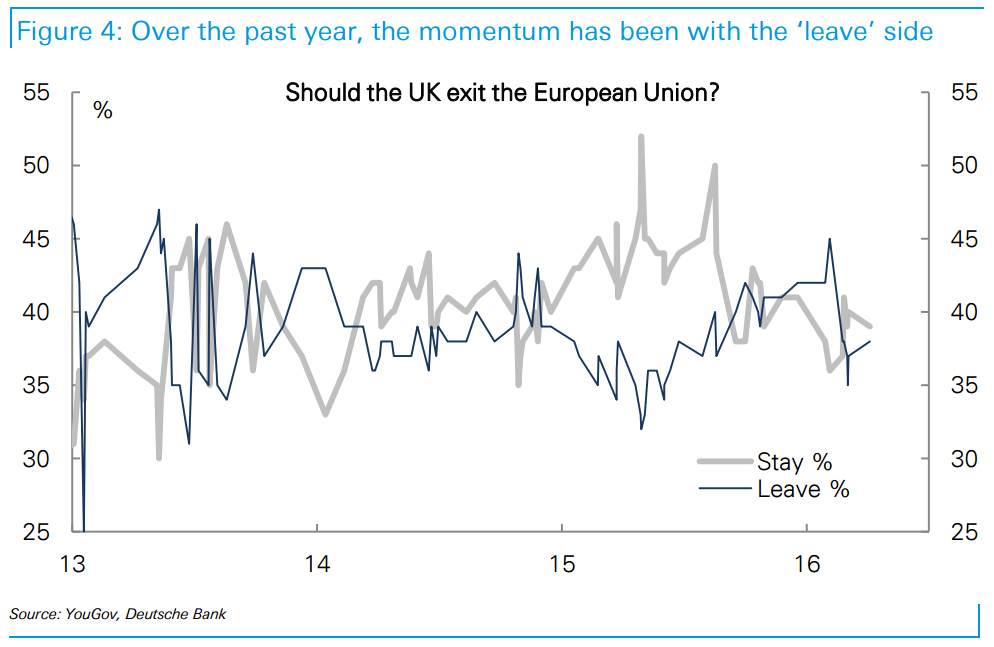
The UK votes on whether to leave the European Union on 23 June. DB’s base case is a victory for the ‘Stay’ camp. That said, momentum has been with the ‘Leave’ side over the past year, with polls now finely balanced. Given the possibility of Brexit happening, we consider the potential impact on Australian stocks.
Momentum hasn’t been kind to the ‘Stay’ camp
Corporate support for staying in the EU has been luke-warm – only 36 FTSE100 companies signed up to a ‘Stay’ letter. Political support hasn’t been overly strong either – the pro-Europe Labour Party has a leader that is perceived to be less passionate, while key Conservative figures have advocated leaving. And the refugee crisis and terrorism incidents could add to immigration concerns amongst voters.
So what will the impact be?
In the lead-up to the vote, uncertainty could weigh on growth as businesses defer spending. And if Brexit happens, this could continue for some time as negotiations proceed. While the treaty provides for two years of negotiations, DB thinks it will take longer, and Europe could drive a hard bargain to dissuade other EU members from following the UK’s lead. What might the impact be?
A Brexit could take GDP growth from 2% to 1% or below.
The GBP could fall 10-20% fairly quickly due to softer capital flows.
The Bank of England’s policy rate could be lower than otherwise.
UK equities could fall 15%, on softer earnings and a PE de-rate.
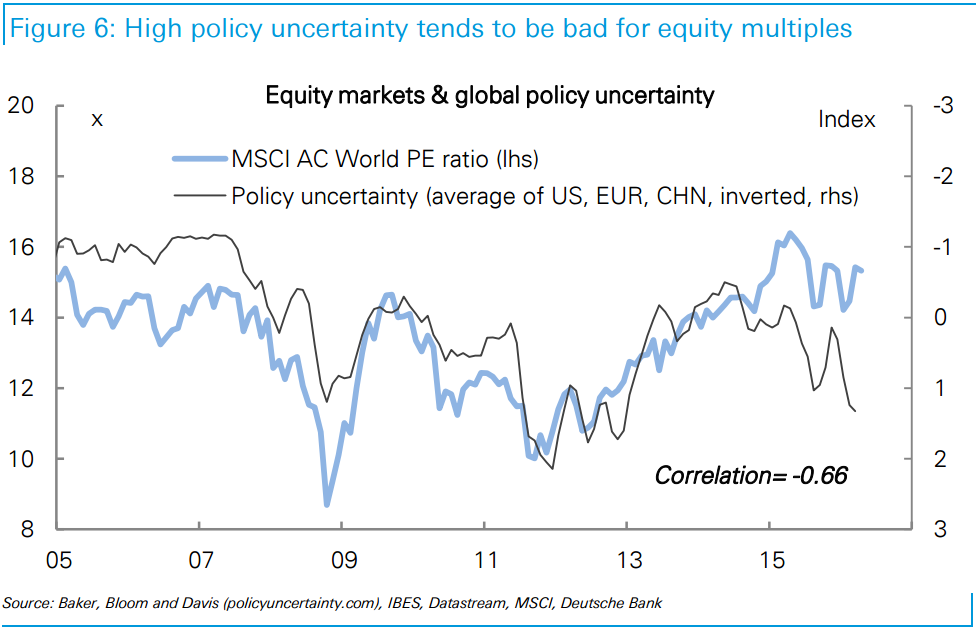
What Australian stocks would be affected? Policy uncertainty is bad for equity multiples, so a Brexit would be expected to drag on equities, including in Australia. At the stock level, the largest impact is likely to come from currency translation, though softer economic conditions would also weigh.
David Llewellyn-Smith is Chief Strategist at the MB Fund and MB Super. David is the founding publisher and editor of MacroBusiness and was the founding publisher and global economy editor of The Diplomat, the Asia Pacific's leading geo-politics and economics portal.
He is also a former gold trader and economic commentator at The Sydney Morning Herald, The Age, the ABC and Business Spectator. He is the co-author of The Great Crash of 2008 with Ross Garnaut and was the editor of the second Garnaut Climate Change Review.