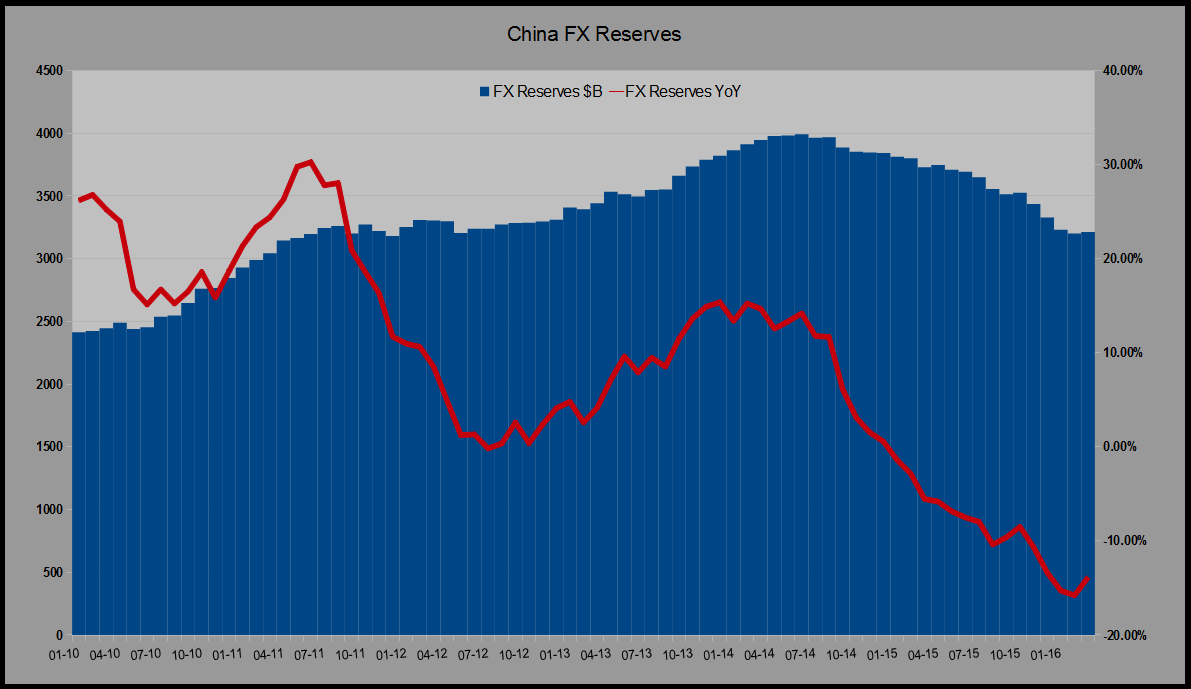
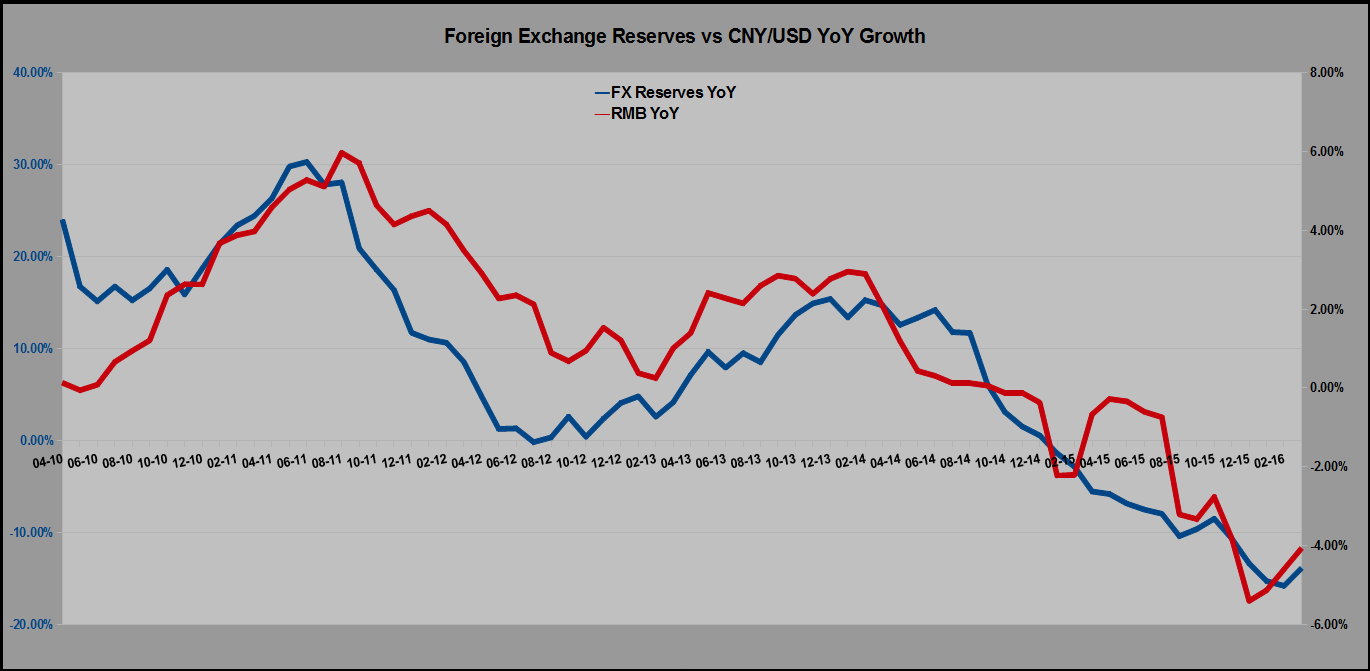
In the financial markets, an asset isn’t said to be in a true bull market unless it’s making new highs in multiple currencies. We can apply this to China’s forex reserves as well, which increased 10 billion when measured in USD, but fell 38 billion measured in SDR (the PBoC now reports reserves in USD and SDR). Outflows continued in March, but were hidden by the falling U.S. dollar.
Capital Economics says the increase in the March reserves is “somewhat misleading.”
“Our calculations suggest that exchange rate fluctuations will have increased the dollar value of the portion of the reserves held in other currencies by roughly US$45 billion,” Capital said in a research note.
“As such, the data still points to PBOC [foreign exchange] sales of around US$35 billion last month, much the same as in February. And since we expect the current account surplus to have been around US$25 billion last month, this would imply net capital outflows of US$60 billion, up slightly from outflows of US$43 billion in February.”
At the same time, Capital said the fall in outflows in February may have been because banks and companies shut down over the Chinese New Year holiday.
“It is noteworthy that outflows did not jump back more significantly last month as business resumed after the holiday,” it said adding outflows were a much bigger US$124 billion in January.
David Llewellyn-Smith is Chief Strategist at the MB Fund and MB Super. David is the founding publisher and editor of MacroBusiness and was the founding publisher and global economy editor of The Diplomat, the Asia Pacific’s leading geo-politics and economics portal.
He is also a former gold trader and economic commentator at The Sydney Morning Herald, The Age, the ABC and Business Spectator. He is the co-author of The Great Crash of 2008 with Ross Garnaut and was the editor of the second Garnaut Climate Change Review.