The Australian Greens have commissioned the Parliamentary Budget Office (PBO) to estimate the Budget savings that would arise under four tax reform proposals, namely:
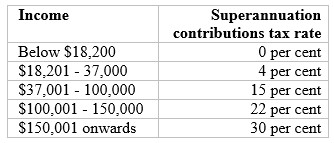
1. Progressive superannuation taxation to replace the 15% flat tax rate on pre-tax superannuation contributions from 1 July 2016 as follows:
Advertisement
2. The removal of negative gearing for assets purchased from 14 December 2015.
3. The abolition of the following fossil fuel subsidies from 1 January 2016:
– fuel tax credits (FTCs) for all industries except agriculture
Advertisement
– accelerated asset depreciation for aircraft, the oil and gas industry and vehicles (except those used for agricultural purposes)
– the immediate deduction for exploration and prospecting expenses for the mining industry
– the Global Carbon Capture and Storage Institute
Advertisement
– the Carbon Capture and Storage Flagships program
– the National Low Emissions Coal Initiative.
4. The removal of the capital gains tax (CGT) discount for all capital gains realised on or after 14 December 2015. Individuals would instead be able to index their cost base by the consumer price index (CPI) so that tax is only applied to real capital gains.
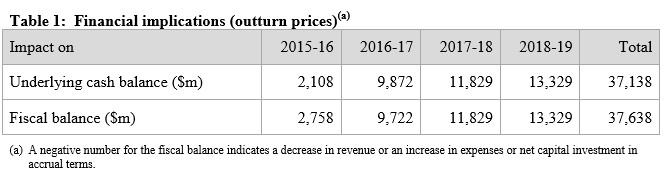
The PBO has estimated that such reforms would improve the Budget by around $37 billion over the four-year forward estimates period, comprising a mix of increased tax revenue and lower expenditure, along with ongoing Budget benefits:
This proposal would be expected to increase the underlying cash balance by around $37.1 billion and the fiscal balance by around $37.6 billion over the 2015-16 Budget forward estimates period.
Over this period, on an underlying cash balance basis, this impact reflects an increase in receipts of around $17.8 billion, a decrease in payments of around $19.5 billion and an increase in departmental expenses of $112 million. On a fiscal balance basis, this impact reflects an increase in revenue of around $17.4 billion, a decrease in expenses of around $20.3 billion and an increase in departmental expenses of $112 million.
This proposal would have an ongoing impact beyond the forward estimates period…
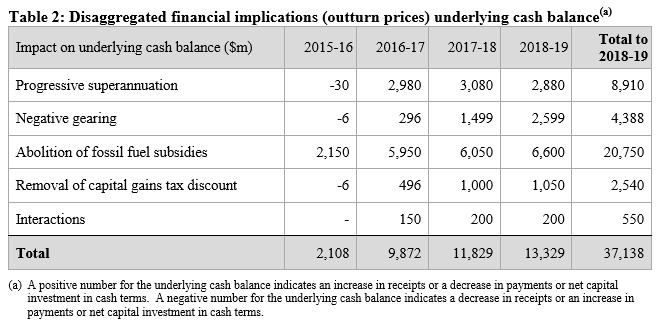
A breakdown of savings by proposal is presented below:
Advertisement
The PBO notes that its estimates are of low reliability, since they are highly sensitive to assumptions and do not account for potential broader macro-economic impacts.
Leith van Onselen is Chief Economist at the MB Fund and MB Super. He is also a co-founder of MacroBusiness.
Leith has previously worked at the Australian Treasury, Victorian Treasury and Goldman Sachs.