

by Chris Becker
Last week the Aussie dollar teased with the 69 cent level against the USD a few times and finally capitulated to the low 69 level on Friday night on the back of the solid US unemployment or NFP report. This fall is not unexpected as the bets on commodities and Australia’s 24 year recession free record go into full reserve.
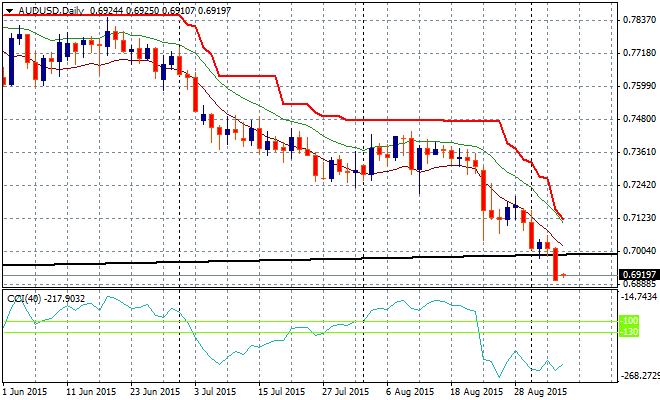
But let’s not forget that while the USD is the “King” currency, which the Chinese Yuan is tied to (although steadily pegged lower), Australia has to deal with devaluation against the “crosses” – the other major currencies.
Let’s have a look because the falls have been equally, if not more dramatic:
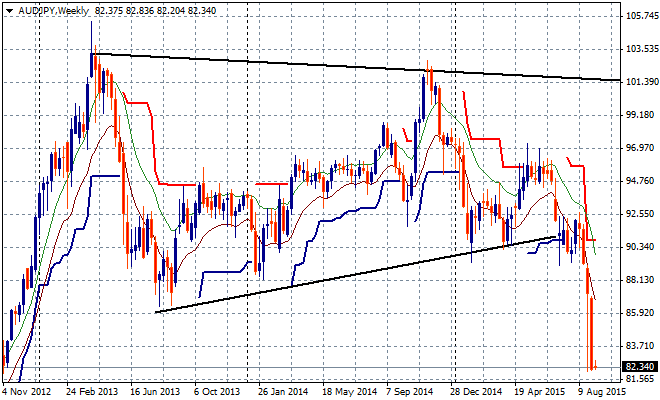
First the Yen, which broke down recently after hovering around the 90 handle (thankfully I did all my Christmas shopping early) and is now at a five year low. Not so good if you want to buy electronic goods or cars (just in time for Australian auto sector to close too!)
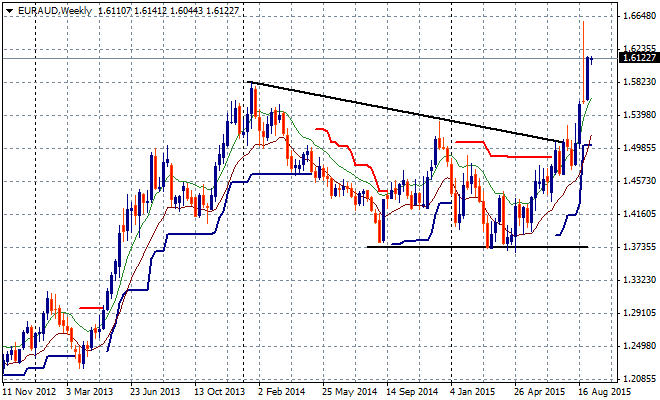
Next, Euro, which is traded as Euro/Aussie or EURAUD. Euro has been appreciating against Aussie for sometime now, forming a point of control around the 1.45 or so handle for the last couple of years. In recent weeks it has completely broken out to new six year highs, currently trading north of 1.61 and looking set to go higher even in face of more European style QE. Another shot in the arm for Aussie exporters (what’s left of them) but again, expensive for holidaymakers and buyers of European autos:
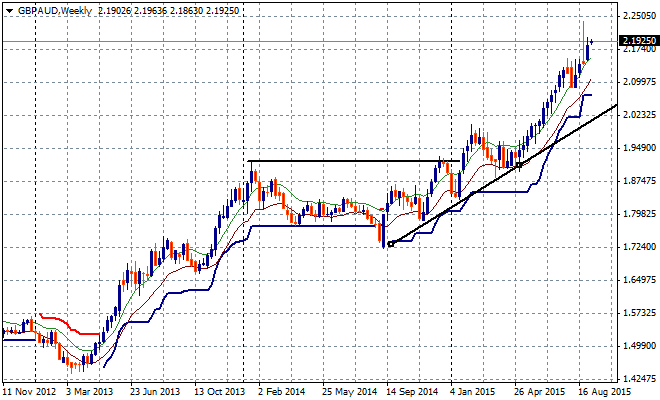
A similar story with Pound Sterling, again traded inversely as Pound/Aussie or GBP/AUD. This is a much simpler chart that has kept many people I know (hint: tell) to be long GBP in Aussie dollars as it accelerates way past 2:1. Are we on track for the early 2000s at 3:1?
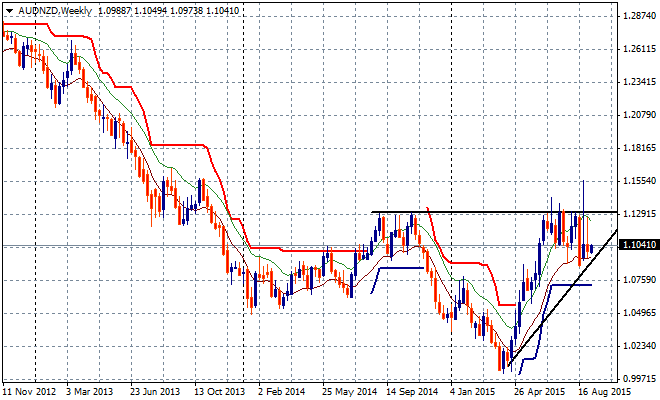
The one silver lining or fern is the rise of the Aussie against the Kiwi. This is mainly due to the reversal in the RBNZs rate cycle, as parity beckoned in June, the OCR was cut 0.25% and then again in July, sharply appreciating the exchange rate as the interest rate differential tightened (now at 3% vs 2%)
What impact these falls will have on tradable inflation is an unknown, as import prices have been held down by a grossly overvalued AUD. Lack of demand as household income falls will likely offset some of any sustained rise in tradable inflation, but this is a big unknown:
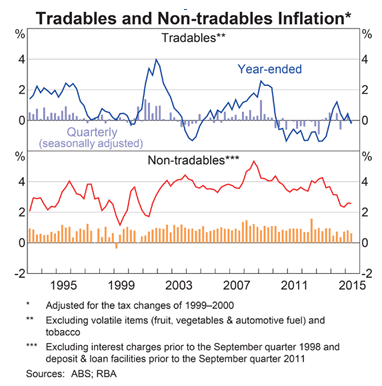
For what’s left of Australia’s export industry, sans commodity extractors, the falls in the Australian dollar against the basket of currencies are good news. It’s been far too late coming and of course, the largest potential benefactor – the automotive industry – won’t be around much longer.
At least holidays in New Zealand will be cheaper!