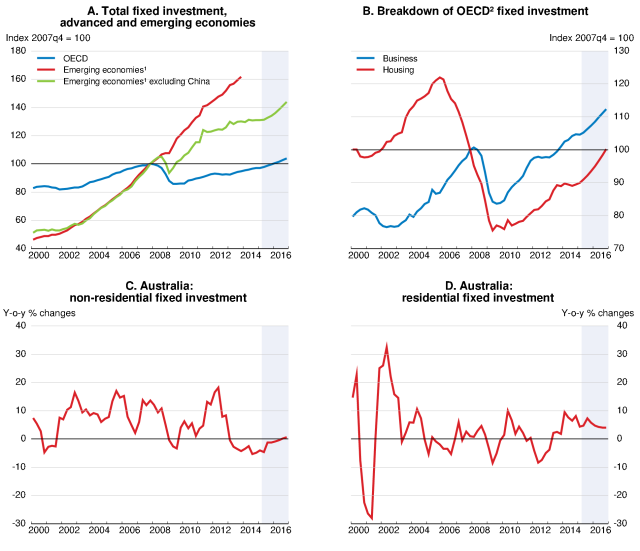
Growth is projected to dip to 2¼ per cent in 2015 but pick up to nearly 3% in 2016. Gathering momentum in consumption, non-resource investment and exports help the economy adjust and recover from the fall in commodity prices and unwinding resource-sector investment. Consumer price inflation has been dented by lower oil prices and will remain moderate due to economic slack.
Monetary policy firepower should be held in reserve given uncertainties about the outlook and the downside aspects of rate cuts on the booming housing and credit markets. Fiscal policy should continue to provide support if needed through the operation of automatic stabilisers. Structural reform should facilitate post-resource-boom adjustment, in particular, further shift towards indirect taxes.
The unwinding of resource-sector investment reflects large-scale projects reaching completion and easing-up of investment plans given commodity-price falls. Enhancing the climate for business investment in non-commodity sectors requires maintaining sound macroeconomic policies, further tax reform, cuts to red tape and competition-boosting measures. Plans to boost investment in public infrastructure are welcome, but project selection requires rigorous cost-benefit analysis.
The forecasts are rubbish straight from Treasury but the narrative is right. Wonder why we don’t see it at home?
David Llewellyn-Smith is Chief Strategist at the MB Fund and MB Super. David is the founding publisher and editor of MacroBusiness and was the founding publisher and global economy editor of The Diplomat, the Asia Pacific's leading geo-politics and economics portal.
He is also a former gold trader and economic commentator at The Sydney Morning Herald, The Age, the ABC and Business Spectator. He is the co-author of The Great Crash of 2008 with Ross Garnaut and was the editor of the second Garnaut Climate Change Review.