
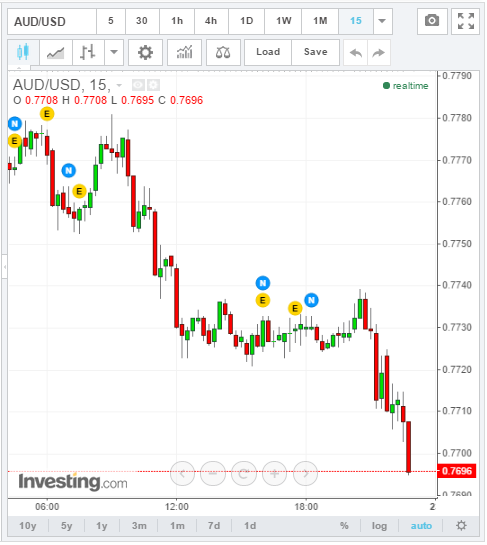
The Aussie is taking a caning today after weaker than expected ABS house price growth and a modest improvement in the China PMI but a closer look shows something else going on:
The real driver is a suddenly bullish US dollar:
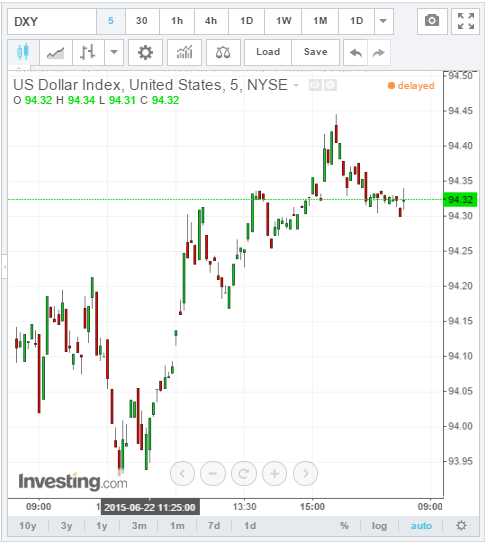
Market conviction that the Greek can is about to be kicked appears to have reset traders to their default position – expecting Fed rate hikes and buying dollars. Ironically, had Greece exited the euro and triggered a debt crisis the rush would have been back into US dollars anyway so it’s all a bit mysterious but nobody should ever accuse markets of betting for the long term.
Goldman has more:
From an economic perspective, Greece shows that “internal devaluation” – whereby structural reforms are meant to restore competitiveness and growth -is difficult politically and a poor substitute for outright devaluation. Emerging markets that devalue during crises quickly return to growth, powered by exports, while Greek GDP continues to languish. We emphasize this because – even if a compromise involving a debt haircut is found – this will not do much to return Greece to growth. Only a managed devaluation, with the help of the creditors, can do that.
With respect to EUR/$, we think the Bund sell-off increases EUR/$ downside if tensions over Greece escalate further. This is because the ECB, including via the Bundesbank, would almost surely step up QE to prevent contagion. We estimate that the immediate aftermath of a default could see EUR/$ fall three big figures. The ensuing acceleration in QE would then take EUR/$ down another seven big figures in subsequent weeks.
We thus see Greece as a catalyst for EUR/$ to go near parity, via stepped up QE that moves rate differentials against the single currency.
Bad for commodity prices, that, and better for Aussie weakness against the US dollar but not the real exchange rate which needs to fall against everyone.
