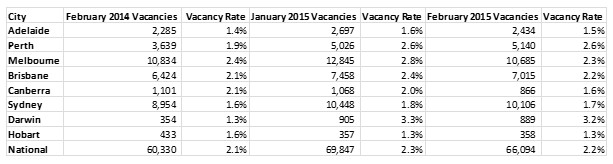
As shown above, the fall in vacancies over the month was driven by Melbourne, where the vacancy rate fell 0.3% (-2,160). That said, vacancies fell in all but two capitals over the month where they remained stable.
Over the year, the small rise in the vacancy rate nationally was driven by Perth (+0.7%) and Darwin (+1.9%), but were fairly steady in the other capitals, with the exception of Canberra (-0.5%).
According to SQM managing director, Louis Christopher, vacancy rates will likely continue to rise, led by the mining stronholds:
…the vacancy rate kept climbing in Darwin and Perth, reflecting the impact of the commodities downturn, which is weighing on employment and property markets in Western Australia and the Northern Territory. Managing Director of SQM Research, Louis Christopher, said vacancy rates in Darwin and Perth will probably keep climbing through 2015 and could edge up nationally if the jobless rate rises further. “While unemployment fell slightly in February, a slowing Australian economy overall will likely place greater upward pressure on the nation-wide vacancy rate though 2015,” he said.
“Ongoing weakness in commodity prices will filter through to the jobs and property markets in Perth and Darwin. Nationally, a continuation in below-trend economic activity will likely push the unemployment rate up towards 7%, which will ultimately work to keep a lid on vacancy rates and rents in other capital cities,” Mr Christopher said.
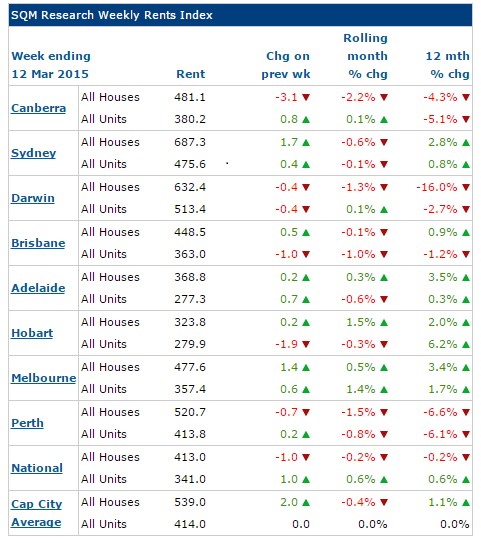
SQM’s asking rents data more or less confirms these trends, with rents falling heavily in Darwin and Perth, which has pulled down rental growth to below inflation nationally: