
From the SMH blog:
Here are some early responses from economists to this morning’s data dump, ahead of the RBA’s rate decision at 2:30:
Kieran Davies, Barclays:
We think consumer spending is back on track for a solid gain this year. The downside risk that budget worries will spill over into spending has faded, given the Senate rejected the government’s more controversial measures.
Although growth in household income remains weak, we see spending underpinned by strong growth in the population and rapidly rising house prices, where the saving rate should edge lower given large gains in household wealth.
Annette Beacher, TD Securities says Retail + trade = good for GDP and AUD:
Stronger retail sales, a wider trade deficit and an on-balance softer labour market made for interesting reading, but is on-balance AUD positive and unlikely to shift the RBA from its staunchly on-hold stance. Indeed, such conflicting news and market volatility are guaranteed to keep the RBA on the sidelines until the picture clears.
Shane Oliver, AMP Capital:
The likely strong contribution to GDP growth from trade and retail sales points to solid September quarter GDP growth. That said the mixed nature of recent readings on the Australian economy generally points to the RBA leaving interest rates on hold at record lows well into next year.
Michael Turner, Royal Bank of Canada:
The economy continues to plod along at pace somewhere below trend. The strength in retail hints at some spill-over from the housing market, but the weakness of the labour market continues to work in the opposite direction, weighing on confidence and wage growth. Meanwhile, the declining terms of trade are also working to constrain nominal GDP growth. None of these themes is new, and they continue to provide reasons for the RBA to portray a firmly neutral stance.
Peter Jolly, NAB:
This strong retail sales growth is a little at odds with surveys which continue to show households are cautious and continue to save against the back-drop of falling real incomes. Today’s data tells us that this negative real income factor is being entirely offset by the positive wealth effect stemming from the strong residential housing market in Sydney, and to a lesser extent Melbourne.
Goodness, it’s one month! The trend remains roughly where it was once you take out the post-election spike, that is, weak:
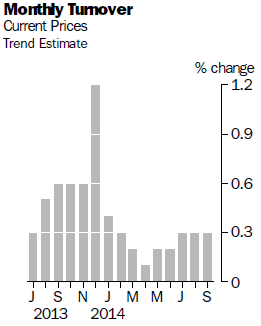
There is also the carbon tax stimulus and Iphone6 to help a bit of temporary purse loosening. Looking ahead, much of the income shock isn’t even here yet, macroprudential is coming and housing is going to slow next year. I’ll stick with the cautious consumer. It’s structural.
