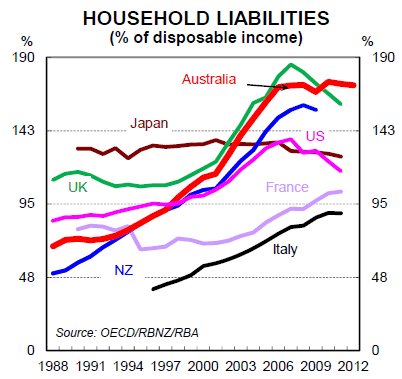
Find a must view video from FTAlphaville interviewing Atif Mian and Amir Sufi, the authors of a cracking new book: House of Debt. The book argues:
– The above-trend rise in household debt during the years prior to the recession of 2008-2009 included a widespread extension of credit to subprime and low-income borrowers.
– This rise in debt led the home price bubble (not the other way around), though subsequently the price bubble also incentivised borrowers to withdraw funds against their homes.
– The lenders extending this debt had little incentive to worry about underwriting standards, as they expected to package mortgages into MBS and sell them to investors.
– When mortgage delinquencies started rising and house prices falling, the losses to homeowners’ net worth had two effects: “The first is the concentration of losses on those who have the highest spending sensitivity with respect to housing wealth: debtors. The second is the amplification of the original house-price shock due to foreclosures.”
– These effects produced a demand shock represented by a decline in household consumption, with the other components of growth later following consumption down.
– The responses of monetary policy (limited at the zero lower bound) and fiscal policy (too unfocussed) were helpful, but they were also insufficient and badly targeted, failing to address the root problem of the collapse in households’ net worth — and particularly in those households with the highest marginal propensity to consume.
– Despite some logistical hurdles, a better response would have been to reduce the mortgage principal of these homeowners, and to allow solvent underwater homeowners to refinance at lower fees.
As you watch, consider this chart: