

The ABS’ dwelling approvals data for January, released yesterday, provided some much needed relief after last week’s dismal capital expenditure survey.
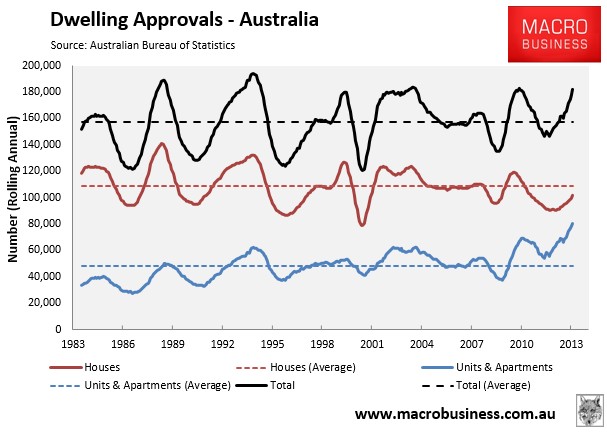
Approvals rose strongly, up a seasonally-adjusted 34% year-on-year, with house approvals up by 26.4% and unit approvals up by 46.3% (see next chart).
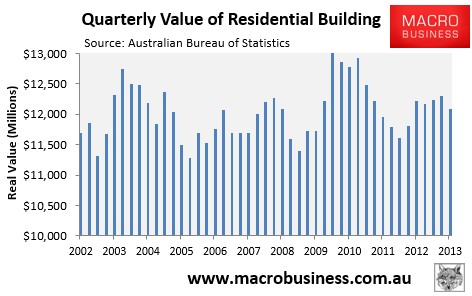
While these figures won’t affect today’s GDP release for December 2013, where the real value of residential construction actually fell over the quarter and will detract from growth (see next chart), they auger well for a decent uplift in construction throughout 2014.
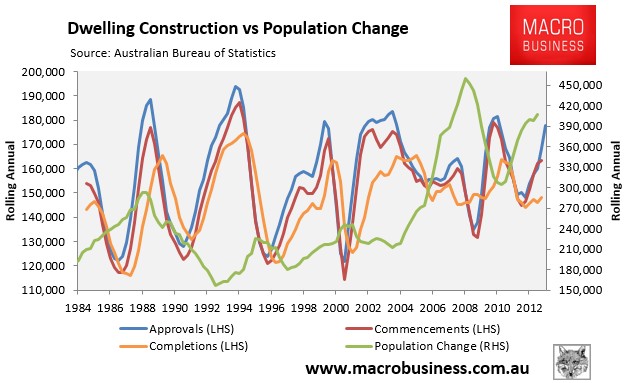
As shown by the next chart, dwelling approvals are a strong leading indicator for both commencements and completions, suggesting good times ahead for home builders:
That said, as noted by Callum Pickering yesterday, there is a good chance that actual economic activity arising from the upcoming construction upswing will disappoint.
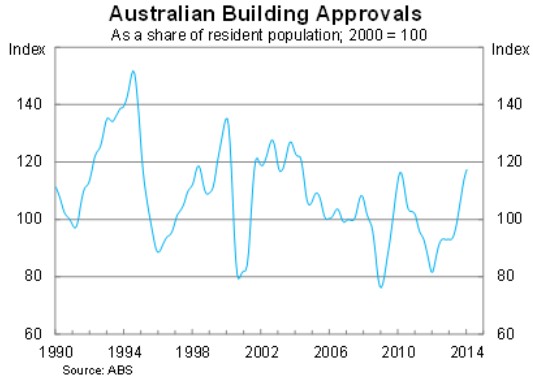
First, while dwelling approvals have improved, they remain at a fairly low level as a share of the population (see next chart).
Similarly, the lift in dwelling completions – when it does finally arrive – will be off a very low base (see next chart).
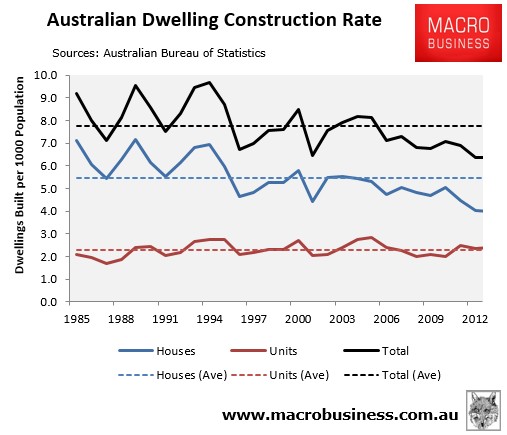
Second, most of the recent growth in approvals has been in apartments, which are generally lower cost and use less labour inputs than a similar number of houses (see next chart).
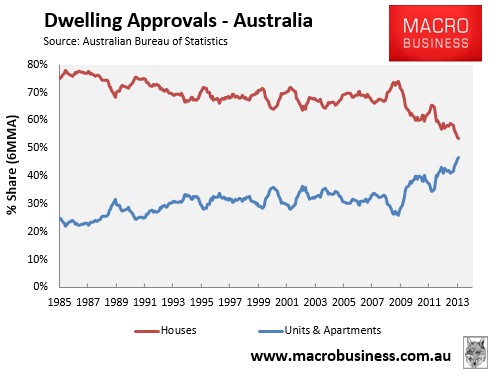
So while the pick-up in dwelling approvals is encouraging, it is likely to be much less pronounced than previous housing cycles.
All of which makes housing poorly placed to fill the void as the mining boom unwinds. As shown by the next chart, engineering construction (mostly mining) is around 2.5 times the size of residential building:
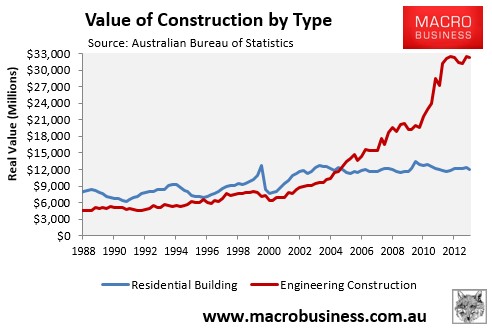
This means that for every 10% decline in mining investment, dwelling construction would need to lift by 25% just to keep activity constant – a highly improbable scenario.
And given that the first estimate of mining capex for 2014-15 was 25% lower than the corresponding estimate for 2013-14, there appears to be buckley’s chance of filling the mining hole.
unconventionaleconomist@hotmail.com
