

In the lead-up to last year’s Federal Election, Joe Hockey suggested that it could be a good time to sell Canberra housing, noting that home prices could be pushed lower by a Coalition Government:
“There is a golden rule for real estate in Canberra – you buy Liberal and you sell Labor”…
He did not specify that this result would be due to cuts to the public sector that are being promised by Opposition leader Tony Abbott if he wins the September election.
However, house prices in the territory dipped when John Howard made big cuts to the public service in his first term of government.
Since making that call, home prices in Canberra have risen slightly, albeit at a rate well below the national average.
Rents, on the other hand, are falling, driven by growing supply and declining jobs growth as the Federal Government looks to cut expenditure.
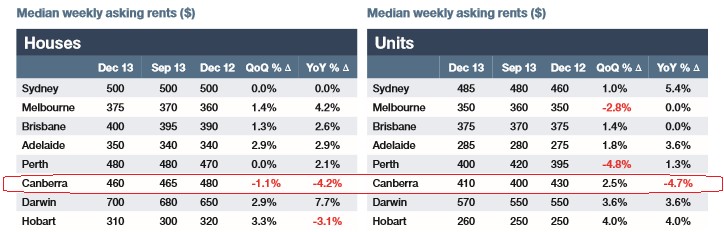
As reported by APM recently, asking rents in Canberra fell by more than 4% in the year to December 2012:
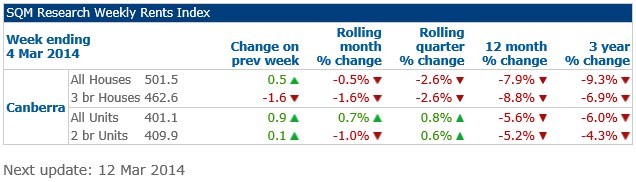
Meanwhile, SQM Research’s asking rents series paints a similar picture, with rents sharply lower for both houses and units when measured on an annual basis:
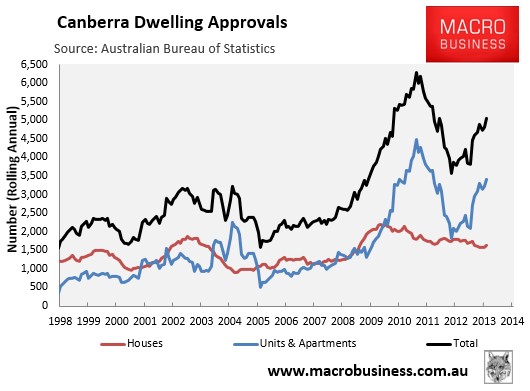
In addition to the worsening employment outlook, Canberra rents are being suppressed by rising supply. Dwelling approvals remain elevated, particularly amongst apartments:
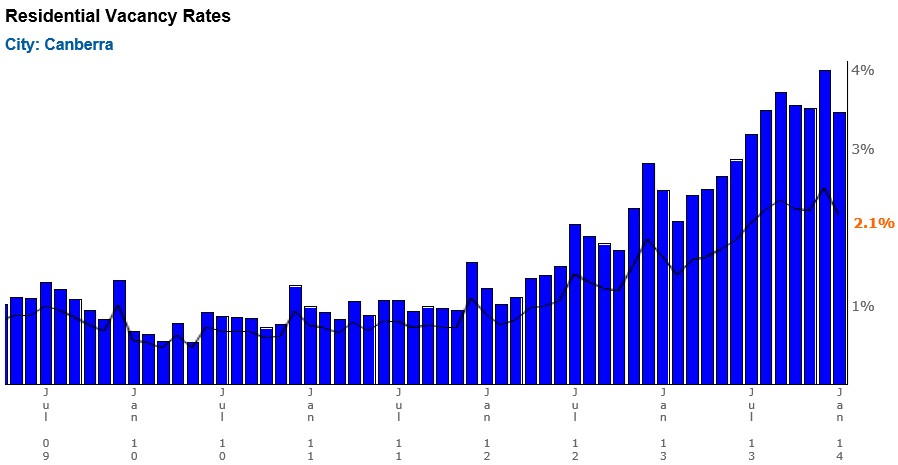
And rental vacancies are on the rise, albeit still fairly tight:
All of which is great news for Canberra renters, who have until recently been forced to endure some of the highest rents in the nation.
unconventionaleconomist@hotmail.com
