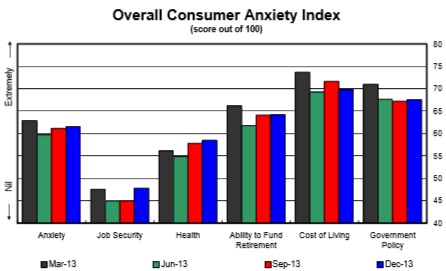
NAB has released its Australian Consumer Anxiety Index for the December quarter of 2013, which revealed that consumer anxiety is rising amid ongoing weakness in the domestic economy. According to NAB:
Consumer anxiety rose to 61.5 points in Q4 from 61.1 in Q3.
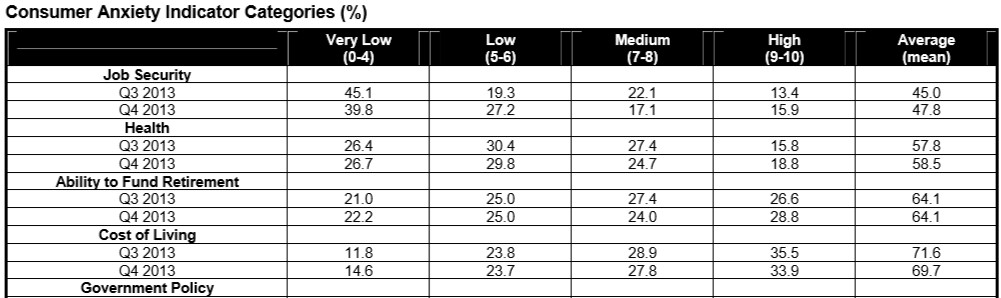
With the labour market softening, anxiety over job security has started climbing (particularly in WA and Victoria) although it still rates as the lowest concern overall.
Instead, consumers are still most worried about the cost of living (but marginally less so than in Q3).
The level of anxiety related to health and government policy was up slightly and unchanged for ability to fund retirement.
Among other key findings: Victorian consumers are most anxious; women are now significantly more anxious than men (especially ability to fund retirement, job security, cost of living and health); anxiety rose most for 30-49 year olds; anxiety was higher for those in part time employment and working in “other” or sales/clerical jobs…
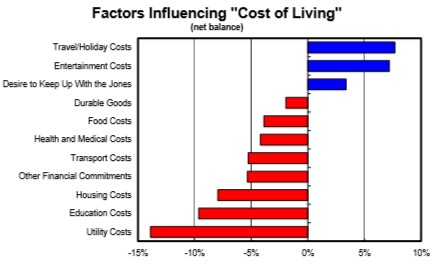
Overall, the most important influences on higher cost of living include: utility bills, education and housing costs. In contrast, travel/holiday costs and entertainment were not considered to have a negative impact on the cost of living.
For larger households utility costs is by far the biggest concern – far more so than for those living by themselves, a result also reflective of those households with children. Though Victorians were generally most concerned regarding cost of living, they ranked transport costs far better than other states.
Leith van Onselen is Chief Economist at the MB Fund and MB Super. He is also a co-founder of MacroBusiness.
Leith has previously worked at the Australian Treasury, Victorian Treasury and Goldman Sachs.