From Saul Eslake today comes a summary with which I completely agree:
The September quarter national accounts data showed that the pulse of economic recovery in non-mining sectors remains relatively weak. It is net
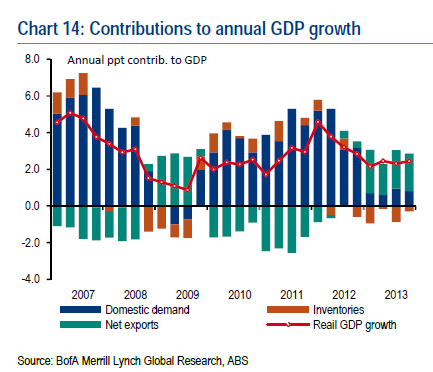
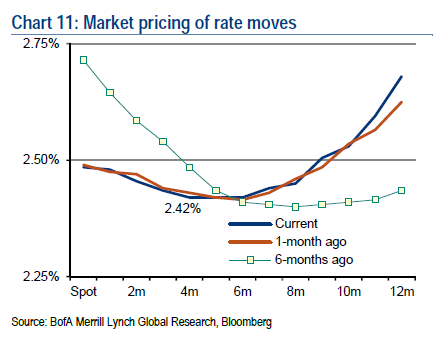
exports, as imports decline and resource exports rise, which have dominated economic growth over the past twelve months. And in doing so has kept growth respectable. Indeed of the 2.3% growth over that period, 2.1% has been from net exports – underscoring that the private sector domestic economy remains very soft. And in our view if the A$ remains elevated at what the RBA describes as “uncomfortably” high levels this would warrant at the very least that it will need to keep monetary policy accommodative through 2014. With the likelihood more stimulus from lower interest rates will be required. As such we still forecast another rate cut in the first half of 2014.
Domestic economy remains soft, rebalancing less than convincing
The September quarter national accounts recorded that GDP expanded by 0.6% in the quarter to be up 2.3% through the year. This result was weaker than the market expectation of 0.7%qoq and 2.6%yoy. June quarter growth was revised a touch higher to 0.7% from 0.6%.
It remains our forecast that the annual rate of economic growth will remain in a range between 2-2½%yoy over the coming year – very much below trend growth.
This basis for our forecast is that we have only just seen the peak in the mining investment cycle at around 7% of GDP. And this has pushed business investment as a proportion of GDP well above average to what was the highest level in more than fifty years.
What we have not yet seen is any consistent decline in this cycle from current levels that would bring mining investment back to 2-3% of GDP over the next two or three years. This has to occur – it just remains a question of timing. And even if the non-mining sector does start to recover modestly it will unlikely be enough to totally offset this decline.
It is our view that the resulting sub-trend economic growth will see the unemployment rate continue to rise as labour markets remain soft. And this will keep household spending and borrowing (at least for consumption) expanding at what are currently average levels – reflecting the ongoing consolidation and prudent behaviour in the sector.
As a result the 55% of the economy that household consumption represents will not come to the rescue and push overall growth back towards trend. We therefore do not subscribe to the view that markets seem to be pricing in, that this will be a “normal” V-shaped recovery. We look for an extended period of below trend growth that will be characterised by weak domestic demand and strong net exports.
David Llewellyn-Smith is Chief Strategist at the MB Fund and MB Super. David is the founding publisher and editor of MacroBusiness and was the founding publisher and global economy editor of The Diplomat, the Asia Pacific's leading geo-politics and economics portal.
He is also a former gold trader and economic commentator at The Sydney Morning Herald, The Age, the ABC and Business Spectator. He is the co-author of The Great Crash of 2008 with Ross Garnaut and was the editor of the second Garnaut Climate Change Review.