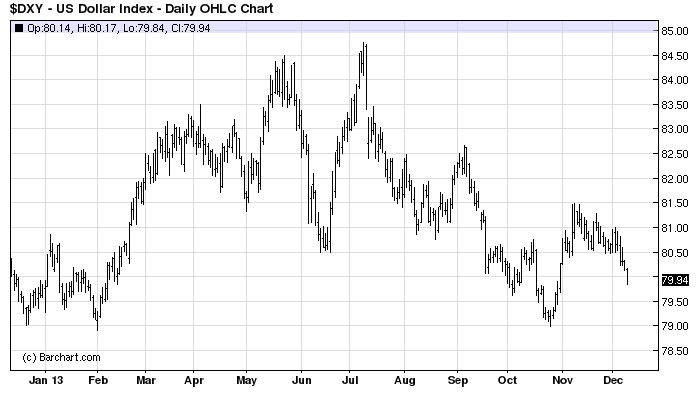
Last night’s market moves were a clear shift towards a tapering taper. It’s not obvious why but the US dollar fell and is not looking “taper strong” at all:
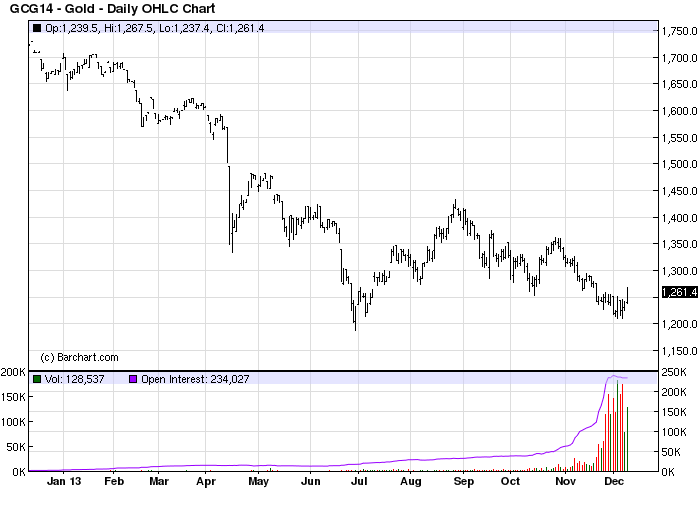
Gold leaped almost 2% though it still has an ugly chart:
Advertisement
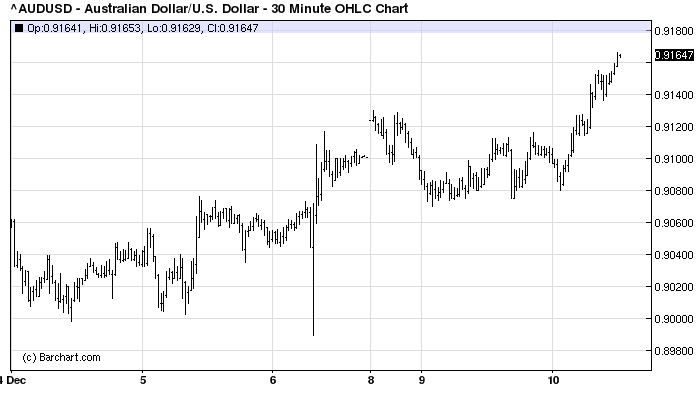
The Australian dollar is back as well, up strongly on the night:
It has run pretty hard since yesterday’s Housing Finance numbers so may be telling us the jig is up for interest rates.
Advertisement
US long bonds were bid and yields retreated further from their recent breakout above 3.9%. Stocks were marginally weak.
The data on the evening was sparse with only Job Openings, which was flat:
There were 3.9 million job openings on the last business day of October, little changed from September, the U.S. Bureau of Labor Statistics reported today. The hires rate (3.3 percent) and separations rate (3.1 percent) were also little changed in October…Quits are generally voluntary separations initiated by the employee. Therefore, the quits rate can serve as a measure of workers’ willingness or ability to leave jobs. Layoffs and discharges are involuntary separations initiated by the employer… The number of quits (not seasonally adjusted) increased over the 12 months ending in October for total nonfarm and total private and was little changed for government.
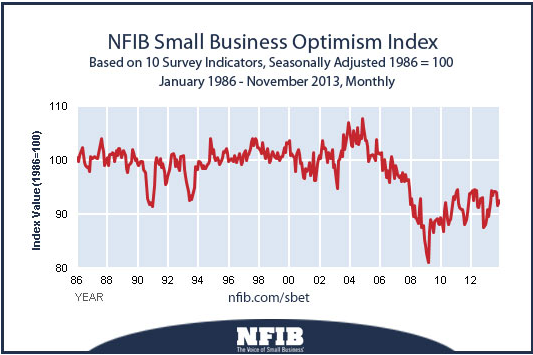
Owner sentiment increased by 0.9 points to 92.5 … Over half of the improvement was accounted for by the labor market components which is certainly good news, lifting them closer to normal levels. Fifty-one percent of the owners hired or tried to hire in the last three months and 44 percent reported few or no qualified applicants for open positions. This is the highest level of hiring activity since October 2007.
Hardly decisive. I guess we’ll put it down to nerves!
David Llewellyn-Smith is Chief Strategist at the MB Fund and MB Super. David is the founding publisher and editor of MacroBusiness and was the founding publisher and global economy editor of The Diplomat, the Asia Pacific's leading geo-politics and economics portal.
He is also a former gold trader and economic commentator at The Sydney Morning Herald, The Age, the ABC and Business Spectator. He is the co-author of The Great Crash of 2008 with Ross Garnaut and was the editor of the second Garnaut Climate Change Review.