
David Uren of The Australian has a piece today summing up the cyclical data that is offering some hope of a turnaround in Australian growth. Let’s go through it point by point:
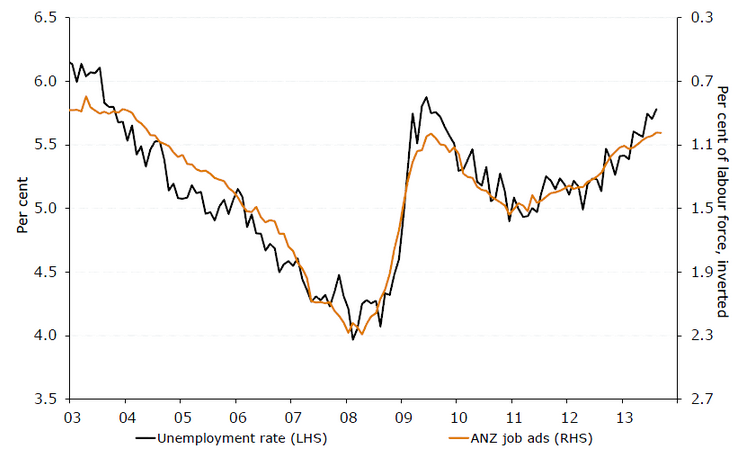
…The ANZ’s job advertisement survey had been in steep decline since early 2011, falling about 12 per cent in the past year; however, the September and October surveys showed no change.
Here’s the chart and you can see the spread between flattening ads and rising unemployment is growing:
…NAB’s last monthly business survey showed the largest number of firms planning to hire since September 2012.
Here’s the chart:
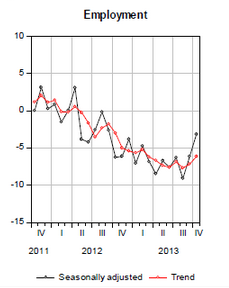
Uren doesn’t mention it but the bottom is also supported by the D&B survey.
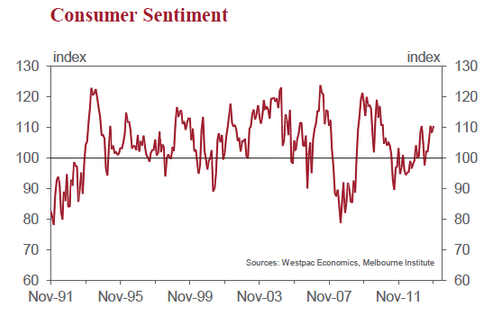
…The retail survey does not capture spending on services and it appears this is where households have been cutting back. However, consumer confidence is also much firmer and has been holding above average for the past four months.
Here’s the chart:
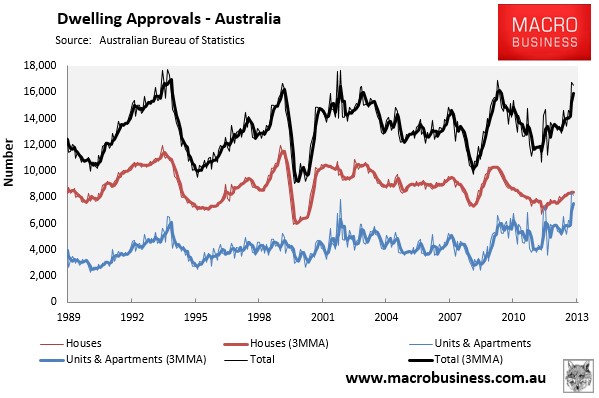
…The revival in housing has undoubtedly helped. This is the most conspicuously strong part of the economy. House prices are rising and so too are building approvals.
Here’s the chart:
Business investment has been the biggest source of concern as the resource boom winds down over the next two years…there was some encouragement, however, in the latest official survey. Although the actual level of non-resource investment is no higher now than it was at the depths of the global financial crisis, there has been no further writedown in the investment intentions of non-resource businesses for the remainder of the financial year.
Here’s the chart:
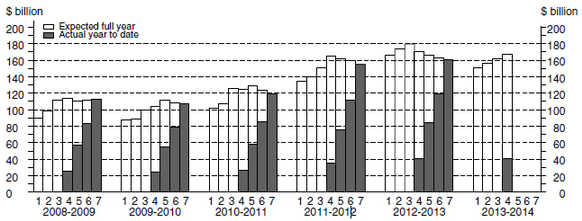
So far we are seeing a step down in capex not a cliff.
As you can see, there are quite a number of cyclical indicators that are turning favourably. The problem is that they’re all dressed up with nowhere to go. By that I mean that even if animal spirits are stirring, we’re not in a structural position to recover. Yes, there’s the possibility that consumers spend next year, I expect some loosening, but the savings trend that’s been in place since the GFC is rock solid and looks like a structural shift:
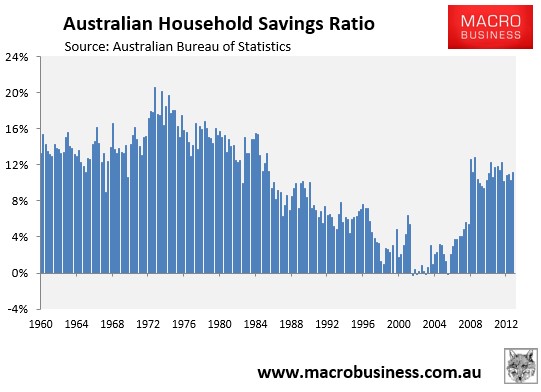
As a headline measure, “confidence” does not pick this up. It can mean different things at different times. It used to mean confident enough to spend, now it means confident enough to save. The internals of the sentiment surveys show this clearly.
The second and even larger structural shift is in the terms of trade, which are falling and will keep doing so, inhibiting income growth:
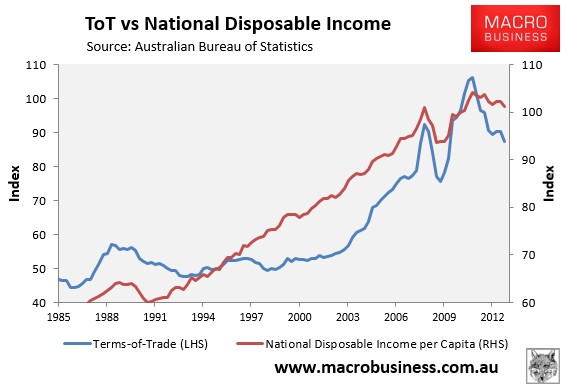
It’s a big ask to get households to borrow and spend in this context. Finally, the ToT correction is driving the capex fall off and in stock terms it’s enormous, even if not yet here:
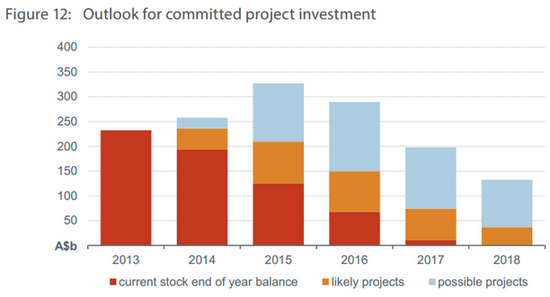
In flow terms it’s just as huge and impossible to offset:
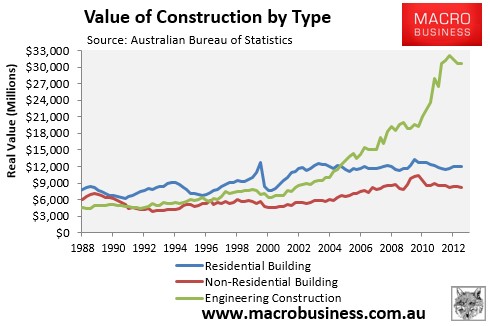
All of these are components of the one great structural problem that we must face, that is, fallen competitiveness. The animal spirits of cyclical recovery are pushing against this structural tide. They might win but probably not.
Uren at least gets half the answer right:
The Reserve Bank’s last monetary policy statement suggested another fall in the currency like the 15 per cent dive earlier this year would be enough to get the Australian dollar growing at or above its long-term trend rate.
That would improve our prospects materially, yes. It’s the best hope for a temporary recovery. But even then problems would arise quickly. Another 15% dump in the dollar would unleash a second tsunami of tradable inflation that is already apparent in the PPI. The RBA would probably “look through” it allowing housing and tradables to fire together. But that would mean the government has an immediate problem on its hands. If wages are allowed to respond to tradable inflation then we would keep hollowing out as wage push inflation trumped the weakening currency. If wage price growth is not allowed to respond then asset price growth stalls as income and standards of living fall.
It can all be mitigated by improvements in productivity, and you can push around who wears the adjustment but, over the stretch, there’s no way out to higher growth without a further deflation that improves competitiveness over the stretch.
