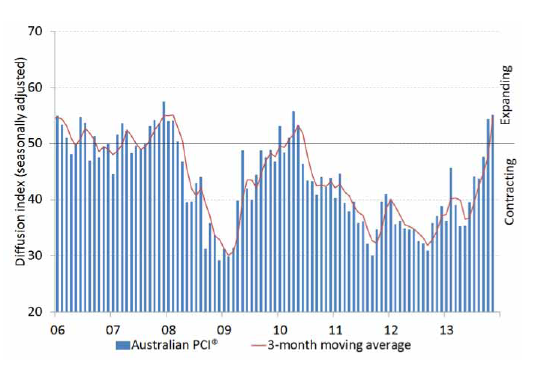
The AIG construction PMI, the PCI, is out for November and the mini-boom continues to build:
The national construction industry maintained its forward momentum in November, expanding for a second consecutive month and at a slightly faster pace than in October. Conditions were boosted by a strengthening in new orders (which increased at their highest rate in almost eight years) and an upturn in deliveries from suppliers. Activity also continued to grow, despite the pace of increase moderating from October’s 3½ year high.
The seasonally adjusted Australian Industry Group/ Housing Industry Association Australian Performance of Construction Index (Australian PCI®) increased by 0.8 points in November to 55.2. This was above the critical 50 points level (that separates expansion from contraction) and signalled the industry’s strongest performance since April 2010 (55.8).
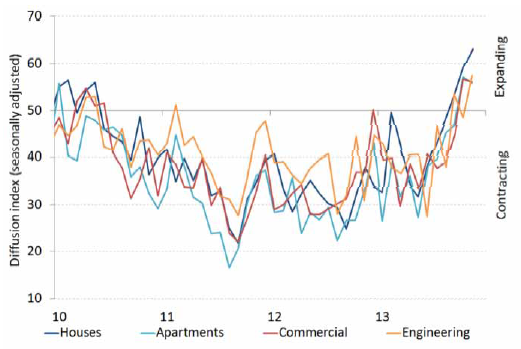
Growth in activity was again broad-based across all four major sectors of the industry. House building was the strongest performing sector, although its rate of expansion slipped slightly from the eight-year survey high level reached in the previous month. Activity in the apartment building sector also moderated after a solid upturn in October. Engineering construction expanded at a marginal and broadly unchanged rate while commercial construction activity edged slightly higher in the month.
Businesses generally noted that market conditions were strengthening in response to higher levels of demand. This was being reflected in increased tender opportunities with respondents also indicating further success in the securing of contracts. House builders reported that customer enquiries had been sustained at high levels and that activity was continuing to draw support from solid investor activity. Impediments such as tight credit conditions and a lack of public sector tenders were cited as the main constraints on activity.
New orders were also great across the board:
I’ve noted some whackyness in this report before. Notice how engineering orders have been in recession for almost three years. This is pretty absurd given we’ve just lived through the largest engineering construction boom in our history. And now that it’s tapering, orders are rebounding.
Advertisement
I suspect that the composition of this index is heavily biased towards urban infrastructure, the kind that gets built with new housing estates and so it follows housing cycles more than mining ones.
David Llewellyn-Smith is Chief Strategist at the MB Fund and MB Super. David is the founding publisher and editor of MacroBusiness and was the founding publisher and global economy editor of The Diplomat, the Asia Pacific's leading geo-politics and economics portal.
He is also a former gold trader and economic commentator at The Sydney Morning Herald, The Age, the ABC and Business Spectator. He is the co-author of The Great Crash of 2008 with Ross Garnaut and was the editor of the second Garnaut Climate Change Review.