
China’s September trade data is out and shows interesting trends. Export growth fell sharply to -0.3% y/y in September, compared with a 7.2% gain in August and expectations of a 5.5% increase. Exports to the US rose 4.2% y/y in September, from 6.1% in August. Exports to the EU fell by 1.0%, from a 2.1% increase in August. Exports to Hong Kong and Taiwan fell 4.1% and 8.6%, respectively. Exports to ASEAN jumped 9.8%.
In better short term news, imports rose 7.4% y/y versus consensus and the previous reading of 7.0%. Iron ore imports increased by 14.7% y/y in September, up from 10.5% in August.
The trade surplus narrowed sharply USD15.2bn in September, from USD28.5bn previously.
The charts are from ANZ:
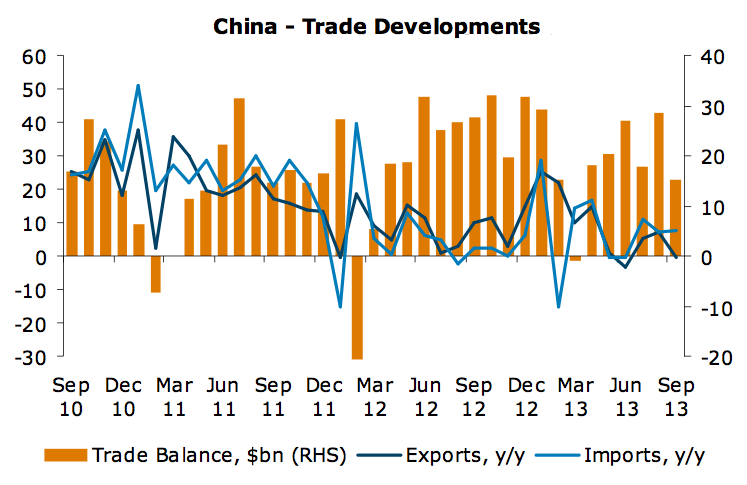
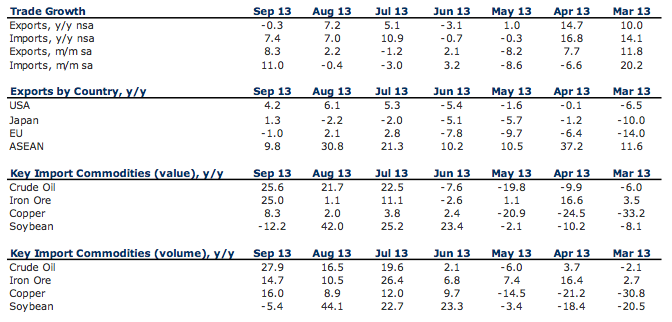
In short, China is doing it’s bit for global rebalancing with a solid downtrend in the trade surplus apparent since mid 2012. However, import growth is still much stronger for raw materials than it is sophisticated manufactures suggesting it’s own rebalancing away from fixed asset investment lies ahead.
It’s domestic demand but not the kind that’s needed.
