
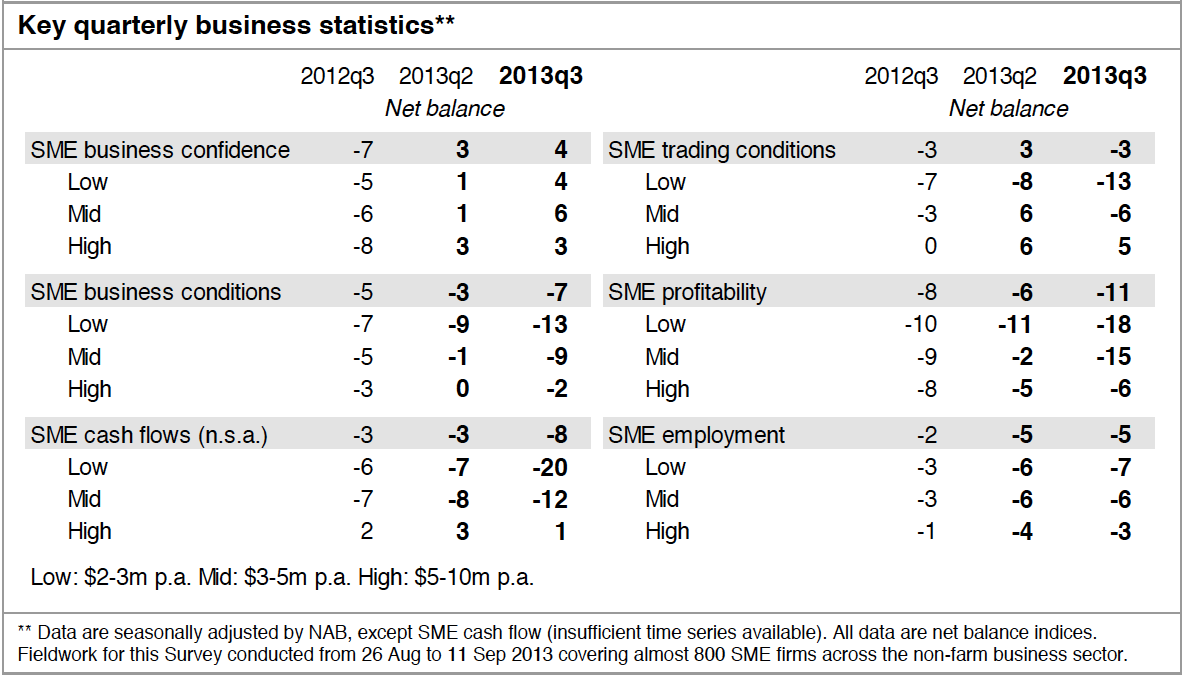
NAB has released the SME component of its quarterly business survey and it’s interesting to note that there was no election pop in confidence and conditions have actually gotten worse:
SME business confidence broadly unchanged – with no sign of the political kick in confidence seen elsewhere in business. That may in part reflect a significant fall in business conditions in the quarter. SME performance in poor sectors of the economy were similar to larger firms but were markedly different in the services sector – generally better. That said, overall forward indicators remain very subdued, implying still soft near-term demand. While cash flow readings among mid to low level SMEs were terrible.
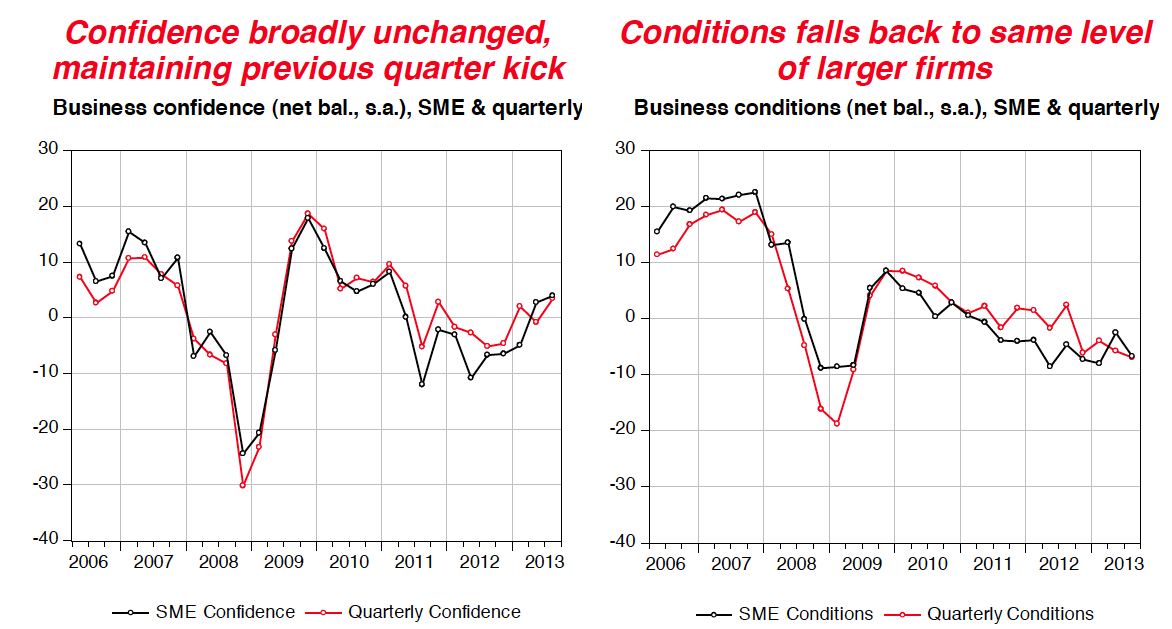
SME business confidence was broadly unchanged in the September quarter, but did maintain a solid pick-up from the previous quarter – and is currently at a 2••• year high. While confidence of SMEs was at a similar level to larger firms in the September quarter, the upswing in sentiment for the latter was delayed by one quarter (NAB Quarterly Business Survey) and appears more political in nature. Confidence lifted significantly in retail and was moderately better in manufacturing and financial services – indicative of the impact of lower rates and the AUD. Confidence rose modestly in Victoria and Queensland. Confidence of low-tier and mid-tier SMEs improved in the September quarter, despite these SMEs experiencing much more difficult conditions than high-tier firms.
SME business conditions weakened significantly in the September quarter, more than unwinding an improvement in the June quarter, with activity of smaller firms deteriorating to the same subdued level of their larger counterparts. High-tier SMEs generally outperformed low-tier and mid-tier SMEs. Cash flows results at very small and mid-tier SMEs were alarmingly low.
SME conditions were markedly different across industry, with property and financial services and accommodation, cafes & restaurants holding up relatively well – and out performing their larger counterparts. But like their larger counterparts SMEs reported very poor conditions in retail, manufacturing and wholesale sectors. Business conditions weakened across all states except for WA, with activity slumping to a new low in SA.
A pull back in forward orders and still weak employment conditions suggest little likelihood of a near-term strengthening in domestic demand, although capacity utilisation did lift from a low level.
The internals are hideous:
However, confidence did rise in earlier in the year:
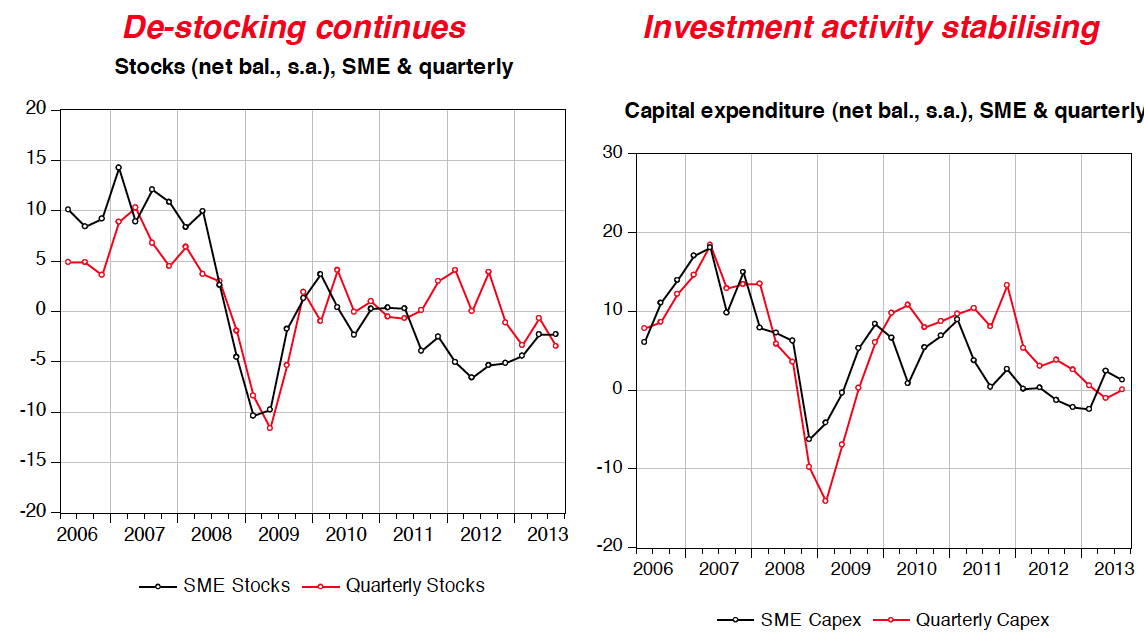
Inventory rundown goes on:
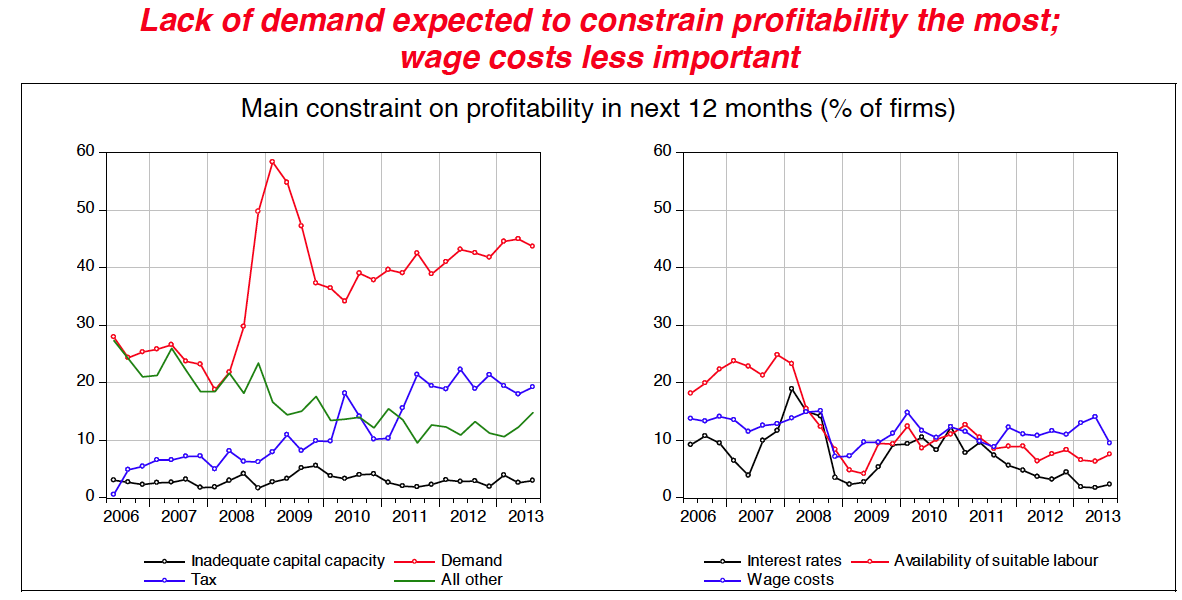
The culprit is very obvious, no demand:
Except in property:
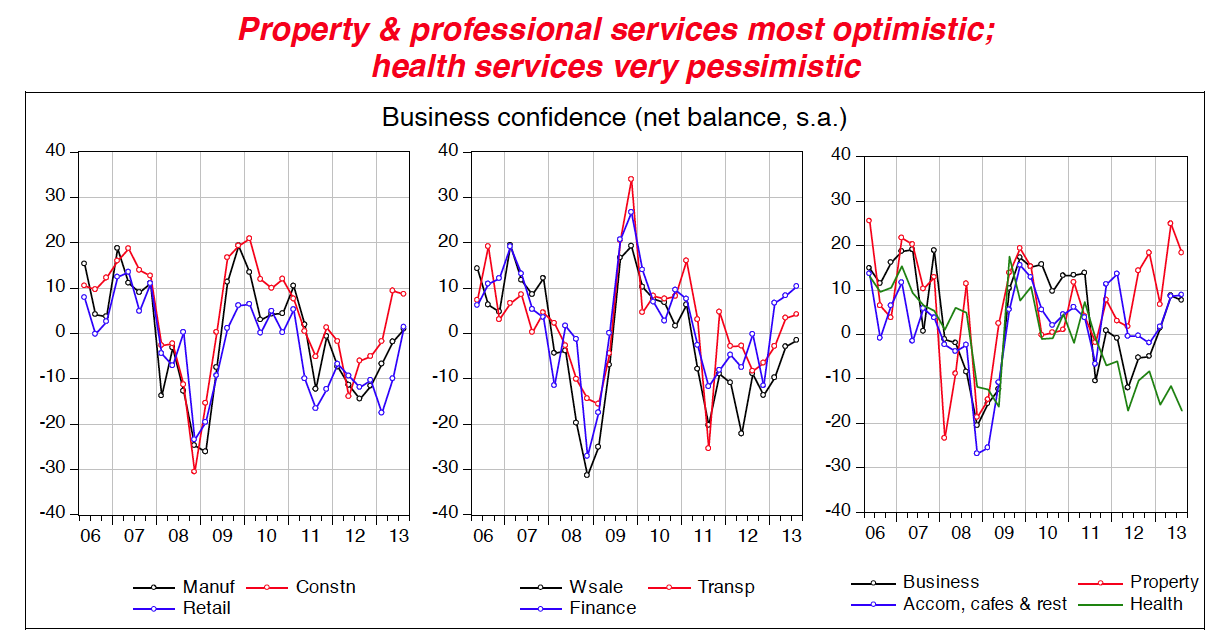
Crap everywhere:
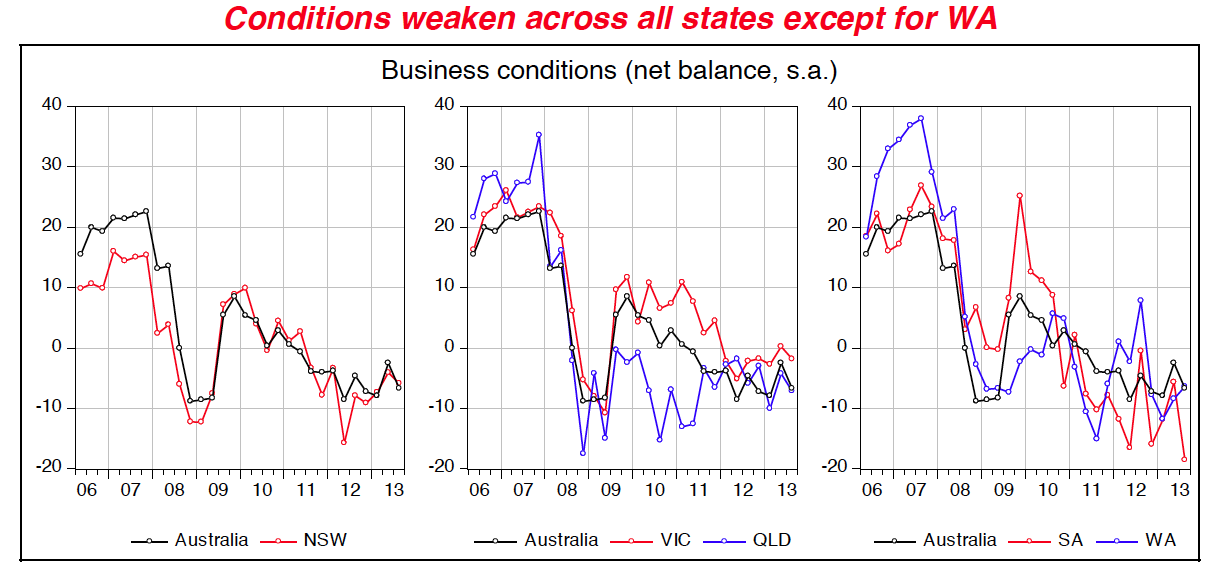
And no need to add or invest:
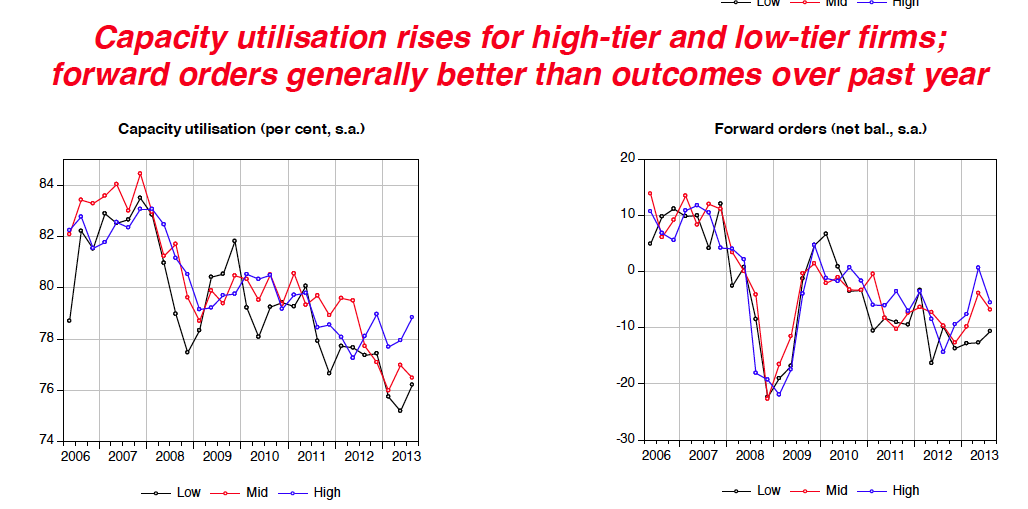
One could mount an argument that property will lead demand higher, such as that out by Bloxo today. I think we’ll get modicum of that but remain skeptical it’ll be any more. The high savings rate is a structural shift I reckon.
