
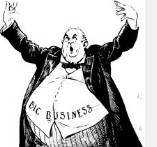
The Age’s Tim Colebatch today questions whether the new Commission of Audit is likely to be just another vested interest looking after its members, given it will be headed by Business Council of Australia (BCA) president, Tony Shepherd, with the secretariat also headed by chief economist and director of policy at the BCA, Peter Crone:
…in August, Shepherd as president of the Business Council and Crone as the council’s chief economist were key authors of its Action Plan for Enduring Prosperity, a reform blueprint that covers essentially the same ground as the commission’s brief. It can be seen as a first draft of what could become the commission’s findings, and its bold, objective thinking on public policy was severely degraded by being intertwined with thinly veiled pleading for the special interests of BCA members…
The BCA report dodges some issues, above all the impact of the high dollar on competitiveness – it falsely implies that unions are to blame for the dollar driving up unit labor costs – as well as climate change, where it urges only minimalist action, and its failure to examine the poor record of privatised public infrastructure (does anyone think privatised airports, or Victoria’s privatised desal plant, or CityLink’s extortionate tolls have made us better off?).
In all this, the council is just another vested interest group looking after its members. The worst example is on tax avoidance, where the report urges that ”Australia should not seek to be a world leader in combating [tax] base erosion and profit shifting [to tax havens]”. Yes, it should, and the other members of the audit commission must be alert to stop its report being used for special-interest pleading like this. The most serious example is on infrastructure. The report rightly highlights our inadequate spending on public infrastructure, but then proposes that the solution should be to put our key infrastructure assets in the hands of private monopolies. It argues:
‘‘Governments should adopt explicit infrastructure ownership policies whereby they limit ownership to selected greenfield projects where there is sufficient early demand risk and, for mature businesses, only when there is net demonstrated public benefit. Otherwise, governments should sell all their mature infrastructure assets, subject to appropriate regulatory frameworks being in place to safeguard consumers and efficient investment where needed.”
This is vested interest cross-dressing as public policy…
Indeed, The Audit Commission’s narrow BCA-centric membership does enhance the risk that it will recommend solutions that benefit big business, but leave ordinary Australians in the lurch. Had the Commission panel instead included representatives from small business, consumer groups, and welfare groups, it would be more likely to present balanced outcomes.
Nobody is denying the dire need to both curb government expenditure, as well as improve the efficiency of spending. With Australia’s population ageing as the large baby boomer cohort shifts into retirement, and Australia facing a falling proportion of workers supporting retirees, root-and-branch reform of government taxation and spending is essential. However, the Government must ensure that the pain of budget cuts is shared across the community, and one segment is not favoured over the other.
As argued last week, a key area where inequalities exist is the superannuation and pension system, which is far too generous to wealthier older Australians and totally unsustainable in light of Australia’s ageing demographics. If the Commission is serious about reigning in expenditures, and placing the budget on a more sustainable footing, this is a good place to start.
