
The Bureau of Resource Economics is out with its quarterly update today and has upgraded its forecasts across the board on the assumption of a lower dollar:
Australia’s mineral and energy export earnings totalled $177 billion in 2012–13, an 8 per cent decrease from 2011–12. While the volume exported increased for most commodities, moderating prices as a result of increasing world supply resulted in lower export revenues for Australian producers. Over the period 2013–14 to 2017–18, BREE projects that Australian export revenues will grow at an annual average rate of 7 per cent to total $293 billion in 2017–18. Growth in export revenue will be driven by two main factors: substantial growth in bulk commodity export volumes, particularly for LNG and iron ore; and a lower Australian dollar exchange rate.
The 2013/14 year forecast has been upgraded from $197 in June to $204 billion. Plus, as you can see below, BREE has offered forecasts out five years:
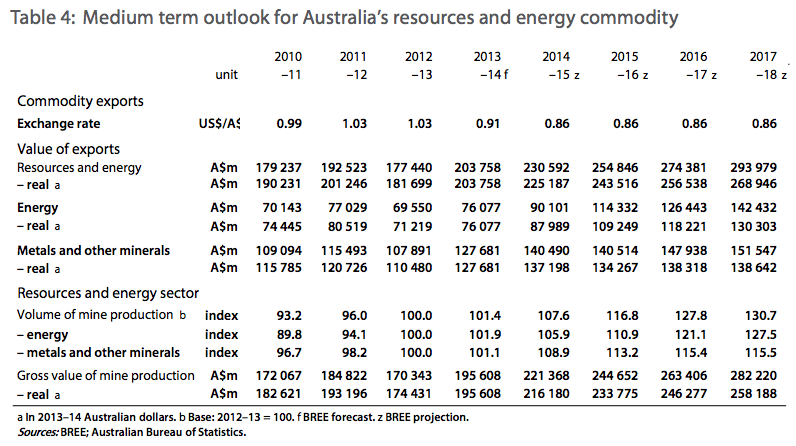
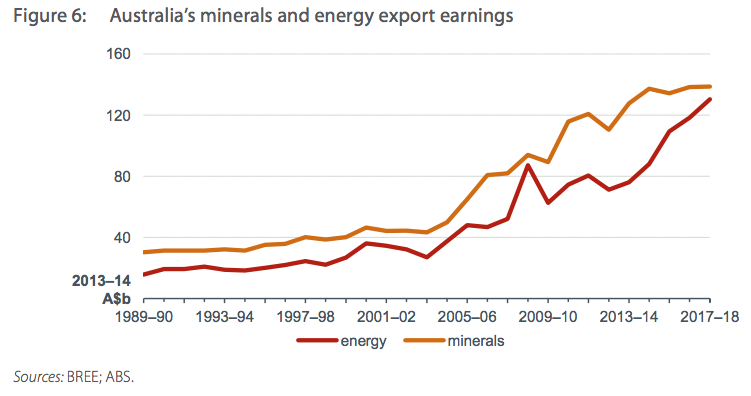
I’ve criticised BREE for its bullishness in the past. This report is an improvement. Thermal and metallurgic coal forecasts are reasonable. The iron ore average price for next year is above mine at $112 but is also fair and about consensus in the market.
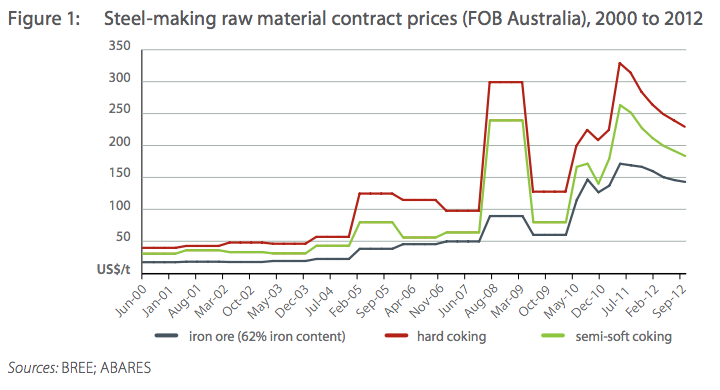
For interests sake, here is the change over two years. From September 2011, which failed to see the coming China correction:
From September 2012, which failed to realise the correction was actually the leading edge of structural change:
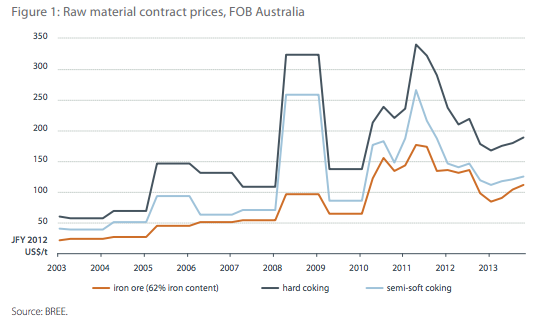
To today, when there is no prospect of price growth:
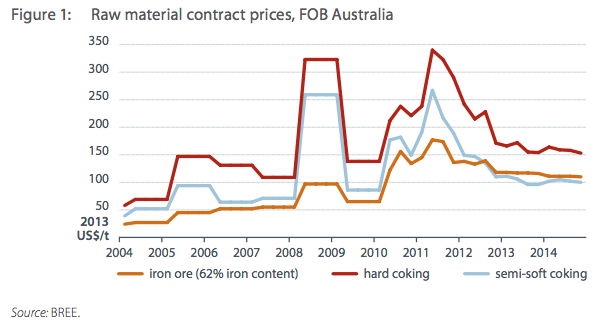
Overly bullish BREE forecasts played their part in misleading Australia’s policy elite that its China boom would run forever. There is still downside risk in these forecasts, especially in very aggressive iron ore volume growth of 17% with only moderate price falls, but they have sobered up considerably.
