

The US 30 year and 10 year bonds were stable overnight but the weekly Mortgage Bankers Association for mortgages continued its big falls:
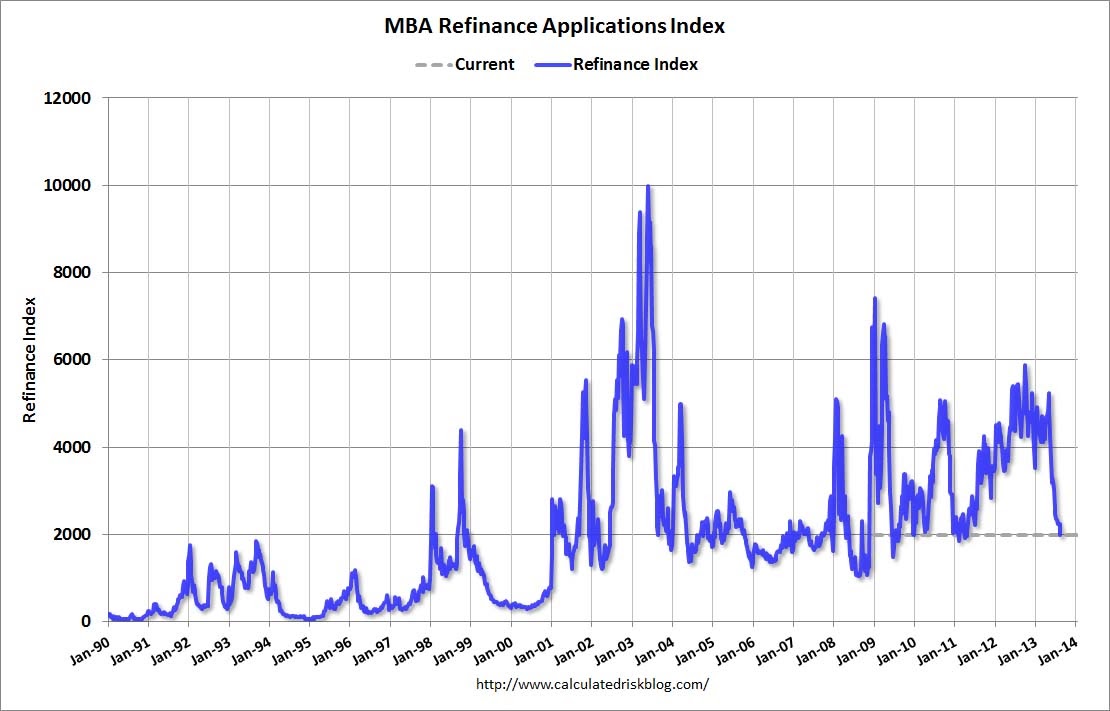
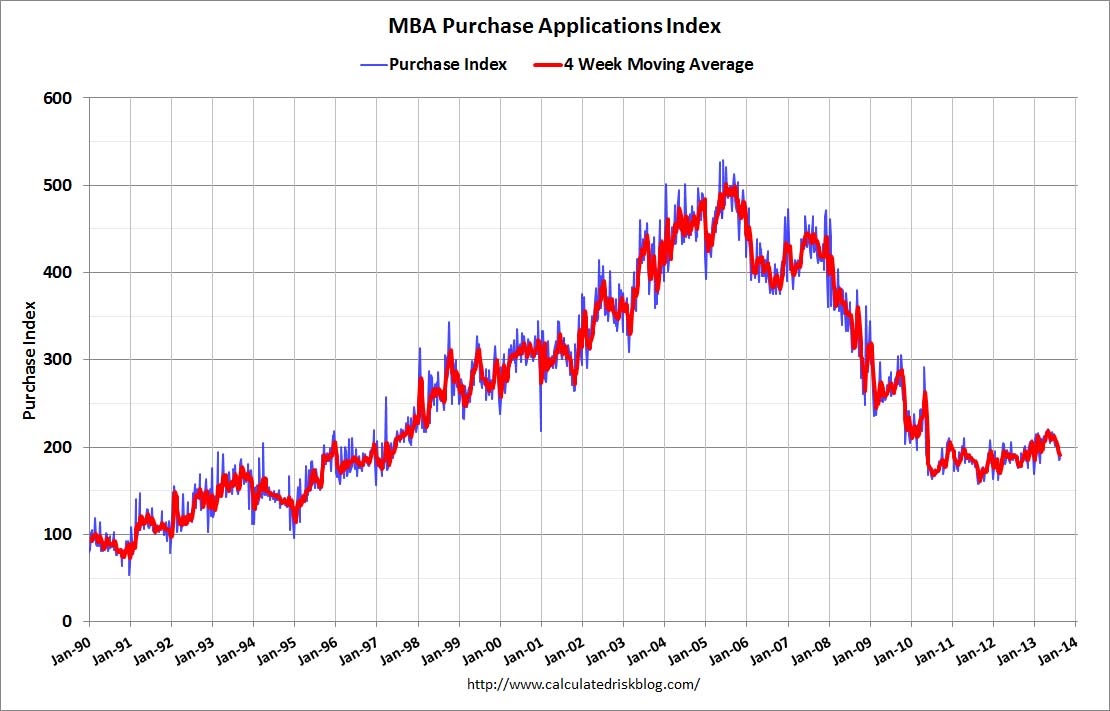
Mortgage applications decreased 4.6 percent from one week earlier, according to data from the Mortgage Bankers Association’s (MBA) Weekly Mortgage Applications Survey for the week ending August 16, 2013. …The Refinance Index decreased 8 percent from the previous week. The Refinance Index has dropped 62.1 percent from the recent peak reached during the week of May 3, 2013. The seasonally adjusted Purchase Index increased 1 percent from one week earlier….The average contract interest rate for 30-year fixed-rate mortgages with conforming loan balances ($417,000 or less) increased to 4.68 percent from 4.56 percent, with points increasing to 0.42 from 0.39 (including the origination fee) for 80 percent loan-to-value ratio (LTV) loans.
So, refi continues its dizzying plunge. From Calculated Risk:
And new mortgages are clearly falling as well (though it was a better week seasonally adjusted):
Here’s the chart with the likely near-term path for mortgage rates:

There is no doubt in my mind that house price gains are going to slow. In fact, at the current rate, a resumption of falls is not out of the question. Prices tend to follow the refi index.
The NAR also released its May data for contract completions of existing homes and it held up well:
Total existing-home sales, which are completed transactions that include single-family homes, townhomes, condominiums and co-ops, increased 6.5 percent to a seasonally adjusted annual rate of 5.39 million in July from a downwardly revised 5.06 million in June, and are 17.2 percent above the 4.60 million-unit pace in July 2012; sales have remained above year-ago levels for 25 months.Total housing inventory at the end of July rose 5.6 percent to 2.28 million existing homes available for sale, which represents a 5.1-month supply at the current sales pace, unchanged from June. Listed inventory is 5.0 percent below a year ago, when there was a 6.3-month supply.
But remember that these are contract completions based upon mortgage issuance that largely pre-dates the big surge in rates.
As I’ve said previously, the Fed is targeting a leveling off in asset prices and it will take some time for deflating price momentum to stall dwelling construction housing can contribute to growth for some time to come but I remain of the view that the combined impact of the rate rises will prevent the US economy from accelerating much above 2%.
