
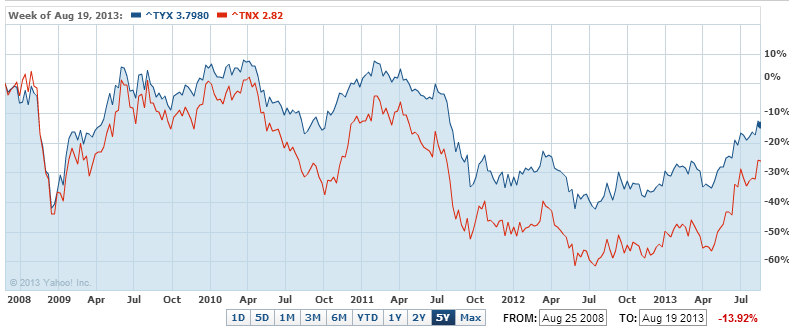
Rocketing US bond rates saw some relief Friday night with the 30 year falling 2% or so to 3.89% and the 10 year yield down 3% to 2.82%. That late rally was in time to prevent another weekly jump in the average 30 year mortgage rate as forecast:

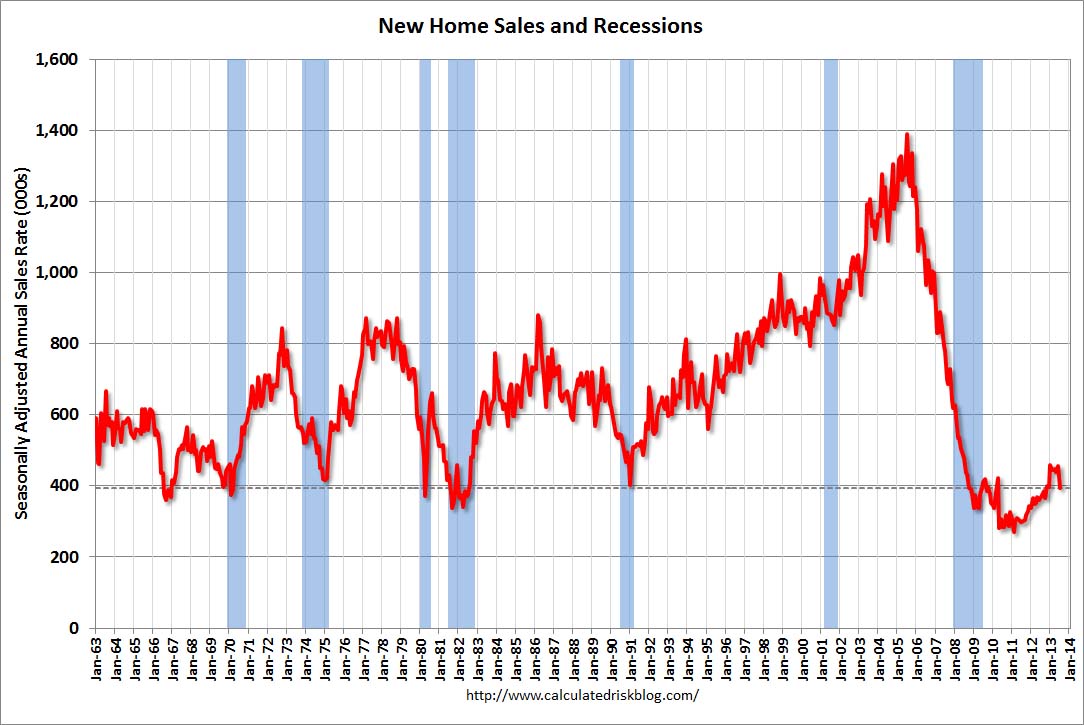
The reason for easing bond rates is simple enough. New home sales, which generate more up-to-date data than existing home sales, crashed in July. From the Census Bureau:
Sales of new single-family houses in July 2013 were at a seasonally adjusted annual rate of 394,000, according to estimates released jointly today by the U.S. Census Bureau and the Department of Housing and Urban Development. This is 13.4 percent below the revised June rate of 455,000, but is 6.8 percent above the July 2012 estimate of 369,000.
This was a mighty miss to consensus which hoped for 487k! A couple of charts courtesy of Calculated Risk. For sales:
And inventory:
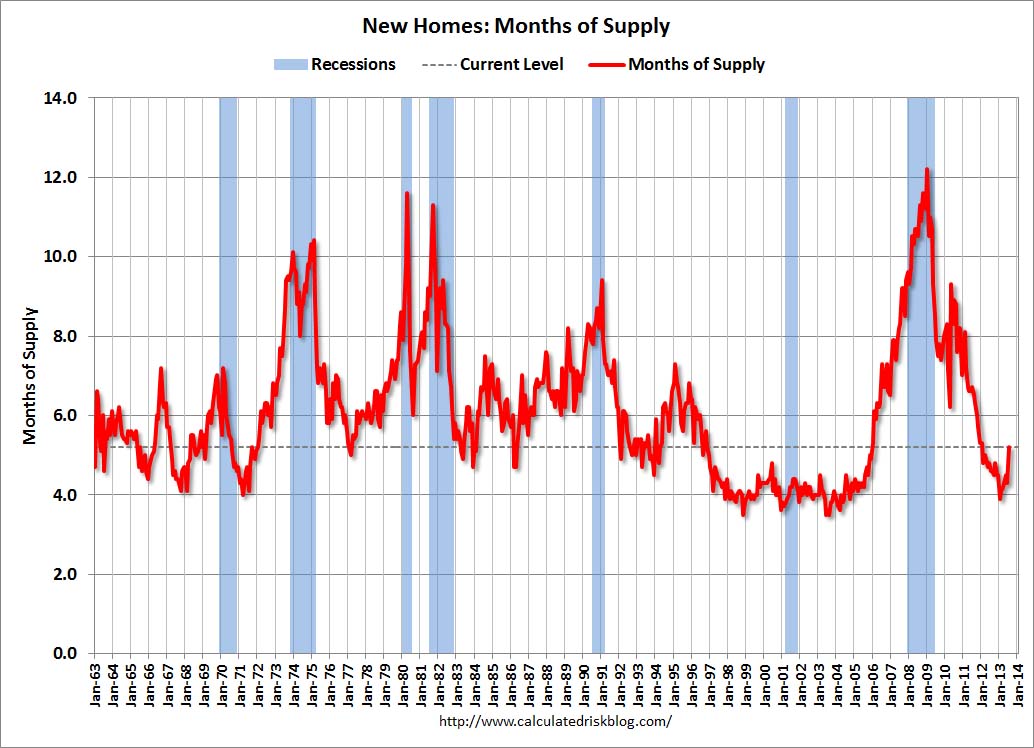
I have been of the view that given low inventory and the slowly improving labour market that household formation would rise steadily and new dwelling construction would hold up better than existing dwelling prices.
One swallow does not a summer make but on this evidence I will have been overly bullish on new dwellings. It’s no wonder markets reversed course on the taper for the day with gold, the Aussie and stocks up.
New dwelling construction is a key plank of the US recovery and if slumping sales become a trend then the taper is off.
