
Three Fed presidents this week have reiterated that Septaper is still on the agenda. On Monday it was hawkish Richard Fisher. Overnight it was Dennis Lockhardt and the dovish Charles Evans:
“We are quite likely to reduce the flow of purchases rate starting later this year – I couldn’t tell you exactly which month that will be – and it’s likely to wind down over time in a couple or few stages.”
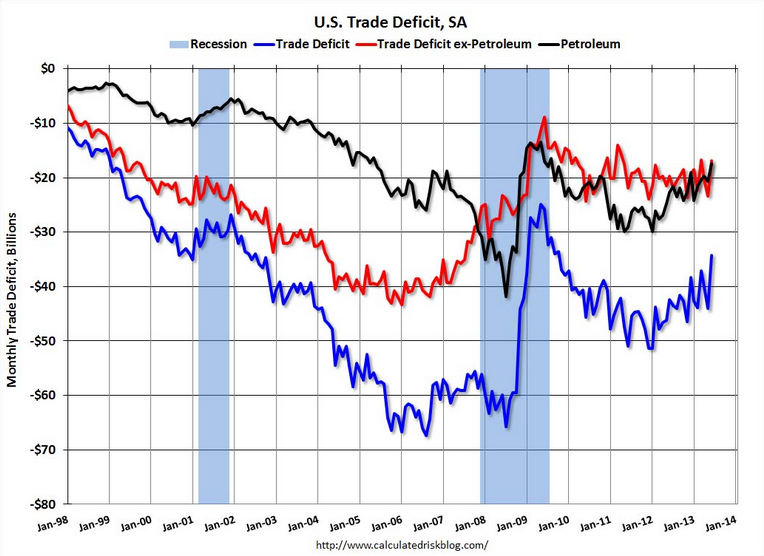
More importantly, the data is on a tear. Late last week, the ISM for manufacturing and services was red hot. Today the trade data was also smoking with a big rise in exports and little growth in imports meaning net exports will contribute strongly to growth. Chart from Calculated Risk:
Also last night, Core Logic released its latest house price data and it must be said that some reining in is needed:
Home prices nationwide, including distressed sales, increased 11.9 percent on a year-over-year basis in June 2013 compared to June 2012. This change represents the 16th consecutive monthly increase in home prices nationally. On a month-over-month basis, including distressed sales, home prices increased by 1.9 percent in June 2013 compared to May 2013.
Excluding distressed sales, home prices increased on a year-over-year basis by 11 percent in June 2013 compared to June 2012. On a month-over-month basis, excluding distressed sales, home prices increased 1.8 percent in June 2013 compared to May 2013. Distressed sales include short sales and real estate owned (REO) transactions.
The CoreLogic Pending HPI indicates that July 2013 home prices, including distressed sales, are expected to rise by 12.5 percent on a year-over-year basis from July 2012 and rise by 1.8 percent on a month-over-month basis from June 2013.
…
“In the first six months of 2013, the U.S. housing market appreciated a remarkable 10 percent,” said Dr. Mark Fleming, chief economist for CoreLogic. “This trend in home price gains is moving at the fastest pace since 1977.”
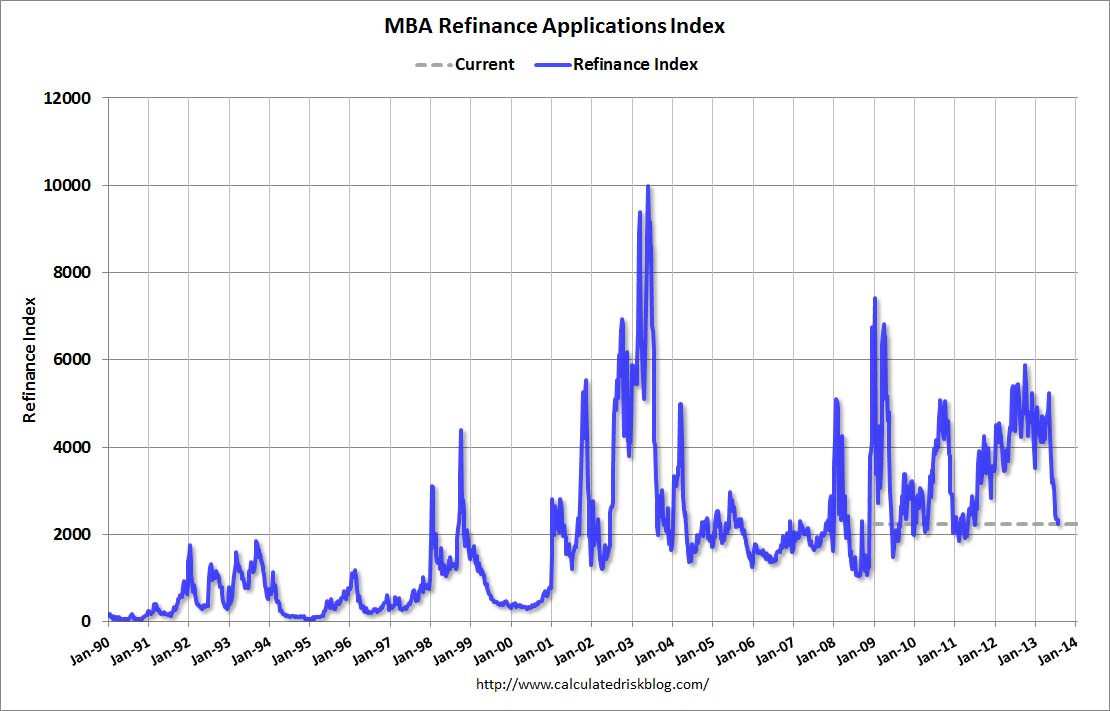
On the flip side, however, the slowing has already begun. The 30 year bond rate (which benchmarks most mortgages) is at its recent highs at 3.7% and that has already put a very big dent in mortgage demand. Charts again from Calculated Risk.
For refi:
And new purchases:
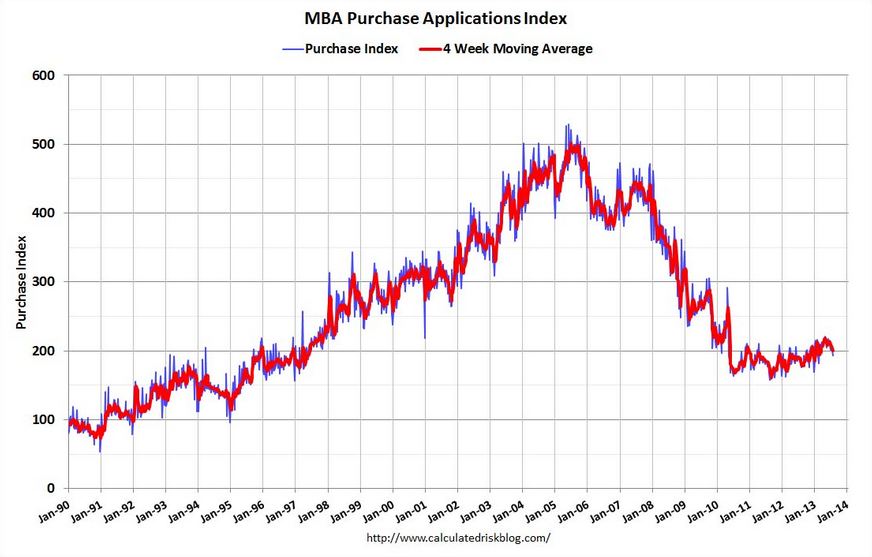
House price gains are set to slow already. More evidence that it’s begun is becoming apparent. Also last week we had a subdued employment report, showing labour market growth is undershooting Fed targets so that’s another reason to hold off. In one very real sense, the Fed’s tightening work is already done.
The question is, then, what will happen if the Fed actually tapers? The rises in yields to date are surely far ahead of what the Fed might have hoped. Will the bond bubble deflate even faster, threatening the recovery? I think it likely.
