

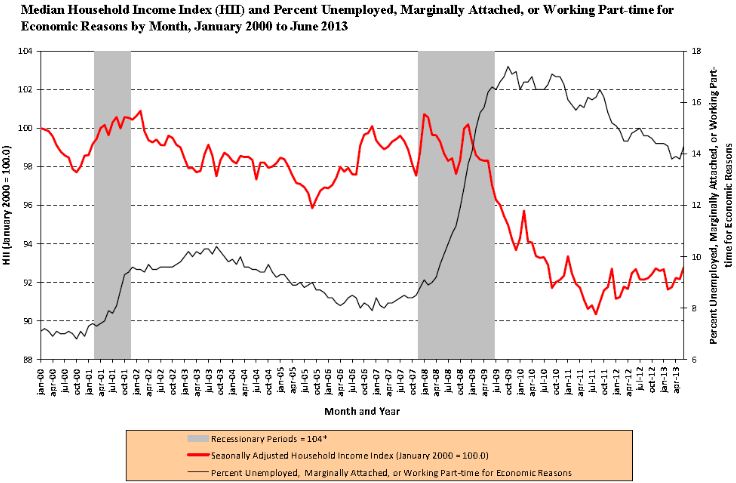
As shown in the chart below, real (inflation-adjusted) median household income in the US remains well below pre-recession levels, whereas U6 unemployment (which also counts “marginally attached workers and those working part-time for economic reasons”) remains at a high level:
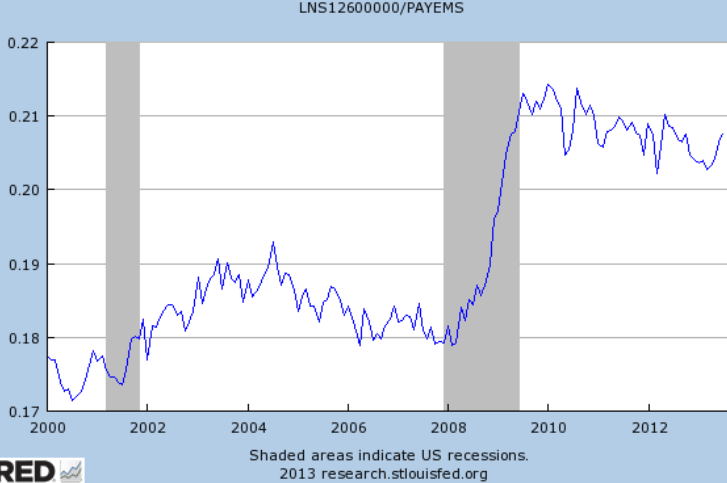
According to Sober Look, “A large part of this wage dislocation can be explained by significantly higher use of part-time labor in the US. The chart below shows the ratio of part-time to total payrolls which remains elevated” (see next chart).
Indeed, according to the Wall Steet Journal, many of the jobs created in the US since the recession have been in low wage paying industries (see next chart).
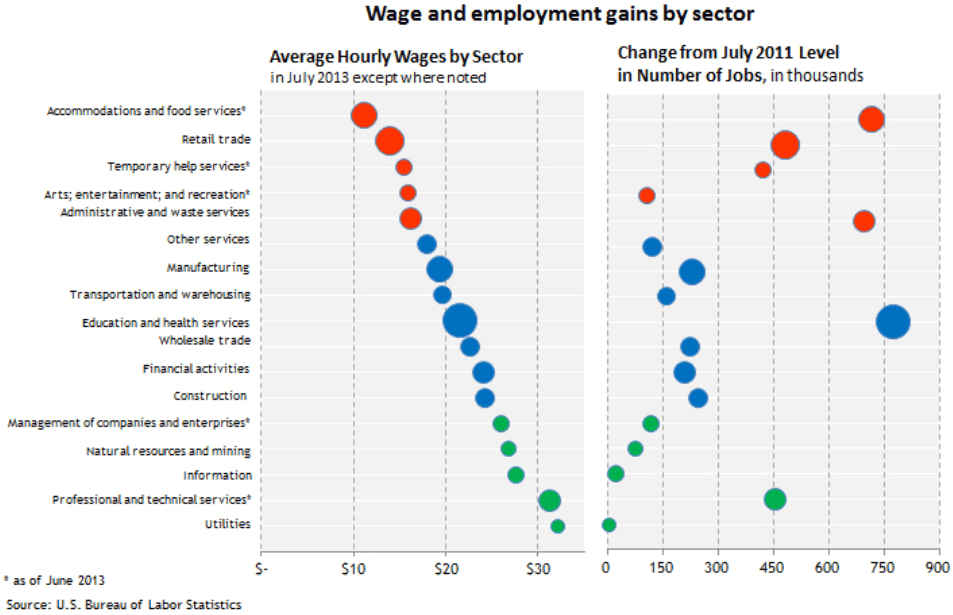
The red circles above represent the five sectors with the lowest average wages, whereas the green circles represent the five sectors with the highest average wages, and the blue circles represent those with average wages between the high and low groups. The size of each of the circles in the chart represents the share of employment in that sector during the July 2011 to July 2013 period.
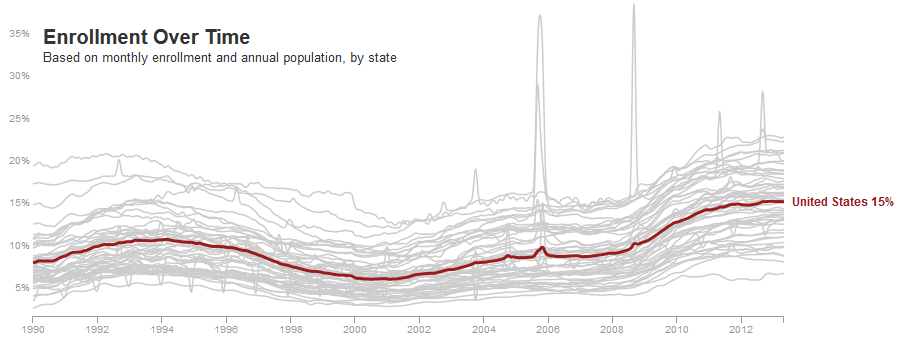
Food stamp usage is also on the rise in the US, according to a seperate article by the Wall Street Journal. Food stamp use rose 2.4% in the year to May, with more than 15% of the US population now receiving benefits. By comparison, during the early 1990s recession, food stamp usage peaked at around 11% (see next chart).
Finally, lower wages and the recent increased use of part-time workers has significantly improved corporate bottom lines, with compensation as a percentage of GDP now at a near 13-year low, according to Barclay’s Bank (see next chart).
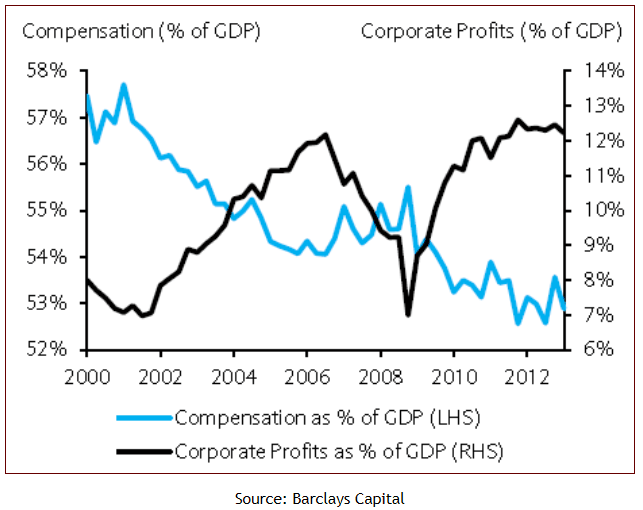
While lower labour costs should help US firms to become more internationally competitive, they also risk weighing on consumer demand, which drives roughly 70% of US GDP. Accordingly, we should not be surprised to see US economic growth remain tepid going forward.
