

The Australian Bureau of Statistics (ABS) has just released the Average Weekly Earnings (AWE) data for the six months to May 2013. A breakdown of the key changes is provided below:
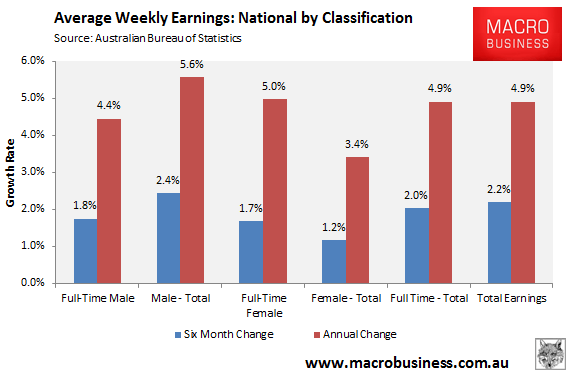
According to the ABS, on a seasonally-adjusted basis, national total AWE increased by 2.2% in the six months to May 2013, to be 4.9% higher year-on-year.
A time series of annual average wages is shown below. According to the ABS, the average Australian earned $57,460 per annum as at May 2013, with the average full-time worker earning $77,220:
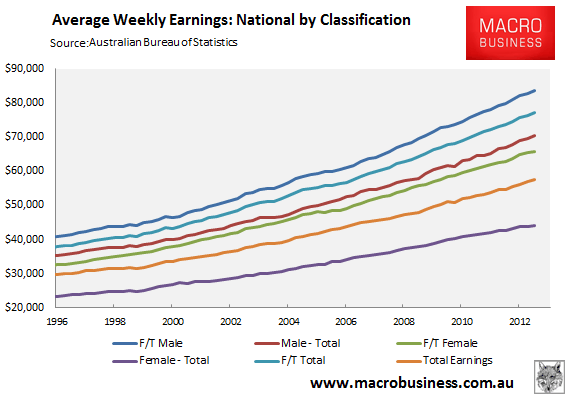
You can see from the above chart that males earn significantly more on average than females. As at May 2013, full-time male earners earned 27% more on average than females full-time workers, whereas total male average earnings were 60% higher.
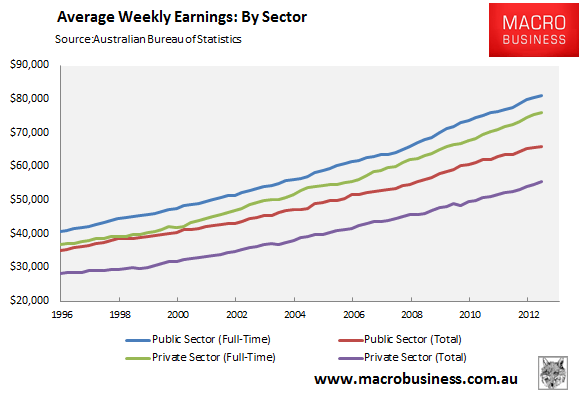
The disparity between the private and public sectors is also striking, with public sector workers earning on average 19% more than private sector workers, and public sector full-time workers earning 6% more:
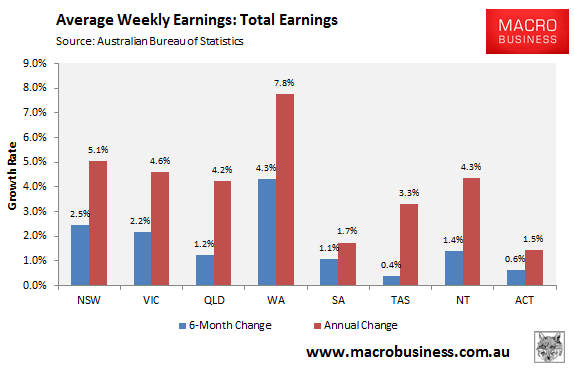
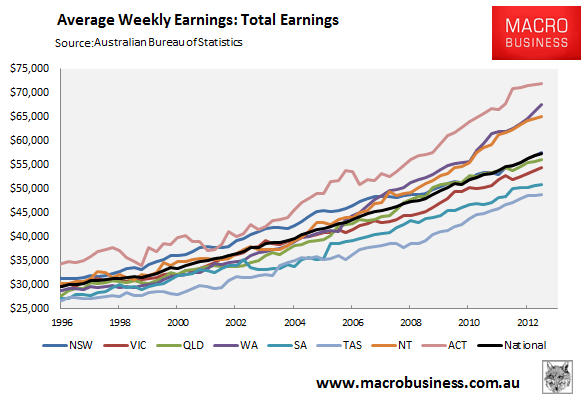
At the state level, wages growth was strongest in the six months to May in New South Wales, Victoria and Western Australia, and weaker elsewhere.
Over the year, Western Australia (+7.8%), New South Wales (+5.1%) and Victoria (+4.6%) were also the standout performers, whereas South Australia (+1.7%) and the ACT (+1.5%) were lagards:
In dollar terms, workers in the ACT, Western Australia, and Northern Territory get paid the most on average, whereas those in Tasmania, South Australia, and Victoria are paid the least:
unconventionaleconomist@hotmail.com
